Premium
This is an archive article published on August 7, 2024

As big cat population plummets, Chhattisgarh approves country’s third largest tiger reserve

The state's tiger population fell from 46 in 2014 to 17 in 2022

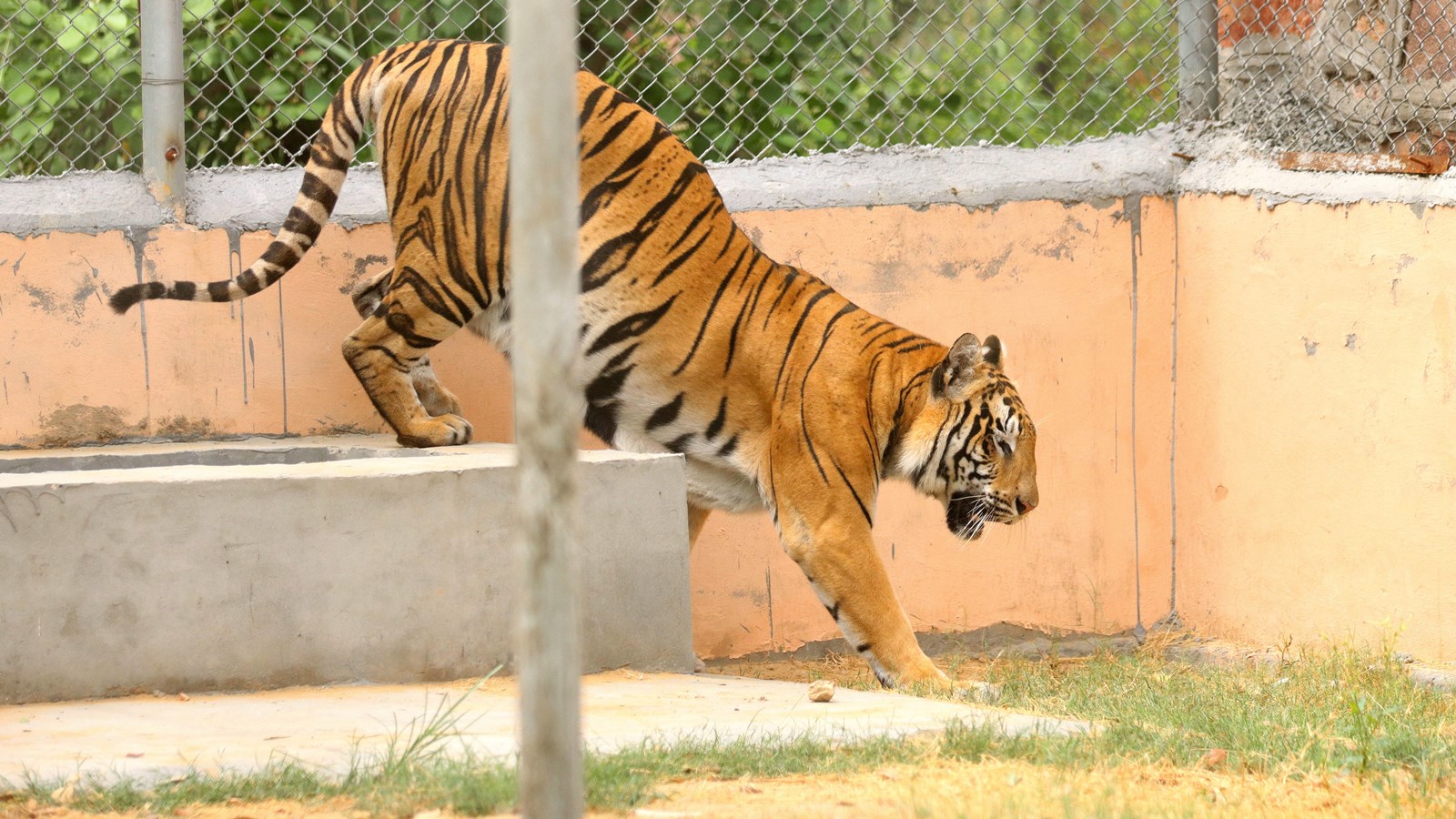
Chhattisgarh tiger reserveChhattisgarh’s tiger population fell from 46 in 2014 to 17 in 2022, according to a National Tiger Conservation Authority report released in July 2023. (File)

With its tiger population plunging in recent years, Chhattisgarh Wednesday cleared a long-pending proposal to notify a new tiger reserve – the third largest in the country.

The Guru Ghasidas-Tamor Pingla Tiger Reserve, which integrates an existing national park with a wildlife sanctuary, is Chhattisgarh’s fourth reserve for the big cats. It spans 2,829 square kilometres across four northern districts of the state.

The decision comes after the Chhattisgarh High Court, while hearing a PIL on July 15, granted four weeks to the state government to clear its stand on declaring that area a tiger reserve.

Chhattisgarh’s tiger population fell from 46 in 2014 to 17 in 2022, according to a National Tiger Conservation Authority report released in July 2023.

The Union Ministry of Environment, Forest and Climate Change had flagged this decline in a 2023 statement: “Some states, including Mizoram, Nagaland, Jharkhand, Goa, Chhattisgarh and Arunachal Pradesh have reported disquieting trends with small tiger populations.”

On Wednesday, the state cabinet merged the regions of the Guru Ghasidas National Park and the Tamor Pingla Sanctuary, located in the districts of Manendragarh-Chirmiri-Bharatpur, Koriya, Surajpur and Balrampur, to create the new reserve.

“The formation of this tiger reserve will foster eco-tourism in the state and create employment opportunities for villagers residing in the core and buffer zones, as guides, tourist vehicle operators, and resort managers. Additionally, the National Project Tiger Authority will provide an extra budget for the reserve’s operations, which will facilitate new livelihood development projects in the surrounding villages,” the government said in a statement.

Story continues below this ad

The state authorised its Department of Forest and Climate Change to proceed with the next steps.

In 2019, wildlife activist Ajay Dubey had filed the PIL in the high court flagging the fall in the population of the big cats in the state. The PIL alleged inaction by the government in notifying and constituting the reserve since 2012 despite approval from the National Tiger Conservation Authority as well as the Union Environment Ministry.

On Wednesday, Dubey told The Indian Express: “I welcome this decision.. It will strengthen wildlife conservation in Chhattisgarh, especially tiger protection.”

A government official, requesting anonymity, said: “Guru Ghasidas National Park was made a tiger reserve in 2021, but it could not be notified due to opposition. Due to many mines in this area, the notification to declare the National Park as a tiger reserve was stuck during the previous government.”

Story continues below this ad

Andhra Pradesh’s Nagarjunasagar Srisailam Tiger Reserve is the country’s largest tiger reserve, covering 3,296.31 sq km. Manas Tiger Reserve in Assam is the second largest with an area of 2,837.1 sq km. Both have 58 tigers.

Jayprakash S Naidu is a Principal Correspondent for The Indian Express, currently serving as the state correspondent for Chhattisgarh. With an extensive career in frontline journalism, he reports on the political, security, and humanitarian landscape of Central India. Expertise and Experience Specialized Conflict Reporting: Jayprakash is a leading voice on the Maoist/Naxalite conflict in the Bastar region. His reporting provides a critical, ground-level view of: Internal Security: Tracking high-stakes encounters, surrender programs for senior Maoist leaders, and the establishment of security camps in formerly inaccessible "heartland" villages. Tribal Rights & Displacement: Investigative reporting on the identity and land struggles of thousands of displaced tribals fleeing conflict zones for neighboring states. Governance & Bureaucratic Analysis: He consistently monitors the evolution of Chhattisgarh as it marks 25 years of statehood, covering: Electoral Politics: Analyzing the shift in power between the BJP and Congress and the impact of regional tribal movements. Public Policy: Reporting on landmark infrastructure projects (e.g., mobile connectivity in remote zones) and judicial interventions, such as High Court rulings on civil and family law. Diverse Investigative Background: Prior to his current focus on Chhattisgarh, Jayprakash held reported from Maharashtra, where he specialized in: Crisis & Disaster Management: Notable for his extensive coverage of the Cyclone Tauktae barge tragedy (P-305) and the COVID-19 pandemic’s impact on frontline personnel. Legal & Human Rights: Investigative pieces for platforms like Article-14, focusing on police accountability and custodial deaths across India. Environmental & Social Justice: Authoritative reporting on the Hasdeo Aranya forest protests and the approval of major tiger reserves, highlighting the tension between industrial mining and environmental preservation. ... Read More

Stay updated with the latest - Click here to follow us on Instagram

Latest Comment
Post Comment
Read Comments
Advertisement
Advertisement
Loading Taboola...
Advertisement