


Stay updated with the latest - Click here to follow us on Instagram
© The Indian Express Pvt Ltd
Tags:


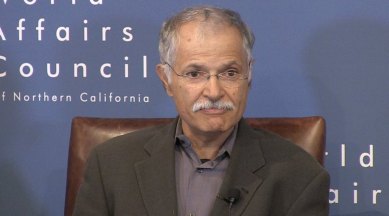
Social scientists should be careful to assert that caste-party linkages determine the outcomes of Indian elections, political scientist Professor Pradeep K Chhibber said on Tuesday.
Delivering a public lecture on ‘Creating Electoral Majorities: Analysing Polling Booth data for Lok Sabha Elections 2009-2019, Chibber said that uncertainty surrounds Indian elections.

“Uncertainty surrounds Indian elections. Many voters vote different parties in successive elections,” said Chhibber, who teaches at the Department of Political Science Berkeley Research, University of California.
Chhibber said, “The uncertainty may exist because political parties are not present as organizations across all areas in a constituency.”
Chhibber observed that there are few strongholds and “significant volatility” in the Indian elections. He said that the social scientists should be careful in asserting that strongholds are commonplace in Indian electoral politics.
“As social scientists, we should be careful to assert that strongholds are commonplace in Indian electoral politics and caste-party linkages determine the outcomes of Indian elections,” he said, adding that the outcome of Indian elections is too uncertain to be predicted by such linkages.
“If you believe that caste voting is important and people vote their caste and people’s caste identity is not changed, then we should get the same outcome again and again… But what I’m going to show you today, Indian elections are very uncertain. There is a lot of uncertainty. There are very few strongholds in Indian elections,” said Chhibber, who has analyzed booth level data of three Lok Sabha Elections (2009, 2014 and 2019) of Uttar Pradesh.
Chhibber said the volatility—defined as swing of vote percentage from one party to the other—is greater at the local level (at village level) than the parliamentary constituency level, which makes the election outcomes in India so uncertain.
According to Chhibber, the volatility is higher in India than in many countries.
For instance, the volatility was recorded at 3.8 per cent in the US, while it was 26.7 per cent in India, Chhibber said.
Stay updated with the latest - Click here to follow us on Instagram


