Journalism of Courage



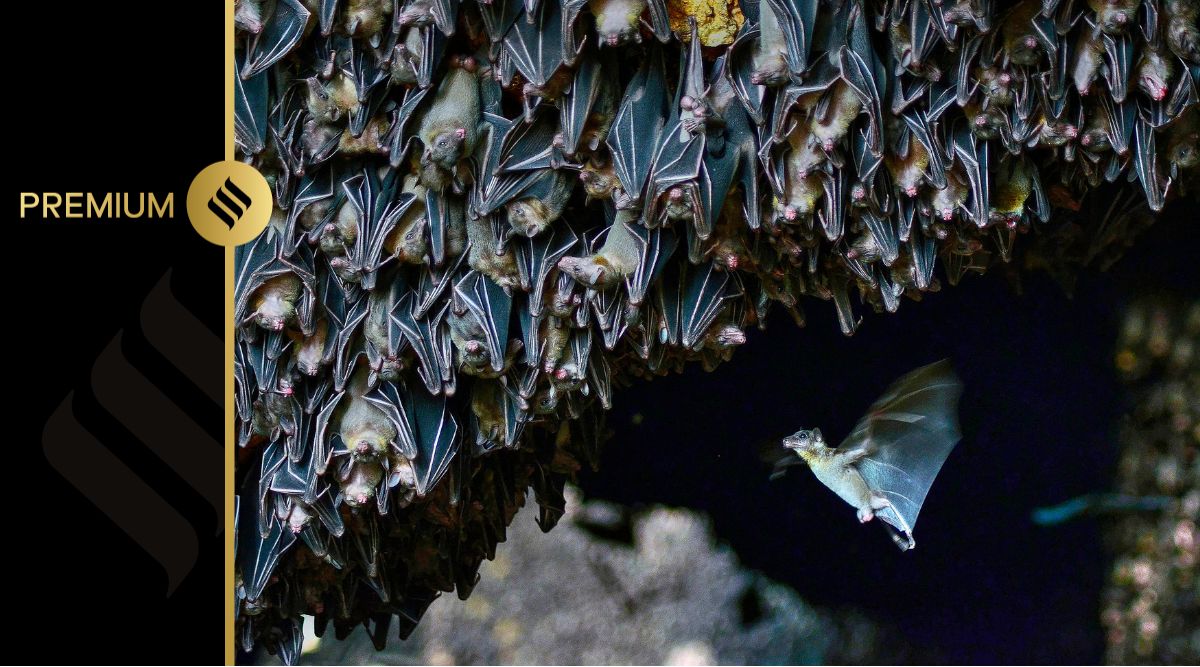 Fruit bats of Monfort Bat Sanctuary, Samal Island, Philippines. (Photo: Wikimedia Commons)
 The Bible says they’re unclean. Dante draws an analogy between their wings and those of Lucifer’s. Women were burnt in the past when these creatures were spotted over their houses and gardens. These mammals are often perceived as harbingers of death and evil. Their appearance during a wedding ceremony is considered a bad omen.
Humans have demonised bats for centuries. However, these beliefs have never bothered Bhargavi Srinivasulu. About 30 years ago, she gifted a dead bat to Chelmala Srinivasulu, her classmate in the Bachelor of Science (BSc) course.
“I saw a big bat electrocuted on an electric wire one day and asked my father to pull it down. We could have just got rid of it, but I thought he (Chelmala) might be interested in studying it (since he was fascinated by bats). I put the bat in a huge packet and took it to his house. I did it partly to impress him too,” Bhargavi says.
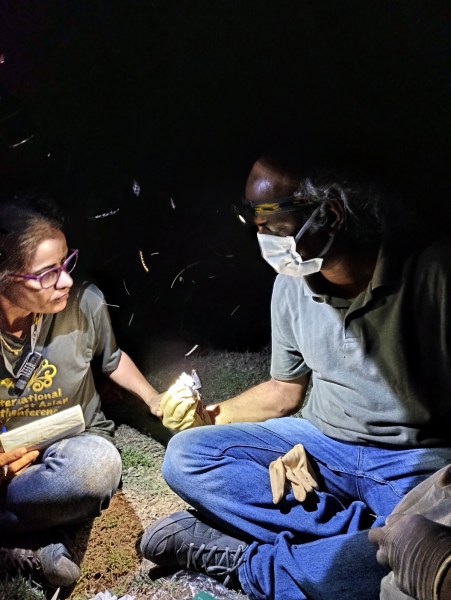 Bats are a common topic at the dinner table for bat researchers Bhargavi Srinivasulu and Chelmala Srinivasulu. Their son studies bats too. (Photo: Chelmala Srinivasulu)
It was the beginning of not just Bhargavi and Chelmala’s love story, but also the couple’s lifelong association with bats. The couple study the nocturnal mammal — while Bhargavi is an independent researcher who works on insectivorous bats (insect-eating bats), Chelmala is a professor of Zoology at Osmania University, Hyderabad, who specialises in fruit-eating bats. Their son, Aditya, too is a bat researcher at University of Reading, the United Kingdom.
Given the family’s shared interest, bats are a common topic of discussion at the dinner table. “We talk about the publication of our papers. If we are going for field work, we discuss where we are going, what we are going to do and which cave we are going to go to first,” says Bhargavi.
But not everyone is as charmed by these chiropterans (the scientific name of bats is Chiroptera) as the Srinivasulus.
Lack of evidence and a crusade to kill bats
The “bad” reputation of bats exacerbated after the breakout of the Covid-19 pandemic. Scientists know that SARS-CoV-2, the pathogen that causes the illness, is part of a family of viruses found in some horseshoe bats (a type of insect-eating bats), mostly found in tropical or subtropical areas, including China, where the first case of coronavirus disease was reported. Scientists are, however, yet to determine how it infected its first victim. Despite the lack of evidence, several communities and government authorities across the world launched a crusade to kill bats soon after the pandemic began.
Most recently, bats grabbed headlines when six people tested positive for Nipah virus (NiV) in Kerala and two of them died in September. Fruit-eating bats are the natural reservoir for NiV. The spread sparked the vilification of bats once again. But experts like Srinivasulus say bats alone can’t be blamed for the outbreak. Humans are at fault too, they say.
 Italian poet Dante draws an analogy between bat wings and those of Lucifer’s. (Illustration: Cornelis Galle/Wikimedia Commons)
The latest NiV spread could have happened in two ways, Chelmala explains. “Fruit-eating bats live on trees and feed on fruit. They mostly drop half-eaten fruit on the forest floor or wherever the fruiting trees are,” he says, adding that these half-eaten fruit mostly contain bat saliva, which could be carrying Nipah virus.
“Either someone consumed such fruit without washing it or an animal like a pig ate it, through which the virus jumped to humans, leading to the outbreak,” he says.
Moreover, the transmission of the virus through bats in most cases happens only when they are sick or under stress, the professor adds.
Like every organism, bats are also natural hosts for many pathogens — the mammals are known to carry rabies, Ebola and other viruses. When their immune system is compromised, bats shed more virus particles, increasing the chances of spreading the disease to humans or domestic animals.
“Dogs are natural reservoirs of rabies. If a dog bites you, you will not get rabies. It’s only when a rabid dog bites that you will get rabies,” Chelmala points out.
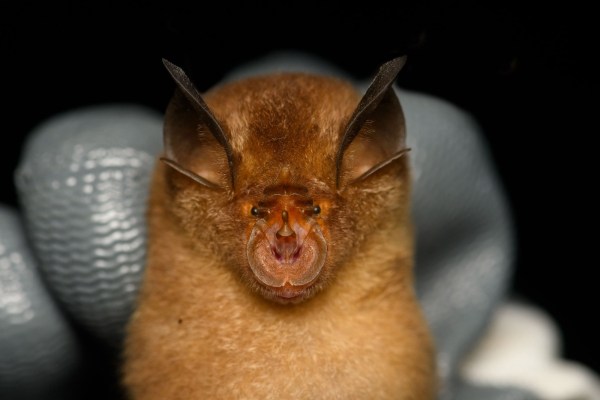 Blyth’s horseshoe bat. (Photo: Nithin Divakar)
Handling bats with care and gloves
And that is why many researchers in India usually didn’t wear gloves while handling bats until 2016. Chelmala says they would pick only healthy bats for examination by observing their behaviour.
“When you go into a cave, you see some bats that aren’t very active. Compared to other bats, they are dull and not moving as much. We know that these are diseased bats. And we don’t handle them — although they are easier for us to catch. General understanding tells us that they have diseases and might have viruses, bacteria and parasites that could be detrimental to our health,” he adds.
These days however, researchers take full precaution. Apart from getting rabies vaccination and immunity boosters, they wear surgical masks and gloves. Scientists use hard cloth gloves, bought from hardware stores, to handle big bats like the Indian flying fox (Pteropus giganteus). To hold small bats, they use nitrile gloves, which are made from synthetic latex.
Nithin Divakar, a PhD scholar at Kerala Forest Research Institute, Thrissur, who has been studying bats since 2013, says, “I use nitrile gloves, the ones used during the pandemic, because they’re thin and make it easier to handle the tiny wings of small bats. If we hold them while wearing hard gloves, there is a chance of damaging their wings.”
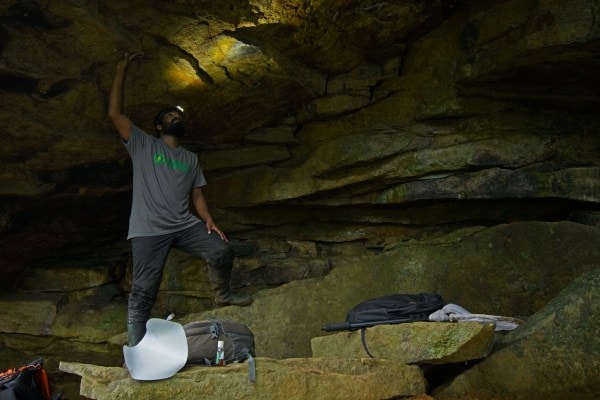 Nithin Divakar, a PhD scholar at Kerala Forest Research Institute, Thrissur, who has been studying bats since 2013, described the first time he handled bat as a “great feeling”. (Photo: Nithin Divakar)
Nithin was trained to handle bats by the Indian Bat Conservation and Research Unit (IBCRU), an organisation that provides support for bat research and conservation in India, at a workshop organised for students interested in studying bats while he was pursuing his master’s degree in 2015.
“We are trained to handle bats in a particular way so that they aren’t affected or bite us,” he explains. It was a “beautiful experience” for Nithin to hold a bat for the first time.
“From pictures, I knew they have many facial structures and different areas for producing and receiving ultrasonic sounds. But when you take a bat into your hand, listen to them and see them in real life, it’s a great feeling,” says Nithin, adding that he is currently researching the impact of land-use change in Kerala on bat communities and their role in ecosystems.
Scientists study bats through two broad methods: active and passive. Active methods involve physically collecting bats from sunset to midnight since bats are most active during this time and leave their roosts for foraging.
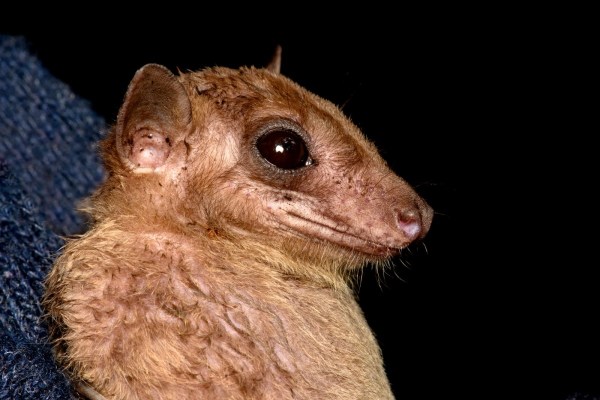 Leschenault’s rousette bat. (Photo: Nithin Divakar)
To catch them, researchers use a mist net, which consists of fine threads that are inconspicuous, especially in the dark. The net is usually 5-15 metre long and 2-8 metre wide, depending on the location of the catch site.
“We deploy the nets in foraging areas and wait for the bat to get entangled in one. We check the net every 15 minutes to see if a bat has become entangled. Once it does, we collect the bat and put it in a bag. We study it and release it later,” according to Chelmala.
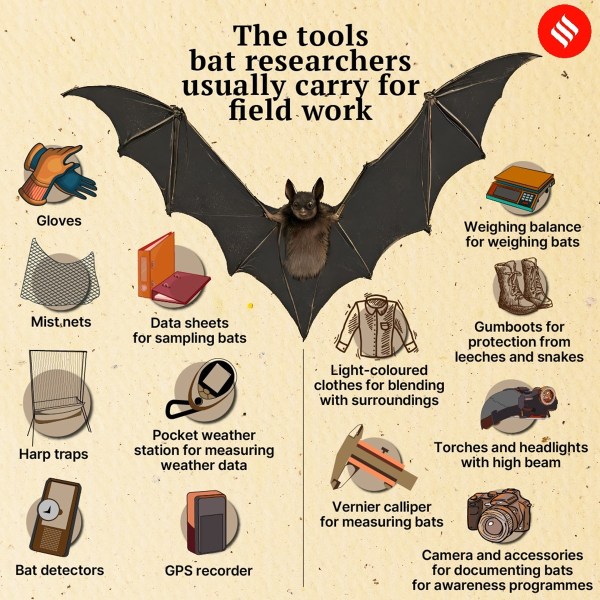 Credit: Angshuman Maity
Passive methods like bat detectors have become prominent only recently. These instruments can detect the ultrasonic sounds that bats use for echolocation — a physiological process for locating distant or invisible objects like prey through sound waves reflected by those objects. Bat detectors were available earlier too, but they cost up to Rs 8 lakh. Thanks to technological advancements, they can now be bought for as low as Rs 22,000.
“Bat detectors have become so cheap that I can download an app on my smartphone and attach one of them, just like your dongle, to the phone and study bats,” the professor says.
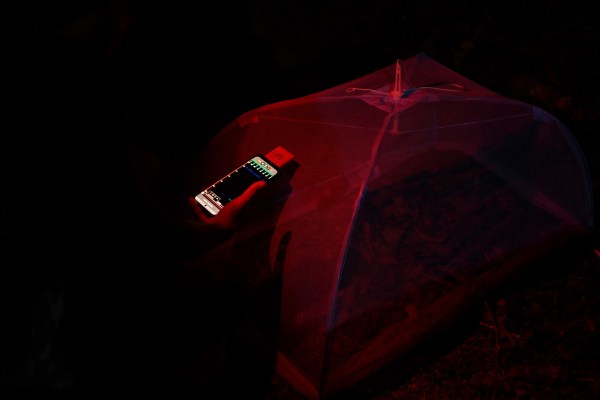 Passive methods like bat detectors have become prominent only recently. These instruments can be attached to mobile phones and detect the ultrasonic sounds that bats use for echolocation. (Photo: Nithin Divakar)
This has not only made research on bats easier for scientists, but also encouraged enthusiasts to contribute to the understanding of these animals.
As a result, there has been an increase in the number of bat researchers in the country. When Chelmala began his career more than two decades ago, there were barely 50 such researchers across South Asia. Today, India alone has more than 120 scientists who specialise in bats, he says. According to Bhargavi, the number of women researchers have also increased.
“When I started in 2003, there were just five women bat researchers, including me… Now, there are a bit more, say 10-15 women researchers,” she adds.
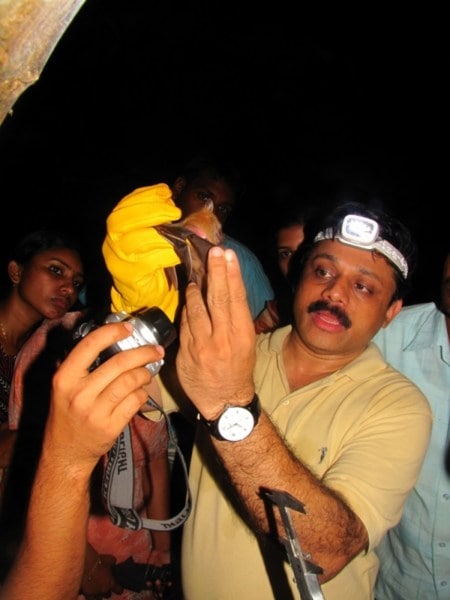 PO Nameer, the head of the Department of Wildlife Science at College of Forestry, Thrissur, says insect bats make our lives quite comfortable and their extinction would create a huge nuisance for humans. (Photo: PO Nameer)
Human encroachment, loss of habitat
Interest in bat research may have increased, but so have threats to these creatures — loss of habitat, global warming and human encroachment.
Bhargavi, who frequents dilapidated buildings, old temples and ancient caves like those in the Andaman and Nicobar Islands to study bats, says, “It’s usually very hard to reach the roosts to catch bats on field trips. We have to walk for miles through jungles, carrying heavy equipment. At times, these caves or spots have no bats, especially in human-dominated areas due to encroachment or other reasons.”
PO Nameer, the head of the Department of Wildlife Science at College of Forestry, Thrissur, says, “Fruit-eating bats play an extremely important role in seed dispersal and pollination. Trees and plants that are bad pollinators themselves depend on them. Insect bats feed on insects that are harmful to humans. Each insect bat can eat up to a hundred mosquitoes, which helps control vector-borne diseases.”
Stating that insect bats make our lives quite comfortable, he says if they become extinct, it would create a huge nuisance for humans.

 10 min read