Journalism of Courage



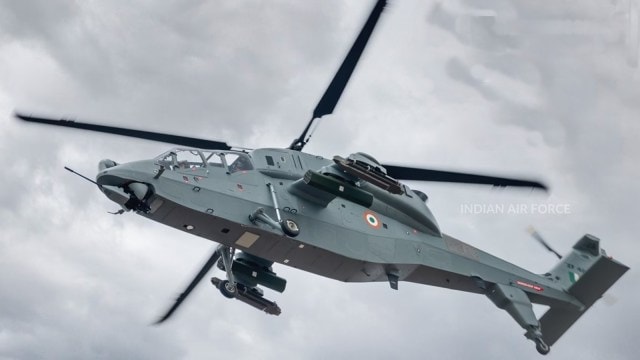 One squadron of Light Combat Helicopters has been inducted and more will be procured. (Image source: X/@IAF_MCC)
 THE ARMY plans to start replacing its old Chetak and Cheetah helicopters within the next three to four years with the indigenously-made Light Utility Helicopters (LUH) and other alternate helicopters which could be leased for a fixed period, according to officials familiar with the matter.
The entire process of replacing the Chetak and Cheetah helicopters is likely to take 10-12 years, they said.
The officials also said that the Army is looking to significantly ramp up its Unmanned Aerial Vehicle (UAV) fleet within the next five years with a range of new UAVs such as the Israeli Heron Mk 2 and Hermes Starliner among others, while also upgrading the existing fleet of Heron Mk 1 UAVs to make them satellite communication-enabled.
An official privy to the modernisation plans said the force requires 250 light helicopters for reconnaissance and surveillance activities. “We will buy the Light Utility Helicopters, but given the capacities that HAL has today, we have to look at alternate means to replace the entire Cheetah and Chetak fleet,” the official said, adding that the total technical life (overall lifespan) of the Chetak and Cheetah fleet will start getting over within three to four years. The helicopters have been the primary workhorse of the Indian Armed Forces.
“We are looking at a couple of other options such as leasing a few helicopters for a few years. Subsequently, if HAL can manufacture the numbers required, we might go for that too,” the official said, adding that the focus will remain on getting indigenous helicopters for the forces.
Around four months ago, the Army had published a Request for Information (RFI) to lease helicopters. The official said the Army has received several responses and is currently in the process of analysing them after which the Request for Proposal would be floated and other procedural issues will be completed. “We are hopeful of leasing a certain number of helicopters in the future.”
Talking further about the LUH, officials said the helicopter has been fitted with an auto pilot, the trials for which are going on and the first lot of the choppers are expected to be delivered by December 2024. Every year, around 30-35 such helicopters are expected to be manufactured all the three services.
THE ARMY Aviation's modernisation plan is critical and comes at the right time in the wake of its Chetak, Cheetah fleet nearing completion of their total technical life and a number of helicopter crashes in recent years. Considering all options, the Army has decided to replace them both with LUH and by leasing other alternate helicopters, with preference to indigenous platforms.
The official said that currently Cheetahs are the only helicopters that are operated at the Siachen glacier regularly with ease and there is no major issue with the chopper at present.
He said the LUH is a good helicopter and is 25-30 per cent better than the Cheetah in terms of load-carrying capability. The auto-pilot fitted LUH will have phenomenal load carrying capability in high-altitude areas and will be a good platform to replace Chetaks and Cheetahs.
On the planned inductions of other helicopters, the official said while one squadron of the Light Combat Helicopters for the Army has already been raised, the delivery of the rest of the helicopters is expected to start in 18-20 months. The Army is looking to procure 90 LCH, which will have the same weapon component as the Advanced Light Helicopter (ALH)-WSI called Rudra. The Army is also preparing to induct six Apache attack helicopters from the US early next year onwards under a February 2020 deal.
The choppers are planned to be deployed along the western borders. The IAF already operates 22 of these helicopters.
Talking about ramping up the Army’s UAV inventory in the next five years, officials said that while the Army has already bought four Israeli Heron Mk 2s and inducted them, it is also expecting the deliveries of Hermes Starliner early next year.
While both the UAVs would be satellite communication-enabled, the existing Heron MK 1 fleet is also being upgraded to make it satellite communication enabled. He said the Hermes Starliners are being manufactured in India at a Hyderabad facility and the ongoing war in Israel is unlikely to affect its delivery timeline.

 4 min read