Journalism of Courage



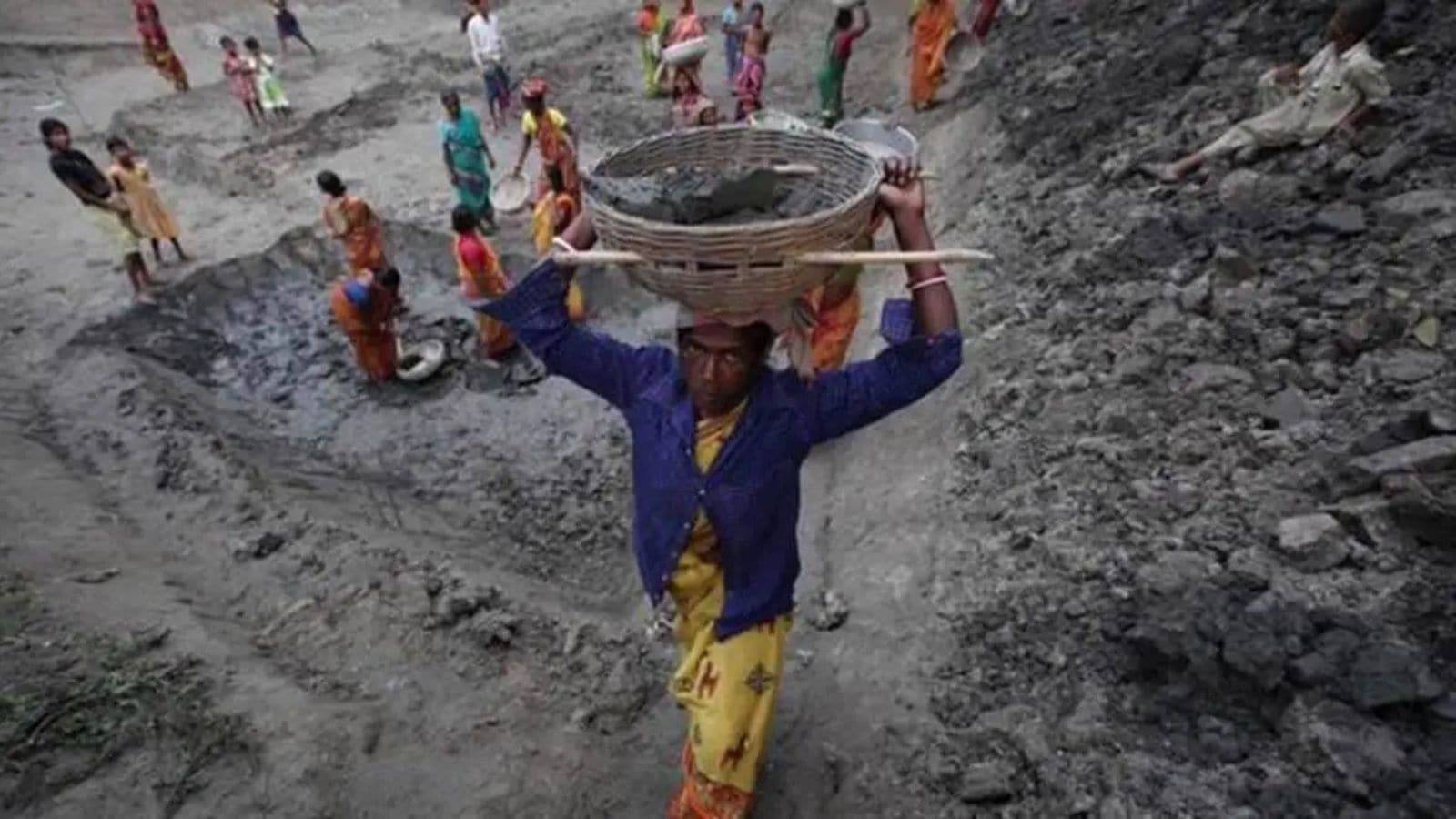 The NREGA was enacted in 2005, and was renamed by the then UPA government as Mahatma Gandhi National Rural Employment Guarantee Act with effect from October 2, 2009.
 THE government may finalise a revamp of the Mahatma Gandhi National Rural Guarantee Act and increase the number of guaranteed employment days to eligible rural households from 100 now to 125.
The Union Cabinet discussed the proposal to expand the scheme and also to change the name of the law itself to Pujya Bapu Rural Employment Guarantee Act, sources in the government said.
While the law guaranteed jobs for 100 days, the average days of employment provided per household under the scheme was just about 50 days in 2024-25. In fact, the number of households completing 100 days stood at 40.70 lakh last year. In the current financial year, only 6.74 lakh families have hit the 100-day ceiling.
The proposal comes on the back of an approval process already initiated by the government for continuation of the scheme in the Sixteenth Finance Commission awards which will be effective April 1, 2026.
In 2022, a committee constituted by the Ministry of Rural Development, which administers the MNREGS, was tasked to study the performance of states and issues related to the scheme’s governance. The committee had submitted its report last year.
The NREGA was enacted in 2005, and was renamed by the then UPA government as Mahatma Gandhi National Rural Employment Guarantee Act with effect from October 2, 2009. According to sources, the NDA government will have to amend the law to rename it and increase the number of guaranteed days of work to 125 from 100.
In the past, several states including Andhra Pradesh, Madhya Pradesh, Chhattisgarh and Rajasthan have been demanding from MGNREGA workers to raise the 100-day work ceiling. While states can provide work beyond 100 days, they have to fund it themselves, and very few do so.
Of the 290 crore person-days generated during the last financial year (2024-25), only 4.35 crore were generated by the states using their own budget. Among the states generating work from their own resources are Maharashtra, Chhattisgarh, Odisha, Himachal Pradesh, Kerala, Rajasthan, Madhya Pradesh and Telangana.
Under MGNREGA, every rural household, whose adult members volunteer to do unskilled manual work, is entitled to get at least 100 days of wage employment in a financial year.
Section 3 (1) of the MGNREG Act provides for “not less than one hundred days” work per rural household in a financial year. But it has become the de facto upper limit as the NREGA software does not allow data entries for employment above 100 days to a household in a year unless specifically requested by the State/UT.
The government, however, allows additional 50 days of wage employment (beyond the stipulated 100 days). For instance, every Scheduled Tribe household in a forest area is entitled to get 150 days’ work under NREGS, provided that such families have no other private property except for the land rights granted under the Forest Right Act, 2016.
Besides, the government, under Section 3(4) of the MGNREGA, can also provide an additional 50 days of unskilled manual work in a year, over and above the 100-day in such rural areas where drought or any natural calamity (as per Ministry of Home Affairs) has been notified
Since its inception in 2005, the MNREGA has generated 4,872.16 crore person-days and a total expenditure of Rs 11,74,692.69 crore has been incurred under the scheme.
Launched across India’s 200 most backward rural districts in 2006-07, the MGNREGS was extended to an additional 130 districts during 2007-08; and to the entire country from financial year 2008-09.
The scheme saw a spike in demand for work during 2020-21 when a record 7.55-crore rural families availed the scheme in wake of Covid outbreak. It became a safety net for migrants who returned to their villages during the Covid-19 lockdown in 2020.
Over the last four years, the number of families working under the MGNREGS has gradually dropped — 7.25 crore in 2021-22 to 6.18 crore in 2022-23, and 5.99 crore in 2023-24 and further to 5.79 crore in 2024-25. The last three financial years (2022-23 to 2024-25) do not include MGNREGS beneficiaries figures for West Bengal, where the scheme has been suspended since March 2022.
During the current financial year (2025-26), 4.71 crore families (6.25 crore individuals) have availed the scheme till December 12, 2025.
Recently, the MoRD circulated a proposal for continuation of the scheme for approval to the Expenditure Finance Committee (EFC), seeking an outlay of Rs 5.23 lakh crores for five years till 2029-30. The EFC is a central body that appraises government schemes and projects and it comes under the Ministry of Finance
When the UPA government had changed the name of the NREGA, it had said that the “association of the name of Mahatma Gandhi with National Rural Employment Guarantee Act, 2005 will reinforce the Act’s thrust towards equity and inclusiveness, specially of the deprived groups and socio-economically marginalised communities.”

 5 min read