16 min read


© The Indian Express Pvt Ltd



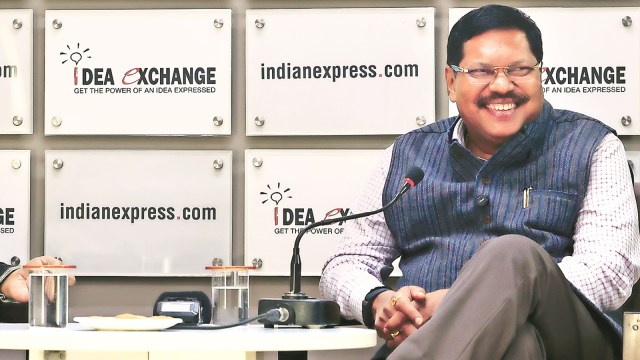 BR Gavai, former Chief Justice of India. (Photo by: Renuka Puri)
BR Gavai, former Chief Justice of India, on laying clear guidelines on bulldozer justice, relaxing the firecracker ban in the Capital and how there can never be a government veto in judicial appointments. The conversation was moderated by Ananthakrishnan G, Senior Assistant Editor, The Indian Express.
Ananthakrishnan G: How do you think the three institutions — Executive, Legislature and Judiciary — are trying to protect the Constitution and democracy today?
In April, one of the constitutional functionaries (former VP Jagdeep Dhankar) was saying that ‘Parliament is supreme and not the courts.’ I had said in many of my speeches that it is only the Constitution which is supreme and all three wings work under the Constitution.
Ananthakrishnan G: Could you tell us a bit about your growing-up years?
I come from humble beginnings. When I was born in 1960, my father had already devoted himself to the cause of the development of the downtrodden. He was associated with Dr Ambedkar. At that time, our financial condition was not that good. I started my schooling at a municipal school in a semi-slum area in Amravati. After that he was elected in 1964 to the Legislative Council, and in 1968, he became the Deputy Chairman. Thereafter, we shifted to Mumbai and I could get a better education. I completed law from Amaravati University and started practising initially in Mumbai and then shifted to Nagpur.
Ananthakrishnan G: Recently, some Benches said that there is no finality to Supreme Court (SC) judgements if one keeps on overruling them.
There is no question of finality to judgements. The framers of the Constitution said that it should not be a static document. It has to be organic, evolving and developing. One of the first judgements the SC delivered in the case Sankari Prasad Singh Deo vs Union of India and State of Bihar, the then Chief Justice HJ Kania said that the Constitution has to change itself to the situations as demanded by the socio-economic changes. Therefore, the law has been evolving and developing. The dissent of the ’70s has now become the majority’s views. Right from 1950 in the case of Sankari Prasad, then subsequently in the case of Sajjan Singh vs State of Rajasthan (1965), the law that was laid down was that Parliament has the authority to amend any part of the Constitution, including any fundamental rights… Thereafter, in the Golaknath case, the 11-judge bench held that the powers of the Parliament to amend the Constitution are restricted and it cannot be in a manner that will take away or breach fundamental rights. Subsequently in Kesavananda Bharati vs State of Kerala (1973), when a 13-judge bench was divided, where six said that Parliament’s powers to amend the Constitution are unlimited while the other six said that the Parliament’s powers are limited and that they cannot amend the Constitution where it breaches the fundamental rights, it was the 13th judge, Justice HR Khanna’s view that led to the Basic Structure Doctrine ruling that Parliament can amend the Constitution but cannot alter its fundamental, unamenable core, like democracy, secularism, and judicial independence. So the law has to evolve. The judges are only human beings. If an earlier judgment is found to be not in accordance with the law, there is nothing wrong in laying down the new law… It is nothing to be touchy about.
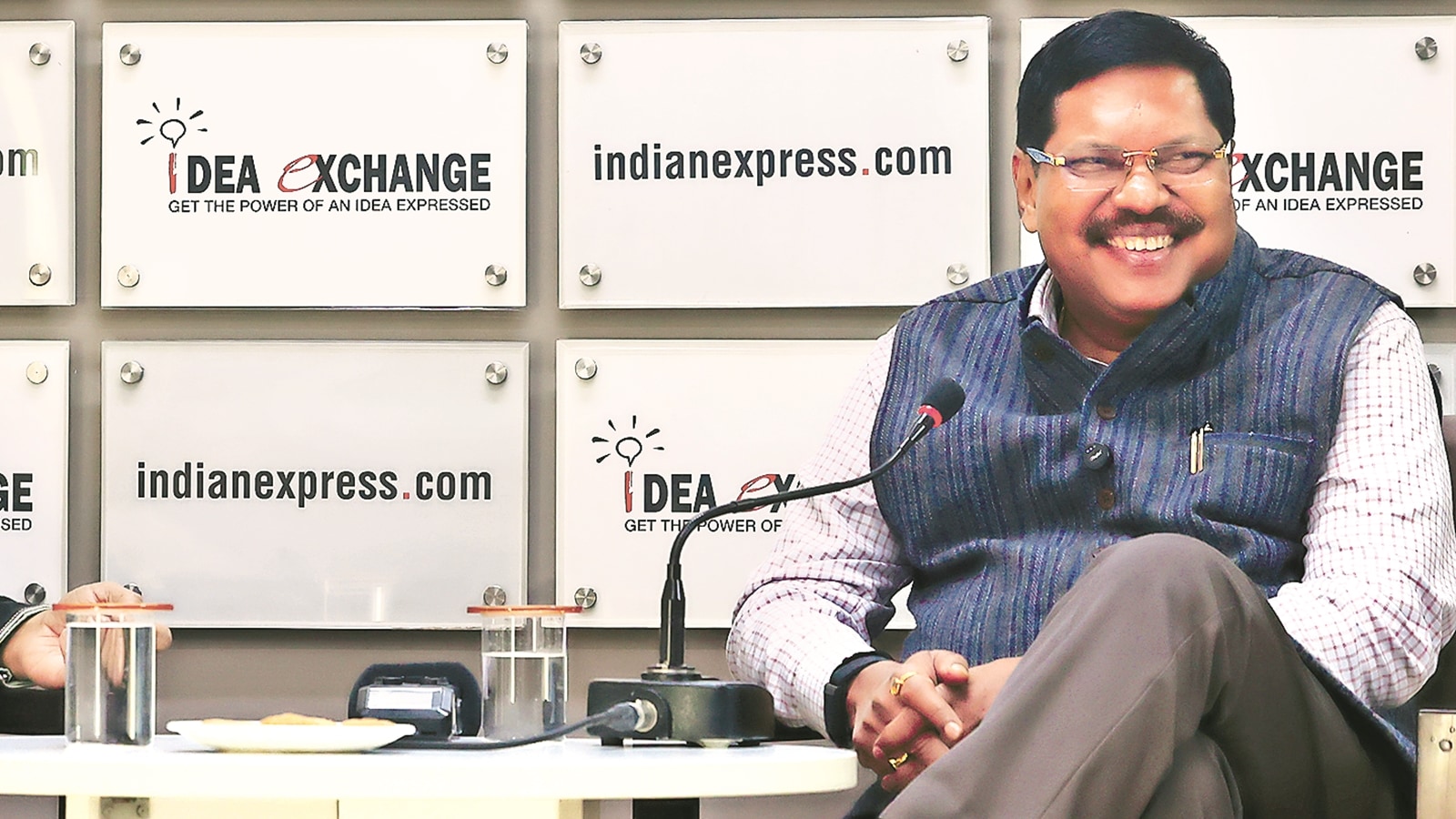 BR Gavai, former Chief Justice of India. (Photo by: Renuka Puri)
Vikas Pathak: About your judgement on bulldozer justice, are you satisfied with how things have panned out? Is the Executive sometimes still acting without due process?
We have laid down clear guidelines in that judgement about the procedure that needs to be followed if the Executive wants to go for demolition. If the Executive does not conform to it, it is clearly contempt of court. We had also laid down that if any officer violates the order, he/she would be personally held guilty of contempt and the government needed to reconstruct the demolished house and recover it from the salary of the officers.
Vikas Pathak: About the sub-classification of SCs and STs: you were part of the bench that reversed EV Chinnaiah’s position. Before Chinnaiah, Andhra Pradesh, Punjab and Haryana tried it. There was a lot of criticism and people said that it divides Dalits as a political entity while those in favour said that it deepened the representation. How do you look at that position today?
In Andhra Pradesh, a major part of the reservations provided for SCs was taken away only by one or two castes. In Punjab, the two castes were not at all being represented in the SCs. We have now completed over 75 years of freedom. The affirmative action or reservation is one of the facets of Article 14 which was developed through the case of NM Thomas vs State of Kerala (1976). It was held that equality does not mean equal treatment to everyone.
Equality means equal treatment to those who are equal and in the real sense it would mean giving unequal treatment to unequals.
The concept of affirmative action was that if somebody is already at 10 km, (and) due to social handicap, social backwardness, a person is at 0 km, then in order to provide him (latter) a speedier way, he is given a bicycle to reach the mark of 10 km. And once he reaches that 10 km, then he should equate himself with those already there. But what has happened over the past 75 years is that only certain castes reap the benefits. I have been very widely criticised for my judgement even from my own community. But a judgement has to be written as per the law and the Constitution. I also introduced the concept of creamy layer (for SCs). I was criticised that I was a Governor’s son and despite that, I took advantage of the reservation. Those allegations were made without reading the constitutional provisions. The Constitution does not provide reservation to any constitutional post.
Vikas Pathak: Could you elaborate on upholding the demonetisation judgement? It was criticised in terms of policy including by former PM and economist Dr Manmohan Singh.
The law is well settled in policy matters unless the policy is found to be palpably arbitrary, manifestly illegal or mala fide. So the scope of interference by courts was very limited. We found that there were no issues with the law. When you are scrutinising the policy with regard to economic matters, the scope is still narrowed. But it was decided purely on the questions of law, not on individual perceptions. And it was decided by a bench and the decision was 4:1.
On Judgements being overruled | There is no question of finality to judgements. The framers of the Constitution said that it should not be a static document. It has to be organic, evolving and developing
Story continues below this ad
Vineet Bhalla: In one particular case, you wrote a letter to one of the judges and then the judge said in the court that ‘because of the letter from the CJI, I am changing my judgement’. There have been criticisms of forum shopping and about lack of finality of SC’s judgements and that Article 141 is being weakened.
As for the first incident, it was an internal communication between the CJI and the concerned judge. Both the judges are constitutional functionaries. As the Chief Justice of India, you are not only first among the equals, but also the head of the judiciary in the country. I personally felt that it was my duty to protect the dignity, honour of the High Court judges, and therefore, it was only an internal communication. As far as the two judgments that you are referring to, when they came up for review, the judge had already retired, so there was only one judge. As CJI, you also have a responsibility to see that the law is settled. In the first matter, the Insolvency and Bankruptcy Code (IBC) was enacted in 2016. So from 2016 onwards, the law has consistently progressed. The wisdom of the Committee of Creditors (CoC) cannot be questioned, is the law which has been held right from the Swiss Ribbons case… So, if there are two conflicting judgments of equal strength, then it is more appropriate that the matter has to be heard by a three-judge bench. In a similar matter, in one court, you may get relief, in the other, you may not get relief. But as far as the final hearing matters and the laying down of the law is concerned, there has to be consistency…We have to adapt to the changing circumstances. No doubt that the law has to be consistent. But if the situation is demanding, the law has to be changed.
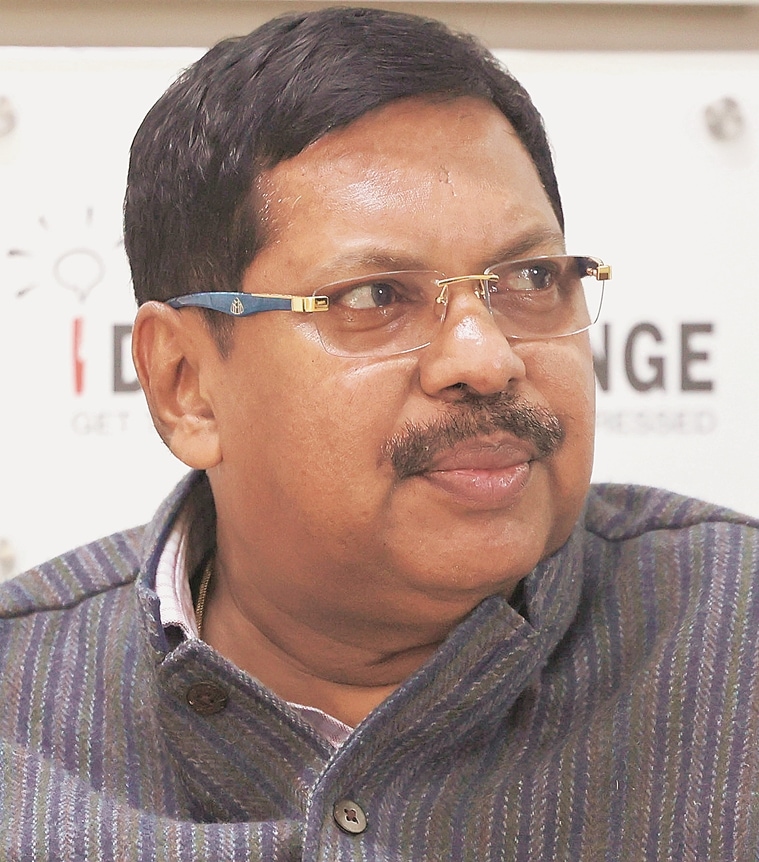 BR Gavai, former Chief Justice of India. (Photo by: Renuka Puri)
Vineet Bhalla: While you filled up many seats in High Courts, there were questions about some appointments made to the Bombay High Court. Three judges were supposedly close to you. Another was a former spokesperson of the BJP. Also, Collegium resolutions would mention the reasons behind transfers and appointments. Why has that stopped?
While making an appointment or transfer, we take various factors into consideration. Inputs from the government, the IB, the Law and Justice Department, then the chief ministers and governors are considered. Normally, two-thirds of the candidates are appointed from lawyers. So after the tentative observations, we get that for reason A or B, the person is not suitable. But putting that in the public domain — would it not amount to condemning somebody publicly? It may affect their practice. In order to bring greater transparency, during Chief Justice Sanjiv Khanna’s period, we introduced the system of interaction with the candidates.
On judicial favouritism | If somebody is related to a judge, that cannot act as a disqualification. We set a higher standard for such candidates. Neither did I participate in the proceedings of the enquiry nor was I part of the resolution
Story continues below this ad
As far as the two candidates close to me are concerned, one was distantly related, and the other was my chamber junior. If somebody is related to a judge, that cannot act as a disqualification if he is otherwise eligible. We set a higher standard for such candidates. Neither did I participate in the proceedings of the enquiry nor was I part of the resolution. As far as the spokesperson of BJP is concerned, just because you have a political background, it cannot be a ground for disqualification. I also have a political background. My father was a leader of the Republican Party of India (RPI). He was closely associated with Congress. I don’t think that in my 22 years of judicial career, my political ideology has affected my decision-making.
Ashish Shaji: Looking back at the shoe-throwing incident, when the highest court of the country can be attacked for expressing a view, how do you think a judge in the trial court passes judgments without fear?
This is not a norm. The litigants respect the institution and this was an aberration.
Shyamlal Yadav: What do you think of the representation of SCs/STs in the higher judiciary? Also, is reservation not able to play any role in eliminating caste discrimination?
The zone of consideration from where we get the candidates is limited. From the marginal communities, women have started practising in the higher courts. Out of the 96 appointments made during my period, there is a substantial representation for SCs and OBCs. We were also able to get some ST and nomadic tribe candidates appointed besides substantial representation to women. As and when the zone of consideration becomes wider and more candidates are available, the representation would be more. As long as there is politics, the caste system will remain.
Aakash Joshi: In the polarised times of today, when the perception of the court’s role as a guarantor of rights is less, how do you see the role of the higher judiciary, both in terms of being more scrutinised as well as having more responsibility?
Scrutiny should not affect the judges. They are answerable to their conscience. They have to decide as per the law, the Constitution. They are not supposed to decide on the basis of whether people will like their decision or not. Judges are watchdogs of the Constitution. They are expected to protect the rights of the citizens. Whenever the question of liberty came and whenever the misuse of the agencies was being done for political reasons, I have always frowned upon such things.
On Government’s push for NJAC | ‘The collegium system has worked well. With regard to the allegations of lack of transparency, we have tried to introduce interaction with the candidates. It is not as if the government views are totally neglected’
Monojit Majumdar: Where do you see the position on NJAC because the government is quite certain to make another push for it?
The collegium system has worked well. With regard to the allegations of lack of transparency, we have tried to introduce certain new things. We interact with the candidates. It is not as if the government views are totally neglected. Even after we recommend a name, if the government has concerns, we take those into consideration. As to what lies in the future, I cannot say.
Raj Kamal Jha: In the NJAC debate, how confident are you that there will never be a government veto in judicial appointments?
There can’t be. One of the basic structures of the Constitution — apart from the separation of three wings — is also the independence of the judiciary. If you go through the Constitution, Dr Ambedkar had emphasised that the judiciary has to be independent. So I don’t think that any such absolute thing would be permissible.
Raj Kamal Jha: When you have a strong government in terms of numbers, the Opposition often complains there are no strong checks and balances. Does a weak Opposition put the judiciary in a tighter spot than if there were a stronger Opposition?
I personally don’t think so. The judiciary has been discharging its duties, whether the Opposition is strong or not. A judge has to be independent. It is not necessary that every judgment he writes has to be against the government. The judges decide in accordance with the cases, in accordance with the law as they perceive and the Constitution. The right to liberty is stronger than the restrictions which are put in the statutes on the grant of bail. And personal liberty cannot be compromised… there shouldn’t be punishment without the trial. Whether the government is majoritarian or not, we decide in accordance with the law.
Monojit Majumdar: Regarding allegations of corruption or the errant behaviour of judges, there is impeachment or nothing. Do you think it is time to consider some other mechanism?
It can’t be on the judicial side because impeachment has been provided in the Constitution to ensure independence of the judiciary. But if Parliament finds that this is not sufficient, it’s always permissible to amend the Constitution.
Amaal Sheikh: You were in the bench that relaxed the firecracker ban in Delhi. Do you think the order overlooked the reality of pollution?
The court has been monitoring the issue for more than a decade. A three-judge bench in 2020, after considering all the aspects and reports, had permitted the use of crackers. Then a year later, the two-judge bench imposed a total ban. I always believe that when we pass the orders, the orders should also be practical. I live in the Lutyens’ zone, so when there was a total ban, I could hear the noise of the crackers. So, this time when the government of India and the Union of India requested the court that at least on a trial basis, it should be permitted, we permitted for a window of two days. We also directed that a study should be done of the AQI levels.
Aakash Joshi: What are your thoughts on post-retirement posts for judges. Does it raise some doubt about the motive of a judgement?
It depends upon individual perception. I was very clear from day one from the day I took oath as a judge of the SC that I will not be accepting any post-retirement assignment from the government.
Shalini Langer: An egregious example of bail being denied for long periods without hearing would be the Umar Khalid case. Do you think in some cases denial of bail has itself become a punishment?
There is a law I have laid down in the case of one of the politicians from Delhi. It is a detailed judgement which is law of the land unless it is reversed by a larger bench. But where individual cases are concerned, I can’t comment because they are pending before the SC.