© The Indian Express Pvt Ltd
 6 min read


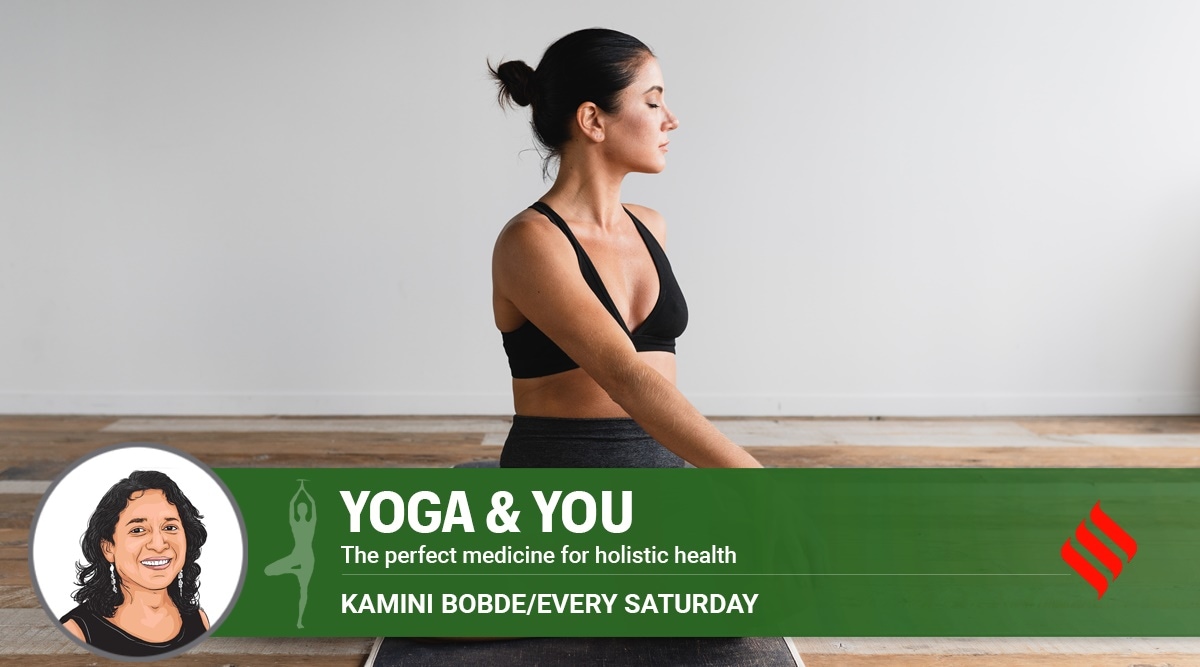 Belly fat has multi-dimensional negatives on your body and mind (Photo by Unsplash)
 Are you one of those who looks for their spectacles when they are hanging around your neck or tilted up your head? Or forgotten where you last kept your car keys? We all go through forgetfulness at some stage in our lives. Sometimes it is age-related, sometimes it could be because of a medical condition that we have or sometimes it could be the first indicator of dementia. Doctors recommend several therapies to boost memory and avoid slipping into fogginess like physical and mental exercises. But one of the best ways to up your memory game is yoga, which has a three-pronged programme.
1. Inverted asanas
2. Simple meditation practices for 5-10 minutes
3. Relaxation practices of 5 minutes
Inverted poses typically increase blood supply to the brain, which, due to our standing and sitting position for most part of the day, drains to the lower limbs due to the pull of gravity. This reduces oxygen supply to the brain, thus reducing its functioning capacity.
Stress drains more than 70 per cent of the blood from the frontal lobe, which is the centre for cognition, playing a major role in the memory process. Relaxation directly helps in better functioning of the brain’s capacity for cognition and retention.
Hippocampus is the memory weaver as it knits together sensory inputs with other disparate actions of the brain and makes it into a neural pattern which is then stored and retrieved as memory when stimulated. Researchers in Harvard have found that eight weeks of simple meditation resulted in cortical thickness of the hippocampus, resulting in better learning and memory. Earlier, it was thought you could never change the physiology of the hippocampus and it only shrank in size with age, resulting in decline in memory and in some cases in Alzheimer’s disease.
Memory is also a function of attention and being in the present moment. We have a tendency to jump around ceaselessly without reason, thus impacting attention and concentration, which are essential ingredients for good memory. Research has now established that even a few months of simple meditation reduces the activity of the “Me” brain. Meditators have increased grey matter, making it more powerful and efficient at processing information, increasing attention and managing emotions resulting in mindful choices.
Sarvangasana
· Lie down on your back with your head and spine in a straight line. Keep legs together and remain so in the whole practice. Keep your whole body aligned and relaxed.
· Place your hands next to your body with palms facing downward.
· Relax and mentally see yourself getting to the Sarvangasana posture.
· Tighten your stomach muscles, then with the support of your arms, slowly raise your legs to 90 degrees to your body.
· Then lift your body further up so that your whole body is resting on your shoulders. Simultaneously place your palms under your rib cage to give support to the body which is now vertical with the chin pressed against the chest and the whole body resting on your shoulders.
· To get back to the starting position, fold your knees and take your legs back over the head, then slowly lower your spine till your hips are resting on the mat. Then bring your legs down to starting position.
· This is one round but you can slowly extend the time of remaining in the final position with eyes closed and deep abdominal breathing.
Precautions: People with heart, BP, glaucoma and back problems should not do this asana.
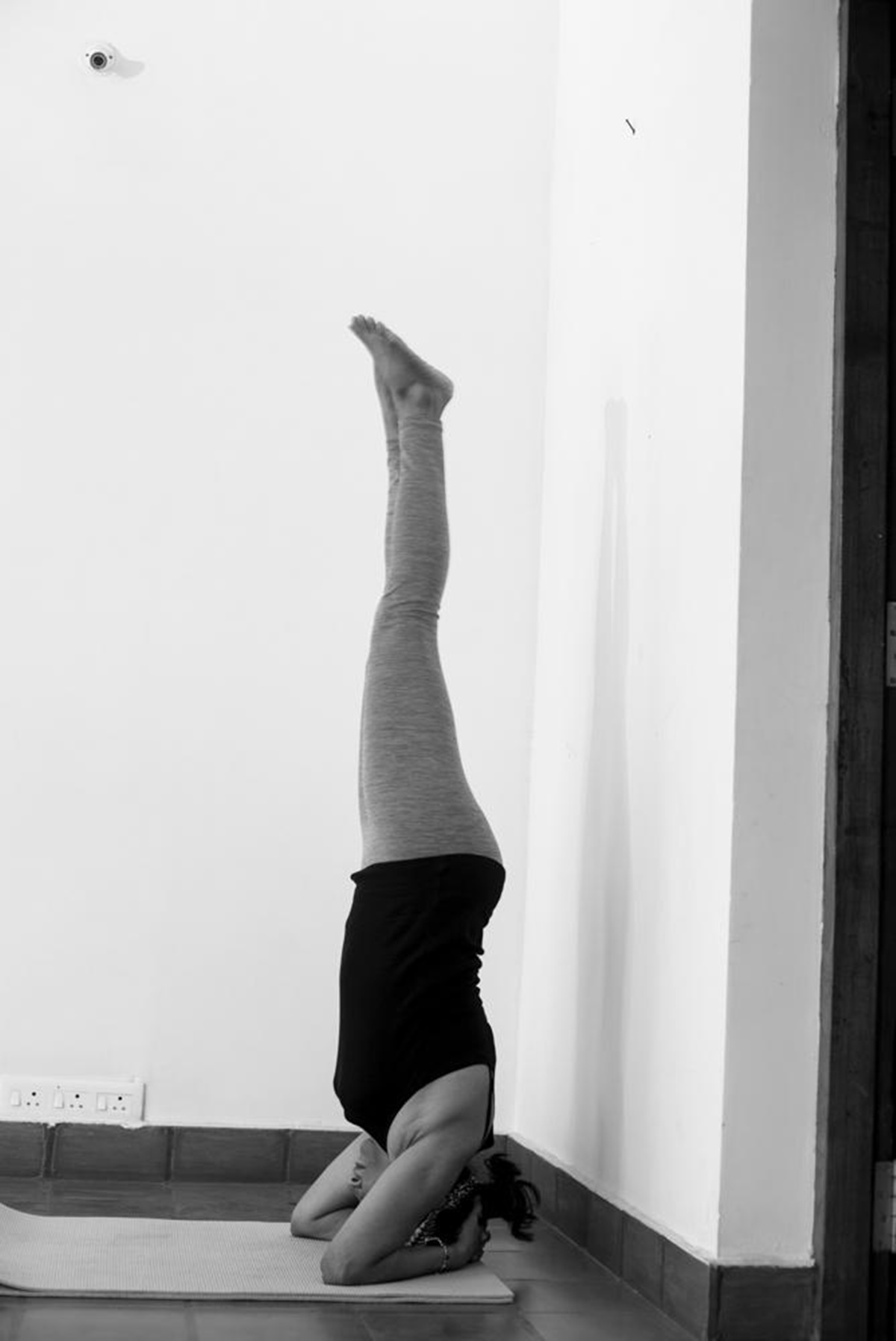 Research has now established that even a few months of simple meditation reduces the activity of the “Me” brain. (Photo by Kamini Bobde)
Sirshasana
1. Sit in Vajrasana, then bend down with folded forearms. Rest them on the ground and interlock your fingers and place them like two sides of a triangle. Then place your head on your hands. Balance your head.
2. Slowly lift the knees and glutes off the floor and straighten them.
3. For liftoff, bend the knees, keep the heels near the buttocks, and slowly straighten the hips so that the thighs are perpendicular to the floor. Straighten the knees and the calves till the entire body is vertical and in a straight line, balancing itself on your head.
4. Hold it for a short while unless you are an advanced level yoga practitioner to sustain it beyond a minute.
5. Slowly fold the legs and the thighs back and drop the legs to the ground.
6. Release the hand position and sit for a while.
7. Rest for a few minutes in Shavasana (Corpse Pose).
Precautions: People with heart, BP, glaucoma and back problems should not do this asana.
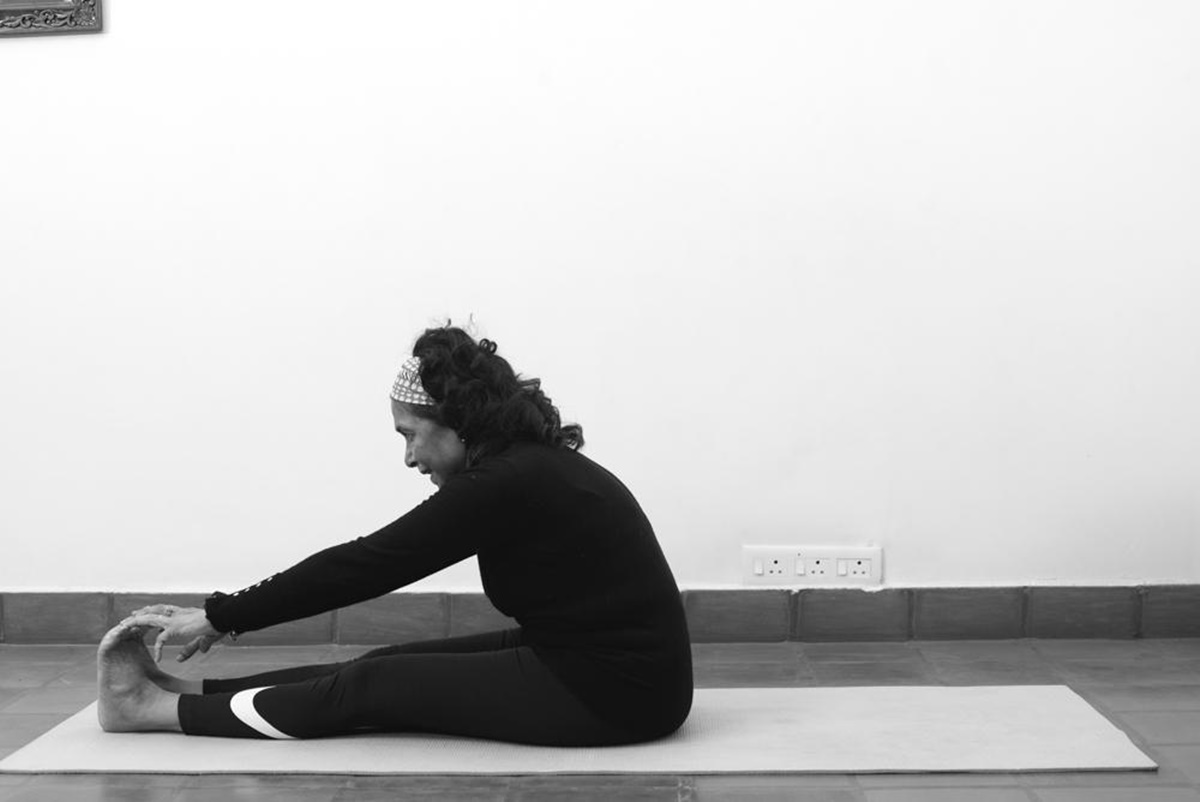 Memory is also a function of attention and being in the present moment.(Photo by Kamini Bobde)
Meditation
· Sit in Padmasana, Vajrasana or merely cross-legged. You may even sit on a chair with back support. Being comfortable and relaxed is of prime importance.
· Check that your head and spine are aligned and held straight.
· Gently close your eyes and keep them closed for the whole practice.
· Relax your whole body
· Take a deep breath, then as you exhale, internally or audibly chant A-A-U-U-M-M.
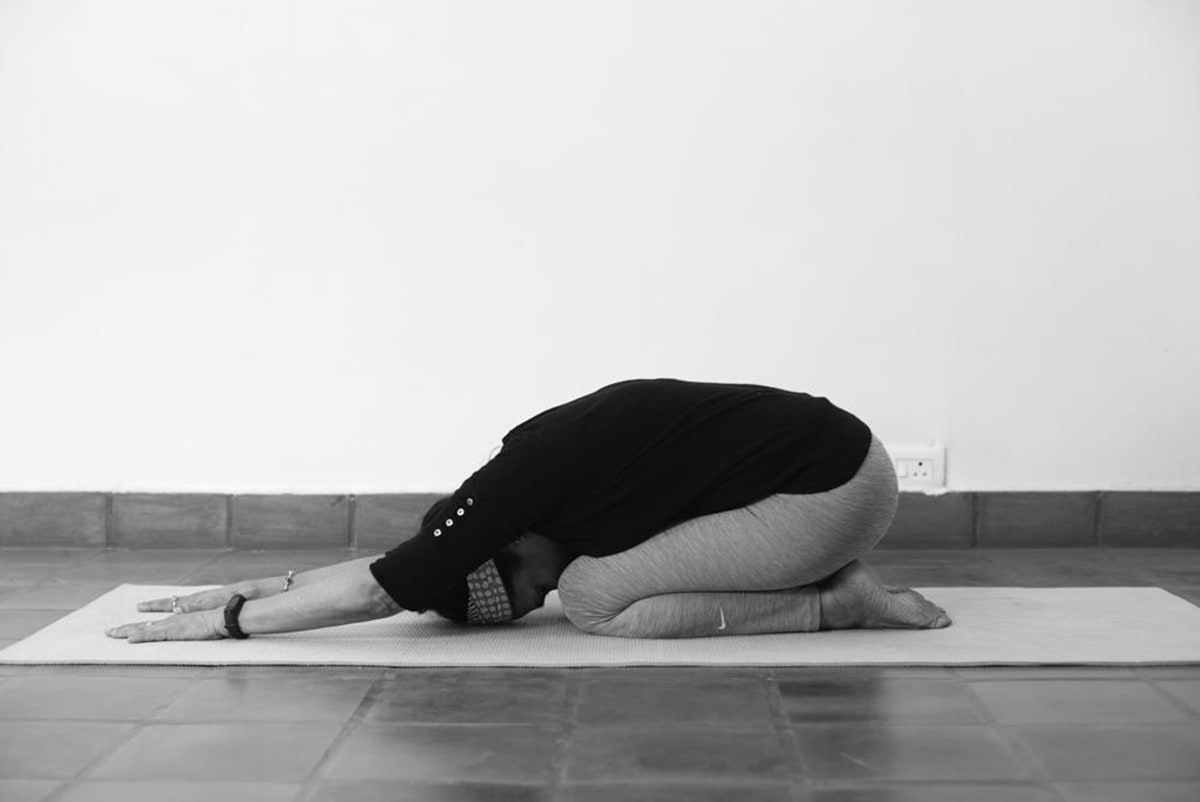 Meditators have increased grey matter, making it more powerful and efficient at processing information, increasing attention and managing emotions resulting in mindful choices.
· Alternately, another simple practice is with the words “So Hum.” With every inhalation, say “So” and with exhalation “Hum.” Or you may choose any other chant that you like.
Relaxation: Shavasana and Yoga Nidra.