5 min read


© The Indian Express Pvt Ltd



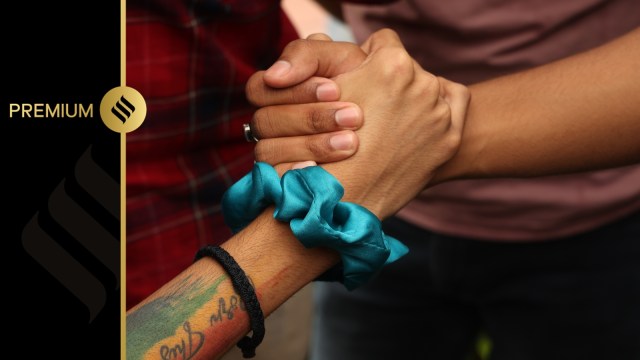 Sharad has signed up as a safe-sex counsellor across apps like Planet Romeo and Grindr. But his job, of winning confidence and trust, is the most difficult. (Express Photo by Tashi Tobgyal)
Twenty-five-year-old Sharad* swipes right the moment he reaches office. He engages with a random profile, chats them up, gets them comfortable and encourages them to move to a WhatsApp chat box for freer conversations. “I ask them about their sexual preferences and fantasies — this can help me understand whether they are participating in high risk sexual behaviours. If they are, I give them tips on how to bring down their risk of HIV infection,” says the counsellor with SafeZindagi, who connects with online daters across 587 cities.
Sharad has signed up as a safe-sex counsellor across apps like Planet Romeo and Grindr. But his job, of winning confidence and trust, is the most difficult. At a clinic in Central Delhi, he is one among eight counsellors on the SafeZindagi platform, which even encourages people to get home testing kits for HIV. “If their results are positive, I connect them to their nearest testing centre,” he adds.
With Phase V of the government’s National AIDS Control Programme advocating virtual interventions, peer educators like Sharad can blend in easily to keep the spread of HIV infection in check — and keep the numbers under control. Online dating has undoubtedly upped the risk of HIV among the group that has shifted from traditional spaces to virtual platforms which are difficult to track. Estimating the size of these groups and planning interventions to curtail the risk of HIV can be challenging. In India, five in a lakh people contract HIV every year, with nearly 25.4 lakh people living with it in 2023, according to a government report.
A BOX FULL OF BENEFITS
In northwest Delhi’s Sultanpuri, Anil* collects boxes of condoms for gay men and sex workers he has connected with online. While he uses the websites to date men himself, he also takes the opportunity to talk to them about HIV and other sexually transmitted infections. He is one of the 52 peer-educators with Deepshikha, the organisation that carries out such virtual intervention in partnership with the government. He has even created WhatsApp groups of people he connects with on apps to answer any questions they might have, direct them towards government testing centres and provide them with tools for safe sex. He encourages them to sign up for safelovers.com — a website developed in collaboration with the Delhi government that can assess a person’s risk of contracting HIV, provide online counselling, allow them to book an appointment at any of the government centres for testing and provide condoms.
SafeZindagi helps users access pre-exposure prophylaxis (PrEP) — medicines that can be taken by high risk individuals to prevent HIV infection. While this medicine is not available as part of the government programme, there is an increasing demand for it. “More and more people are now aware of PrEP and want it. In fact, with all the advocacy around HIV, it is heartening to see many on their dating profiles declare whether or not they are on PrEP and when they last got tested,” says Jalpa Thakker, programme director for ACCELERATE that runs SafeZindagi.
WHY ONLINE MANAGEMENT HAS AN EDGE
With an increasing penetration of smartphones and low-cost internet — bolstered by the pandemic that drove most activities online — organisations tasked with HIV prevention find it increasingly difficult to find defined physical spaces where they could earlier monitor people at higher risk of contracting HIV, such as sex workers and gay men.
“While dating apps were always available, their use shot up in the last five to seven years. In 2019, we started noticing that the traditional hotspots — such as red light districts, toilets, parks and railway stations — were emptying out. Then the pandemic hit and everything changed. Those who engaged in sex work went back home or moved online — there wasn’t much work in the physical space. Now, there are network operators who share the profiles of sex workers on WhatsApp, and after a video chat, agree to meet in a rented accommodation or hotels that you wouldn’t think were being used for sex work. So, we had to move with the target population,” says Thakker. The known physical haunts see only about 20 per cent of the traffic now, she adds.
With sex workers and sexual partners readily available online, Deepshikha’s counsellors have been answering queries and curiosities of young adults between the ages of 17 and 22. “Those who are gay or trans are extremely confused at this age; they get on the website to connect with others who feel like them and get a grip on who they want to become. When they do start having sex, they have no idea about sexually transmitted infections. One of the most common queries we get is regarding their gender identity. That clarity helps them trust us and our advisories,” says Tajuddin Khan, president, Deepshikha.
The organisation connects the virtual world to the physical one — it has a drop-in centre where youngsters can have conversations and share thoughts. They are even free to dress up as they please here, something they might not be able to do at their homes. “When we conducted a survey across these dating platforms in 2019, we found 15,000 people at high risk, who were not connected to any safe sex programmes. Now, people are talking more and the numbers are much higher,” says Khan.
(*Name changed to protect privacy)