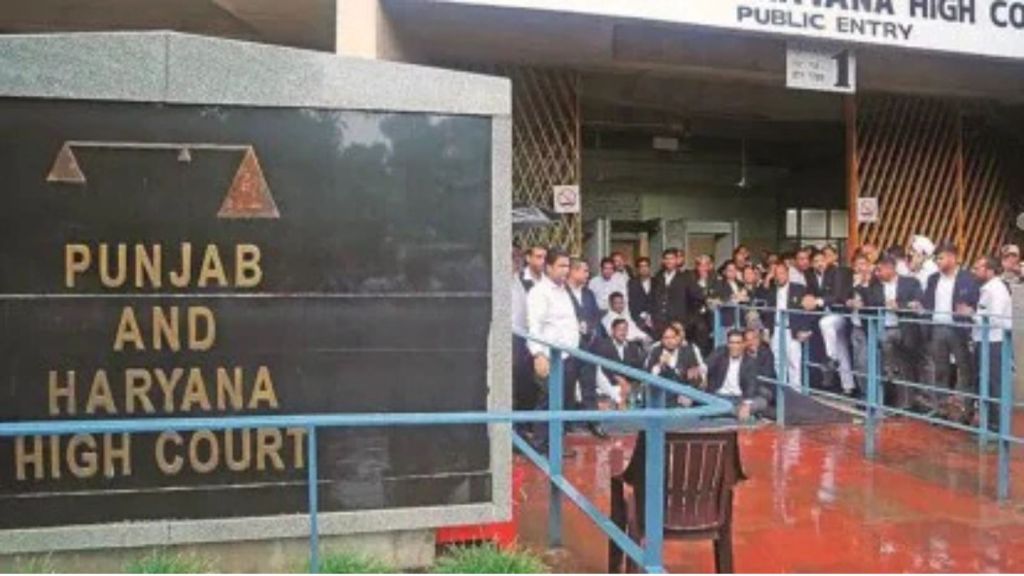
Citing the constitutional bar under Article 243 O and the self imposed restriction followed by courts once the election process has begun, the Punjab and Haryana High Court division bench of Chief Justice Sheel Nagu and Justice Sanjiv Berry on Thursday declined to interfere in a plea challenging the “arbitrary” rejection of nomination papers of over a dozen candidates in Dhariwal block. But the court added, “..this Court expects the Election Commission to deal with the representations of the petitioners in regard to the wrongful rejection of nomination papers of petitioners.” It said, “With the aforesaid hope and expectation, this petition stands disposed of without interference on merits of the case.”
Earlier in the day, the bench heard urgent arguments in the writ petition filed by the 18 candidates ahead of the December 14 Panchayat Samiti and Zila Parishad polls. Senior advocate A P S Deol, representing the petitioners, all affiliated with a Congress, accused election officials of succumbing to pressure from the ruling Aam Aadmi Party to clear the path for unopposed election.
.
The petitioners, including Atithpal Singh, Sucha Singh and others from villages across the block, had sought a direction to the State Election Commissioner to decide their representation at the earliest.

Deol highlighted the alleged wholesale rejection of nominations on the same ground, “illegal occupancy of village common land”, despite no prior notices of encroachment and despite No Objection Certificates issued by the Block Development and Panchayat Officer certifying eligibility. He said the Returning Officer Resham Singh and Assistant RO Karamjit Singh flouted mandatory provisions under Section 41 of the Punjab State Election Commission Act, 1994 and Rule 11 of the Punjab Panchayat Election Rules, 1994 by issuing “cyclostyled” one line orders without hearings, inquiries or reasons.
“This is not a rejection; it is a rejection factory,” Deol argued. “Eighteen candidates, all from one party, contesting on a common symbol, submitted complete papers with checklists and NOCs. The same BDPO who issued the NOCs a day earlier suddenly flips, citing letters from his own office claiming ‘illegal possession’. No khasra numbers, no documents, no opportunity, just a proforma stamp to obliterate opposition.”
In Dhariwal alone, Deol said that of 76 nominations across seven blocks, 25, over 30 percent, were rejected on identical grounds, leaving five blocks with single AAP candidates for unopposed wins. “What election is this? Please nip this misadventure in the bud.”
The petition, filed on December 8 under Articles 226 and 227, alleges that officials acted under a “pre conceived plan” of a ruling party functionary. A joint representation submitted on December 6 sought “stern departmental and criminal action” against the RO, Assistant RO and BDPO Kuljinder Singh for “tampering with nominations” and “slaughtering democracy at the grassroot level”.
Pointing out that the State Election Commissioner had not acted on their December 6 representation, Deol said election petitions filed post poll take years. “I have not seen a single one decided in five years.”
The bench repeatedly pointed to the constitutional bar that restricts judicial interference in electoral processes to post poll petitions. “There is a reason courts keep hands off, otherwise elections would never end,” Chief Justice Nagu observed while asking: “Is there an enabling provision for the State Election Commission to inquire? It has to operate within the four corners of the statute. You are not challenging the election; you are seeking pre poll relief. But Article 226 is not a parallel track unless it is a rarest of rare case of flagrant abuse.”
Deol countered. “Once in the fray, the right to contest is statutory, but arbitrary ouster violates Article 21. This is not isolated; it is systemic. In the 2024 Gram Panchayat polls, 187 writs exposed mass rejections; the court stayed processes despite state objections.”

 Senior advocate APS Deol, representing the petitioners, all affiliated with the Congress, accused election officials of succumbing to pressure from the ruling Aam Aadmi Party (AAP) to clear the path for unopposed victories. (Express Photo)



 Share


