4 min read
© The Indian Express Pvt Ltd



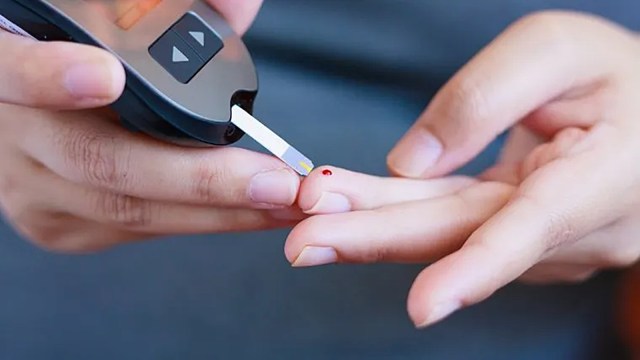 US FDA clarified that the devices it’s warning about are different from smart watches that merely show data from separate glucose monitoring tools. (File)
If you are living with diabetes, then do not get taken in by claims that futuristic smartwatches being developed by tech giants can replace needles and measure and monitor blood glucose continuously by sitting on the skin. The US Food and Drug Administration (FDA) has warned consumers against using smart watches or smart rings as both Apple and Google try to develop technologies for patients with diabetes to measure blood sugar without a finger prick.
Using those technologies to measure blood sugar “can lead to errors in diabetes management,” the FDA warned, adding an inaccurate measurement could result in an incorrect insulin dose or the use of medication that can rapidly lower blood sugar to dangerous levels, increasing the risk of a coma, mental confusion or death “within hours of the error.” The agency clarified that the devices it’s warning about are different from smart watches that merely show data from separate glucose monitoring tools.
WHAT THE TECHNOLOGY CLAIMS
Dr V Mohan, Chairman, Diabetes Specialities Centre, Chennai, says attempts at developing non-invasive glucose monitors are not new and have failed consistently. “Several years ago, a company called Cygnus had brought out a device called GlucoWatch to track blood glucose levels in the body non-invasively. It administered a small electrical charge into the wrist to bring glucose to the skin surface where it could be measured every 10 minutes. This process was called reverse iontophoresis, which uses electrical current to extract ions or other substances from the skin based on the electric field force,” he says.
The device, however, was discontinued in 2007 after users complained about its accuracy and skin irritation. A few years ago, Dr Mohan himself ran trials with similar devices. “The values were widely inconsistent and not reproducible. They were hugely erroneous and definitely not workable in humid countries like India where people tend to sweat a lot. It is due to the wide variation in glucose levels that the field went quiet for a few years till the tech majors again tried their hand at a smart device,” says he.
DANGER FOR PEOPLE WITH DIABETES
The consequences of using such unapproved devices could be serious, as erroneous blood glucose measurements could compel people with diabetes to take the wrong dose of insulin or other medications used to lower blood glucose. “For example, if your device reading shows high blood sugar levels, when in reality they are not, and you take insulin. It could lower blood sugar levels drastically beneath required levels, raising the risk of hypoglycaemia. That could lead to mental confusion, coma or death within hours. Similarly if the device indicates you have low sugar levels, when they might not be so, you would have excess carbohydrates, resulting in a high sugar surge,” explains Dr Mohan
The continuous glucose monitoring devices available at present are popular, wearable and measure glucose levels quite accurately. But there are snags in these too because they measure interstitial glucose and not blood glucose. “This is nothing but the rate of glucose diffusion from plasma to the interstitial fluid and the rate of glucose uptake by subcutaneous tissue cells. There is a time lag between the two of about 20 to 30 minutes. This time lag is becoming shorter in later versions of monitors and improvements. In fact, there is a documented court case in Toronto about a driver with Type 1 diabetes, whose CGM reading indicated normal sugar readings before he got into his car but 20 minutes later, he had a hypoglycemic reaction and ran over a pedestrian. Just a 20-minute gap affected his judgment. That’s why extreme caution has to be exercised before mainstreaming wearables,” says Dr Mohan.