3 min read


© The Indian Express Pvt Ltd



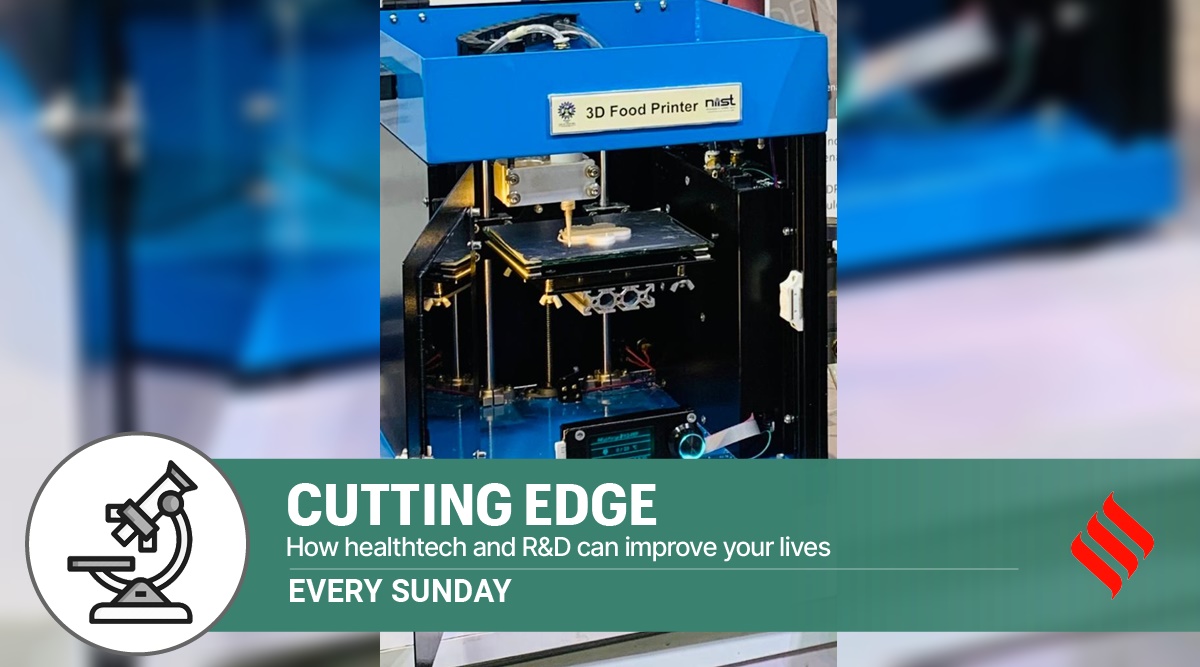 While the technology is currently in its initial phases and not ready to be marketed, a small 3D printing machine is expensive at the moment.
 Remember the cartoon Jetsons where a simple press of the button would dispense a tray full of food? It is no longer science fiction. A research institute in Thiruvananthapuram is working on different types of inks to 3D-print food items based on individual preferences — you can choose any shape, colour and most importantly their nutrient profile. That means customising their salt, sugar, fats, carbohydrate and protein content.
“Usually, 3D printers are used for producing construction materials or machine parts. The inks used for this are based on different types of fibres, plastics or concrete. For printing foods, we need edible ink, which is made from molecules derived from natural sources. Not only do we require inks for different food groups, we need to ensure they are printable and the layers can be deposited on top of each other for a stable form. For example, if the ink has high fibre content then it is likely to print materials that are brittle,” says Dr C. Anandharamakrishnan, who is heading the project and director of the CSIR-National Institute for Interdisciplinary Science and Technology. His team has already created inks of rice starch, millet carbohydrates, egg proteins and chocolate. Their 3D printer is now capable of producing noodles from vegetable refuse. “At the end of the day, noodles are carbohydrates and you can find carbohydrates in vegetable waste such as potato peels. The machine just uses these to print the noodles,” he explains.
The pride of the team, however, is the vegan or the mock meat, which uses ink from vegetable proteins to replicate the flavours of meat and fish. “Not only would the 3D-printed food taste like meat, it would also have its texture. A person eating it would feel he is having the real thing when it will mostly be plant proteins. While many have worked on meat, we are one of the few to attempt fish,” says Dr Anandharamakrishnan. The 3D-printed fish will contain high levels of Omega-3 fatty acids like normal fish, which are needed for our eyes, the brain and the heart. Since the body does not produce Omega-3, it has to be sourced from food. So you can create a nutrient-dense animal protein.
https://www.youtube.com/shorts/JLiuoqWJfaQ
Dr Anandharamakrishnan says the 3D printers can be installed at homes and cafes. “A family of four can eat different foods without too much effort. Some can even be shaped like cartoon characters to make the dish interesting for children,” he adds.
While the technology is currently in its initial phases and not ready to be marketed, a small 3D printing machine is expensive at the moment, costing around Rs 1 lakh. Working on different inks for 3D printers, Dr Anandharamakrishnan’s team is experimenting with 4D printing. “This will print foods in sheets that acquire the needed shape when cooked. For example, you can print fusilli pasta as plain sheets but when you boil them in water, they would spring up in coils,” he says. This will ease packaging and transporting of foods.