3 min read

Journalism of Courage



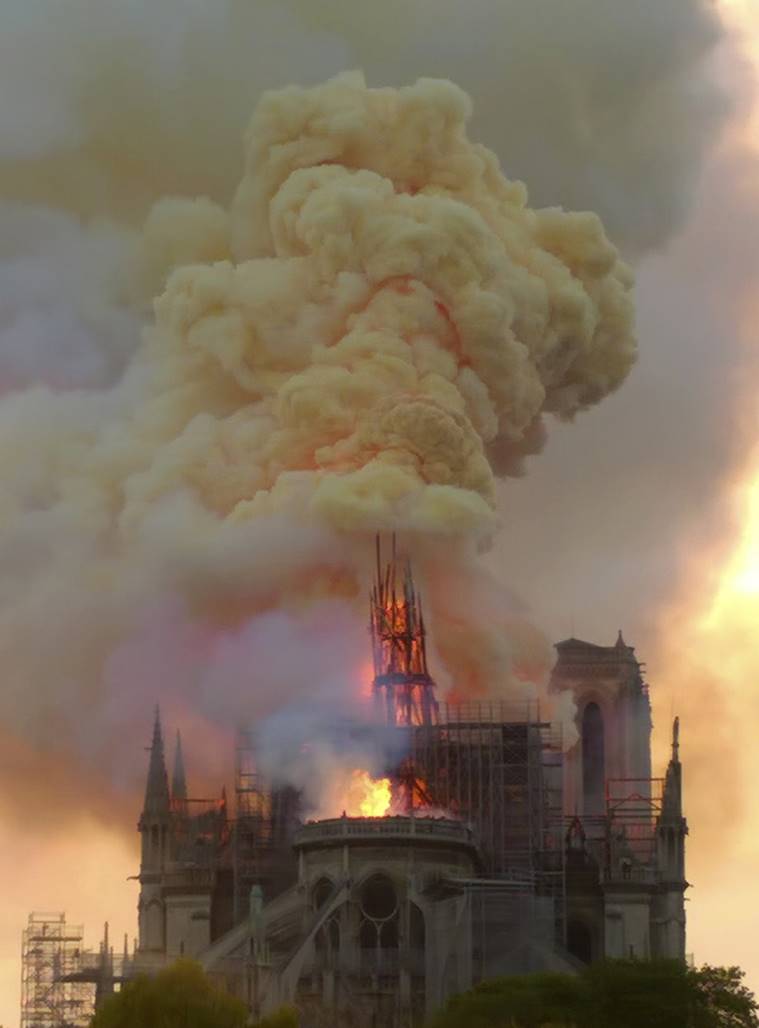 Fire safety procedures at Notre Dame were premised on assumptions that were proved grotesquely wrong — and that the reaction time for the emergency was far too long (AP)
A week after the devastating fire that wrecked the 850-year-old jewel of Paris and triggered a global outpouring of grief, it is evident that peculiarities of structure and construction made the cathedral especially vulnerable. Also, that fire safety procedures at Notre Dame were premised on assumptions that were proved grotesquely wrong — and that the reaction time for the emergency was far too long
Inaccessible, Inflammable: Structural features and architecture of cathedral made fighting the fire difficult
Vaulted stone ceiling prevented firefighters from shooting water up into the attic from within. Lead roof of attic may have hindered access further; firefighters may’ve had to wait until lead panels were burnt through before they could start spraying water from above. Attic structure was enormous, complex, made of extremely dry, super inflammable wood.
Giant oak beams were entangled with each other in a ‘forest’ that was near impossible to enter. And because preservation designers didn’t want to mutilate wood by cutting it, they put no fire walls.
Express Explained | Notre-Dame – architectural marvel and most important witness of French history
Underestimation of risks from fire: Prevention and detection of fire was the focus; keeping the Notre Dame ‘original’ the mantra
Officials had misjudged the speed with which a blaze, once ignited in the attic, would spread. According to the top architect who oversaw the fire protections, the system had assumed that the ancient oak timbers would burn slowly, leaving time for firefighting action; what actually happened was, therefore, “incomprehensible” (right). A conservative bias towards preserving the beautiful historic structure unaltered ensured that sprinklers or fire walls were not installed in the attic; the mantra, instead, was prevention and detection of fires.
Read | Notre-Dame’s famed rose window spared but blaze harms priceless artworks
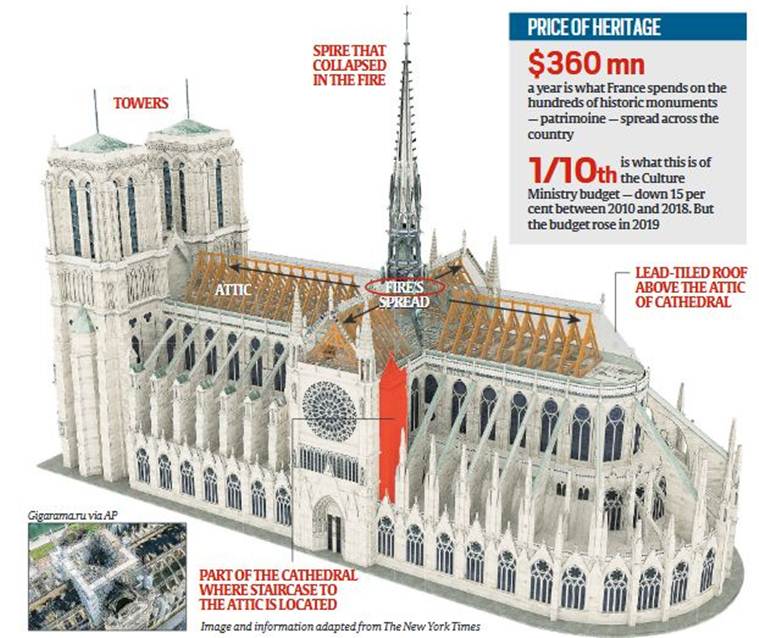
Built-in delay in response time: As per the emergency drill, staff had to complete — twice — 6-minute climb to the attic before calling fire services
6.20pm: First Alarm went off
A fire security agent alerted church staff. A guard started to climb the steep staircase to the attic to have a look.
6.26 pm: A full six minutes later
Guard reached attic, but found no fire. Climbed down, reached the ground after several minutes, announced all was well.
6.43 pm: Second alarm went off
Just as cathedral was closing to visitors, alarm rang again. The fire had likely been burning for well over 20 minutes then.
6.49 pm: a race Back to the attic
Two staffers who climbed up this time found a big fire. Hurrying down, realised they’d locked door; had to go back up.
6.51 pm: Call for help, finally
Fire department was called in. Smoke and flames were clearly visible by then.