Premium

What is MP’s Simhastha Land Pooling Policy and why was it revoked

This week, the Madhya Pradesh government revoked the proposed land pooling scheme in Ujjain following farmer pushback. We explain everything about the scheme and its aftermath.

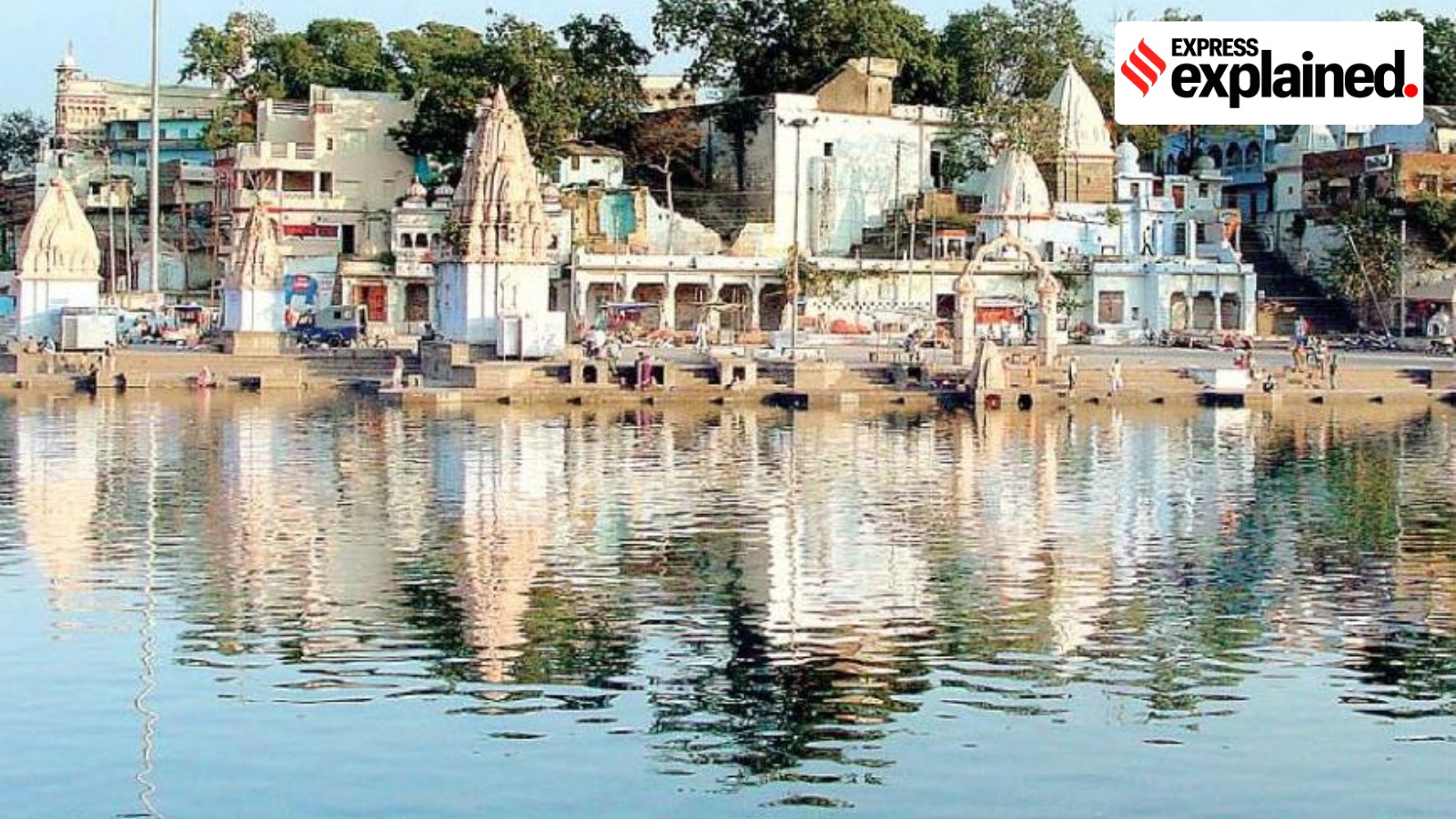
The policy aimed to pool government and private land so the government could build permanent roads, utilities, sanitation, and large-scale facilities for the massive influx of devotees during the decennial Simhastha mela. (Source: Wikimedia commons)The policy aimed to pool government and private land so the government could build permanent roads, utilities, sanitation, and large-scale facilities for the massive influx of devotees during the decennial Simhastha mela. (Source: Wikimedia commons)

Earlier this week, the Madhya Pradesh government revoked the proposed land pooling scheme in Ujjain, aimed at permanently acquiring thousands of hectares of land to build infrastructure for the Simhastha Kumbh Mela, 2028.

A major land acquisition initiative by the Madhya Pradesh government, the Simhastha land pooling policy was withdrawn after widespread farmer protests and political backlash. Here’s what it was.

Simhastha Land Pooling Policy – key provisions

The policy aimed to pool government and private land so the government could build permanent roads, utilities, sanitation, and large-scale facilities for the massive influx of devotees during the decennial Simhastha mela.

The policy targeted pooling between 2,376 and 3,360 hectares of land in all, of which approximately 850 hectares was government land and the rest private agricultural land from about 1,800 farmers. The goal was to convert this area into a permanent “mega city” for Simhastha festivities.
Farmers who participated in land pooling would retain ownership of 50 percent of their land in a consolidated, developed form with access to wide roads and infrastructure.

The other 50 percent would be used for public infrastructure development, and the government would compensate farmers at market rates for this portion.

For farmers who did not consent to pooling, an alternative scheme was proposed for land acquisition with double compensation. Until construction started, farmers could continue cultivating their land.

Why was the policy revoked

The biggest reason for the scheme’s failure was steadfast opposition led by farmer groups such as the Rashtriya Swayamsevak Sangh-affiliated Bharatiya Kisan Sangh.

Story continues below this ad

Farmers’ organisations saw the policy as an attempt to grab land to disproportionately benefit the government and developers. Specific objections included the loss of permanent ownership of ancestral land and perceived unfairness in the compensation and redistribution of land.

Escalating protests, including a threatened indefinite “derao Andolan” or sit-in agitation, created immense political pressure. With protests intensifying, the government is believed to have capitulated on all fronts to avoid broader unrest before the start of the Simhastha preparations.

The aftermath – stalled infrastructure projects

Even though the local administration is still working out the fine print of how to build the temporary city, the revocation threatens to put several projects on hold.

This includes plans for 60-, 80-, and 200-feet roads across the Simhastha area for crowd management, underground water pipelines, electricity poles, and modern sewage lines. Meanwhile, infrastructure projects for hospitals, schools, parking facilities, and public parks in the Simhastha zone are cancelled.

Story continues below this ad

Instead, like in past Simhastha festivals, authorities will now work on infrastructure requiring voluntary and temporary land use — tents, sheds, temporary roads, and event-focused facilities.

“The priority is to develop temporary infrastructure which can accommodate the huge crowds,” one government official said. “Our team will study the UP Maha Kumbh infra projects to make this project a success.”

How will crowd management be ensured without permanent land acquisition

Like with this year’s Mahakumbh mela at Prayagraj, the local administration is expected to leverage temporary but robust practices and technology.

These include sturdy moveable barriers, fencing, ropes, and dividers to “create designated lanes, control crowd flow, and prevent surge points”.

Story continues below this ad

“The main aim to prevent a stampede. We are also working towards use of real-time monitoring tools such as CCTV cameras, drones, crowd density sensors, and AI-based analytics to oversee large groups, identify congestion points,” the official said.


Anand Mohan J is an award-winning Senior Correspondent for The Indian Express, currently leading the bureau’s coverage of Madhya Pradesh. With a career spanning over eight years, he has established himself as a trusted voice at the intersection of law, internal security, and public policy. Based in Bhopal, Anand is widely recognized for his authoritative reporting on Maoist insurgency in Central India. In late 2025, he provided exclusive, ground-level coverage of the historic surrender of the final Maoist cadres in Madhya Pradesh, detailing the backchannel negotiations and the "vacuum of command" that led to the state being declared Maoist-free. Expertise and Reporting Beats Anand’s investigative work is characterized by a "Journalism of Courage" approach, holding institutions accountable through deep-dive analysis of several key sectors: National Security & Counter-Insurgency: He is a primary chronicler of the decline of Naxalism in the Central Indian corridor, documenting the tactical shifts of security forces and the rehabilitation of surrendered cadres. Judiciary & Legal Accountability: Drawing on over four years of experience covering Delhi’s trial courts and the Madhya Pradesh High Court, Anand deconstructs complex legal rulings. He has exposed critical institutional lapses, including custodial safety violations and the misuse of the National Security Act (NSA). Wildlife Conservation (Project Cheetah): Anand is a leading reporter on Project Cheetah at Kuno National Park. He has provided extensive coverage of the biological and administrative hurdles of rewilding Namibian and South African cheetahs, as well as high-profile cases of wildlife trafficking. Public Health & Social Safety: His recent investigative work has uncovered systemic negligence in public services, such as contaminated blood transfusions causing HIV infections in thalassemia patients and the human cost of the fertilizer crisis affecting rural farmers. Professional Background Tenure: Joined The Indian Express in 2017. Locations: Transitioned from the high-pressure Delhi City beat (covering courts, police, and labor issues) to his current role as a regional lead in Madhya Pradesh. Notable Investigations: * Exposed the "digital arrest" scams targeting entrepreneurs. Investigated the Bandhavgarh elephant deaths and the impact of kodo millet fungus on local wildlife. Documented the transition of power and welfare schemes (like Ladli Behna) in Madhya Pradesh governance. Digital & Professional Presence Author Profile: Anand Mohan J at Indian Express Twitter handle: @mohanreports ... Read More


 

Latest Comment
Post Comment
Read Comments
Advertisement
Advertisement
Advertisement
Advertisement