Premium
This is an archive article published on January 25, 2019

Crocodylus palustris, a crocodile species that is being removed from the Narmada

Already extinct in Bhutan and Myanmar, the mugger has been listed as vulnerable on the IUCN Red List since 1982.

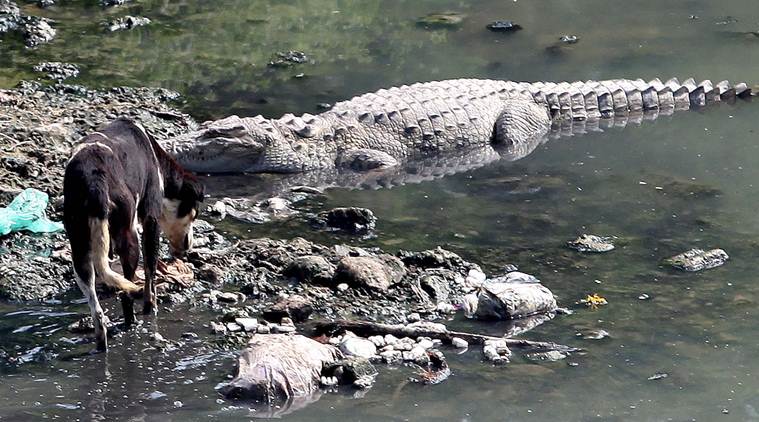
Crocodylus palustris, a crocodile species that is being removed from the Narmada A mugger crocodile on the Vishwamitri riverbank in Vadodara. (Express Photo by Bhupendra Rana/Archive)

The mugger crocodile, also called marsh crocodile or broad-snouted crocodile, is a species (Crocodylus palustris) native to freshwater habitats from southern Iran and Pakistan to the Indian subcontinent and Sri Lanka. It has come to the centre of renewed attention in Gujarat, where the Forest Department has started evacuating muggers from two ponds on the Sardar Sarovar Dam premises on the Narmada, to facilitate a seaplane service at the Statue of Unity.

Already extinct in Bhutan and Myanmar, the mugger has been listed as vulnerable on the IUCN Red List since 1982. In India, it is protected under Schedule I of the Wildlife Protection Act, 1972. Among the six schedules in the Act, Schedule I and part II of Schedule II provide the highest degrees of protection to listed species, with the most stringent penalties for offenders.

For animals listed in Schedule I, any of kind of population control activity, capture for captivity, or transportation can involve cumbersome processes. A wildlife expert said: “Any activity involving the animal, technically require permits and sanctions from multiple authorities. It is a tedious process that involves a chain of paperwork, and permissions.

This includes even transportation of crocodiles. So its relocation or capture is definitely illegal without permission. However, state governments have the authority to give permissions in some situations where they become a danger for the human population.”

Vadodara, 90 km from the Narmada dam, is the only city in the country where crocodiles live in their natural habitat amidst human population. Crocodiles from the Vishwamitri river, where they number around 300, often enter people’s homes, giving rise to conflict and capture. Most of these crocodiles are thereafter released in the Narmada dam waters, away from human habitats.

Experts say crocodiles were listed under Schedule I not because of the fear of extinction but to prevent their trade. Crocodiles are valued for their skin and flesh. In some cases, they are also worshipped, including in the Narmada. In idols of the Narmada Goddess, a crocodile is her vehicle; there is an idol on the premises of the Narmada Dam. Goddess Khodiyar Maa, who is worshipped by a section of Gujaratis, is also seen riding a crocodile as a symbol of her supremacy over land and water.

Aditi Raja is an Assistant Editor with The Indian Express, stationed in Vadodara, Gujarat, with over 20 years in the field. She has been reporting from the region of Central Gujarat and Narmada district for this newspaper since 2013, which establishes her as a highly Authoritative and Trustworthy source on regional politics, administration, and critical socio-economic and environmental issues. Expertise: Core Authority & Specialization: Her reporting is characterized by a comprehensive grasp of the complex factors shaping Central Gujarat, which comprises a vast tribal population, including: Politics and Administration: In-depth analysis of dynamics within factions of political parties and how it affects the affairs in the region, visits of national leaders making prominent statements, and government policy decisions impacting the population on ground. Crucial Regional Projects: She consistently reports on the socio-economic and political impact of infrastructure projects in the region, especially the Statue of Unity, the Sardar Sarovar Project on the Narmada River, the Mumbai-Ahmedabad High Speed Rail bullet train project as well as the National Highway infrastructure. Social Justice and Human Rights: Her reporting offers deep coverage of sensitive human-interest topics, including gender, crime, and tribal issues. Her reports cover legal proceedings from various district courts as well as the Gujarat High Court (e.g., the Bilkis Bano case remission, POCSO court orders, Public Interest Litigations), the plight of tribal communities, and broader social conflicts (e.g., Kheda flogging case). Local Impact & Disaster Reporting: Excels in documenting the immediate impact of events on communities, such as the political and civic fallout of the Vadodara floods, the subsequent public anger, and the long-delayed river redevelopment projects, Harni Boat Tragedy, Air India crash, bringing out a blend of stories from the investigations as well as human emotions. Special Interest Beat: She tracks incidents concerning Non-Resident Gujaratis (NRIs) including crime and legal battles abroad, issues of illegal immigration and deportations, as well as social events connecting the local Gujarati experience to the global diaspora. ... Read More


 

Latest Comment
Post Comment
Read Comments
Advertisement
Advertisement
Advertisement
Advertisement