Journalism of Courage
 3 min read


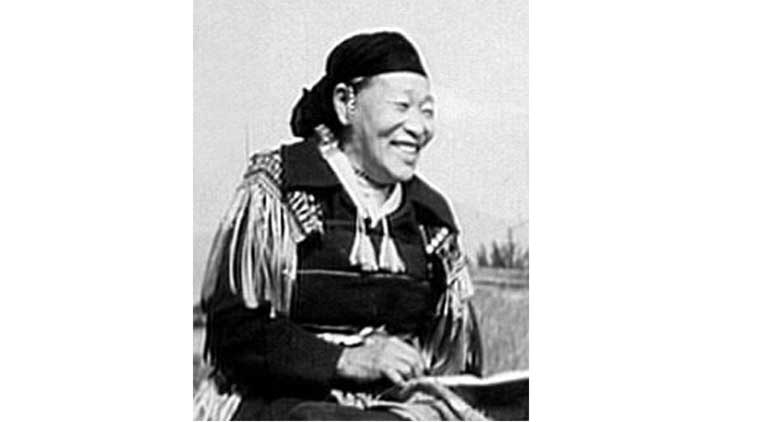 Gaidinliu fought the British, and spent many years in prison. (Source: Wikimedia Commons)
Several civil society groups and tribal bodies, and some Naga rebel organisations, are opposing the construction of a library-cum-memorial museum in Kohima to mark the birth centenary of Rani Gaidinliu, a yearlong celebration that Prime Minister Narendra Modi inaugurated in Delhi last month.
Modi had said Gaidinliu’s struggle for the Naga people against the British was also a struggle for India’s freedom, unity and integrity — many Naga groups, however, see her as being anti-Naga, especially because she had allegedly opposed the Naga national movement for a sovereign state.
Spearheading the opposition is the Angami Public Organisation (AYO), which has submitted a memorandum to Nagaland Governor P B Acharya, saying it was upset over the status and recognition accorded to Gaidinliu, more because the government was trying to “impose” her legacy on the Nagas.
[related-post]
It has also opposed a statue of Gaidinliu at the proposed Memorial Hall at Kohima, saying Angami Nagas did not venerate human idols, which were alien to their traditions.
Gaidinliu, who belonged to the Zeliangrong tribe — a conglomeration of the Zeme, Liangmei and Rongmei tribes that she created — was born in Luankau, 200 km west of Imphal, and worked across three states to raise an army to resist the British, while also trying to protect her three communities from conversion. Most Zeliangrongs follow Heraka, a faith that the Sangh Parivar now claims is part of the larger Hindu family.
When the British hanged her cousin Haipou Jadonang in 1931, the movement’s leadership came to the teenage Gaidinliu. She introduced Gandhi to the tribals in the remote mountains, but stuck to an armed rebellion. The British put a price on her head, and carried out an intense search for her, interrogating all girls of her name.
Gaidinliu was captured in 1932, and held in prisons across the Northeast until India attained independence. Jawaharlal Nehru, who fought for her release, described her as “Rani”.
Post-independence, Gaidinliu launched a battle to protect her Heraka faith, and clashed with Naga groups, and for some years demanded a Zeliangrong Administrative Area comprising contiguous areas of Assam, Nagaland and Manipur inhabited by the Zeme, Liangmei and Rongmei peoples.
The Angami protests notwithstanding, there are many admirers of Gaidinliu in Nagaland too — led by Chief Minister T R Zeliang, who comes from the same tribe but is Christian.
He has described Rani Gaidinliu as a “daughter of the Northeast”, and said the Centre’s recognition is a great honour to the people of the Northeast in general and Nagas in particular.
Governor Acharya, who is chief patron of the birth centenary committee, had an association with Gaidinliu dating back to 1966, when she was released from prison. It was in Kohima that she spent the last 27 years of her life, from 1966 to 1993. Faced with the stiff opposition, the Nagaland government has said that the tag “freedom fighter” is decided by the Government of India, and not by any state government.