5 min read


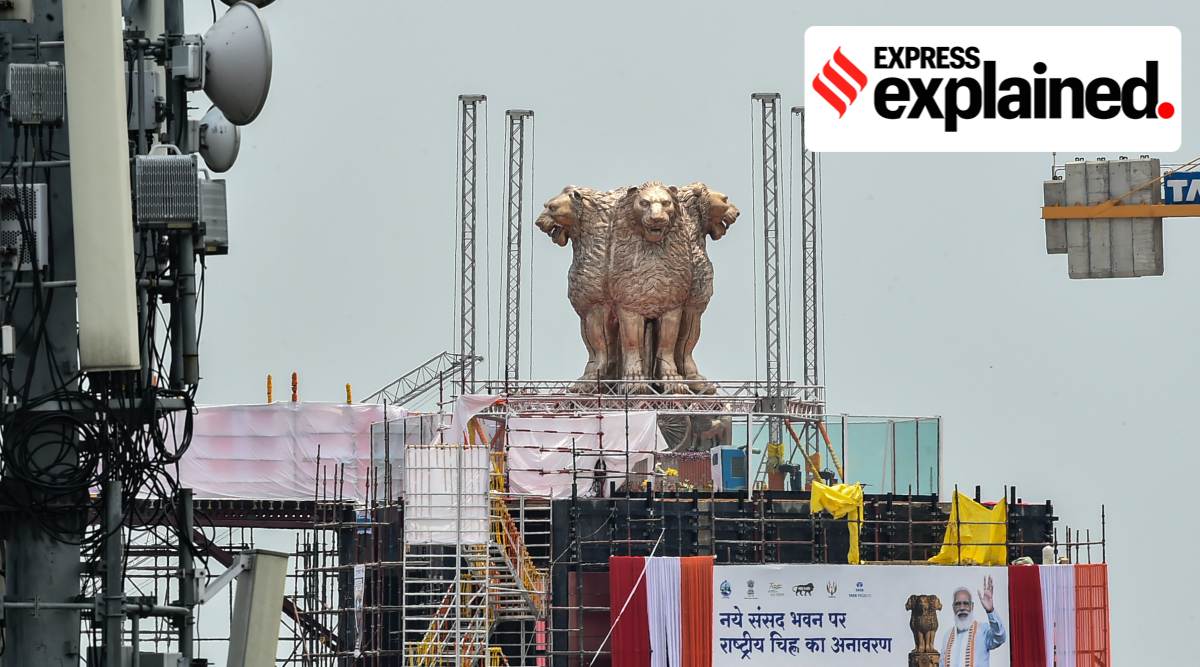 View of the national emblem, which was unveiled by Prime Minister Narendra Modi cast on the roof of New Parliament House building, in New Delhi, Monday, July 11, 2022. (PTI Photo)
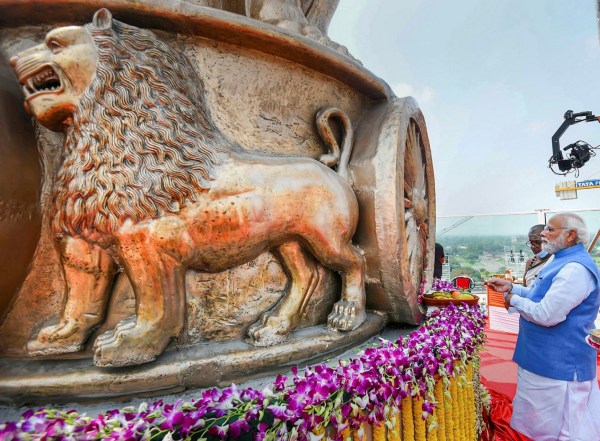
On Monday (July 11) morning, Prime Minister Narendra Modi unveiled the National Emblem cast on the roof of the new Parliament building. Work is underway to meet the October-November 2022 deadline for completion of the work.
Cast at the top of the Central Foyer of the new Parliament building, the 6.5-metre-high National Emblem is made of bronze, and weighs 9,500 kg. A supporting structure of steel weighing around 6,500 kg has been constructed to support the Emblem.
The concept sketch and process of casting of the National Emblem on the roof of the building went through eight different stages of preparation from clay modelling/ computer graphics to bronze casting and polishing, officials said.
This morning, I had the honour of unveiling the National Emblem cast on the roof of the new Parliament. pic.twitter.com/T49dOLRRg1
— Narendra Modi (@narendramodi) July 11, 2022
The new building will have six granite statues of important personalities, four galleries each for the two Houses of Parliament, three ceremonial foyers, three India galleries, and one Constitution gallery.
Each wall in the building will have a dominant theme — dedicated, for instance, to the contribution of tribal leaders, or to showcasing the contribution of women. Displays including a mix of portraits, illustrative arts, installations, sculptures, and decorative art will frame storylines.
Almost 70 per cent of the artwork that will adorn the walls of the building have been commissioned; the rest will be sourced over the next two months.
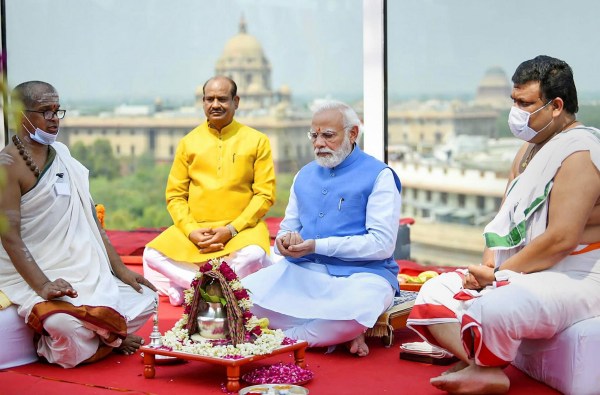 Prime Minister Narendra Modi and Lok Sabha Speaker Om Birla during a ceremony for unveiling of a bronze National Emblem cast on roof of the new Parliament Building, in New Delhi, Monday. (PTI)
Bimal Patel of HCP Designs, Ahmedabad, is the architect in charge of the building, which is triangular in shape, and incorporates architectural styles from around India. The building is coming up adjacent to the existing Parliament complex, and is of almost the same size. According to Patel’s office, the building is designed to be earthquake-resistant.
The new complex has 888 seats in the Lok Sabha chamber and 384 seats in the Rajya Sabha chamber. Unlike the present Parliament building, there is no Central Hall, and the Lok Sabha chamber will be able to house 1,272 members in case of a joint session. The building will have an open-sky area of 2,000 sq metre for a banyan tree.
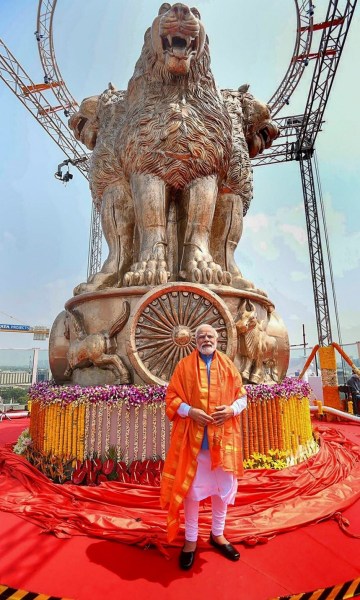 The concept sketch and process of casting of the National Emblem on the roof of the building went through eight different stages of preparation from clay modelling/ computer graphics to bronze casting and polishing, officials said. (PTI)
The existing building was designed by Edwin Lutyens and Herbert Baker who were responsible for the planning and construction of New Delhi. It was inaugurated in January 18, 1927, by then Governor General of India Lord Irwin. The foundation stone for the new building was laid by the Prime Minister in December 2020, nearly a century after the foundation for the existing Parliament was laid by the Duke of Connaught on February 12, 1921.
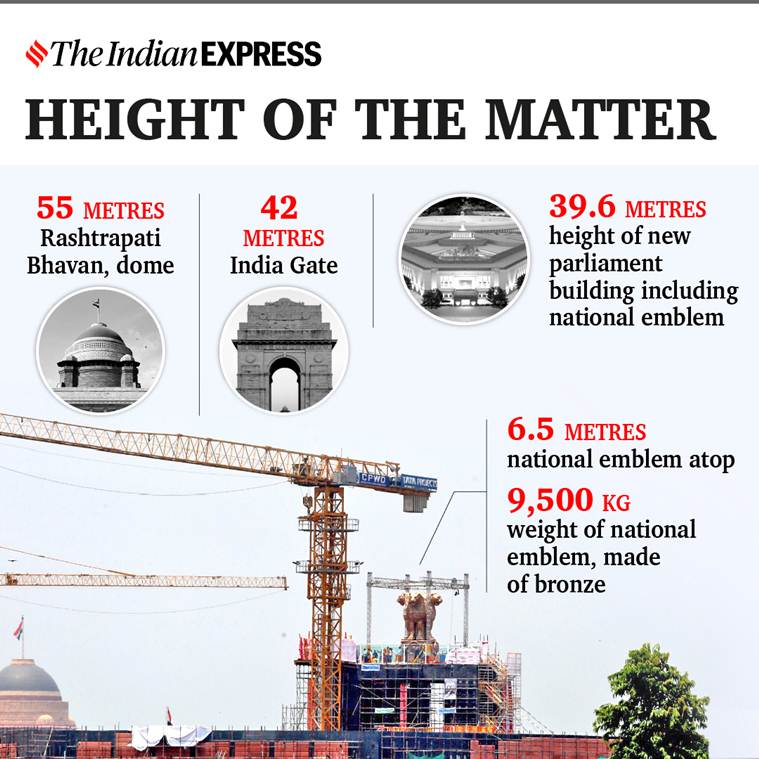 At 6.5 metres in height, the National Emblem is made of bronze, with a total weight of 9,500 kg and has been cast at the top of the central foyer of the building.
Speaker Om Birla said on Monday that the new Parliament building will “most likely be completed in time by October-November 2022”, in time to hold the winter session this year, to coincide with 75th year of India’s independence.
 The new complex has 888 seats in the Lok Sabha chamber and 384 seats in the Rajya Sabha chamber. (PTI)
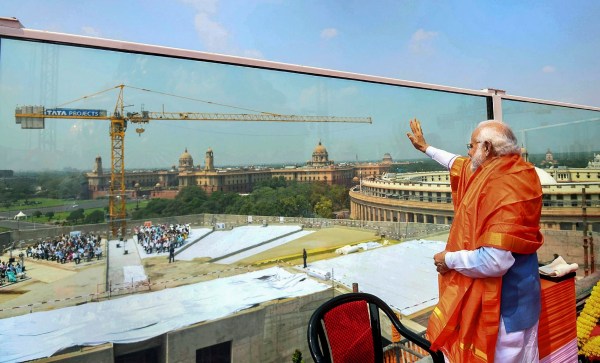 Speaker Om Birla said on Monday that the new Parliament building will “most likely be completed in time by October-November 2022”. (PTI)
The new Parliament building project was awarded to Tata Projects for Rs 971 crore. The estimated project cost has shot up by nearly 24 per cent to about Rs 1,200 crore due to additional works, changes in construction plan, and pandemic-related delays.
The building is part of the Central Vista Project, which also includes a joint central secretariat, revamp of the Rajpath, a new Prime Minister’s residence, a new Prime Minister’s Office, and a new Vice-President’s enclave.