3 min read

Journalism of Courage



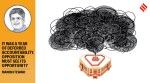
 Researchers focused on the right Temporal Parietal Junction (rTPJ) – an area of the brain that is believed to play a crucial role in social decision-making processes. (Illustration: CR Sasikumar)
When a person donates to charity or does volunteer work, the action is guided by moral values. In other words, such persons are putting someone else’s needs before their own, and forgoing their own material interests in favour of material values.
What goes on inside the brain when it makes the choice? Neuroeconomists at the University of Zurich have investigated in which area of the brain the conflicts between moral and material motives are resolved. Their study is online (htpps://elifesciences.org/articles/40671).
Led by UZH professor Christian Ruff, the researchers focused on the right Temporal Parietal Junction (rTPJ) – an area of the brain that is believed to play a crucial role in social decision-making processes.
In an experimental set-up, participants had to decide whether and how much they wanted to donate to various organisations. Through electromagnetic stimulation of the rTPJ, the researchers were then able to determine what kinds of considerations are processed in this area of the brain. The researchers found that people have a moral preference for supporting good causes and not wanting to support harmful or bad causes.
However, depending on the strength of the monetary incentive, people will at one point switch to selfish behaviour. “If we don’t let the brain deliberate on conflicting moral and monetary values, people are more likely to stick to their moral convictions and aren’t swayed, even by high financial incentives,” Ruff said on the UZH website.
Although people’s decisions were more social when they thought that their actions were being watched, this behaviour was not affected by electromagnetic stimulation of the rTPJ. This means that considerations regarding one’s reputation are processed in a different area of the brain. In addition, the electromagnetic stimulation led to no difference in the general motivation to help.
Therefore, the authors concluded that the rTPJ is not home to altruistic motives per se, but rather to the ability to trade off moral and material values.
Source: University of Zurich