Premium
This is an archive article published on August 16, 2017

J&K special status: In Supreme Court, an old matter back in a new context

The first such Presidential Order was issued on January 26, 1950. This was replaced by another Presidential Order (the ‘mother’ order), which applied several provisions of the Indian Constitution to J&K with substantial changes, amendments and provisos.

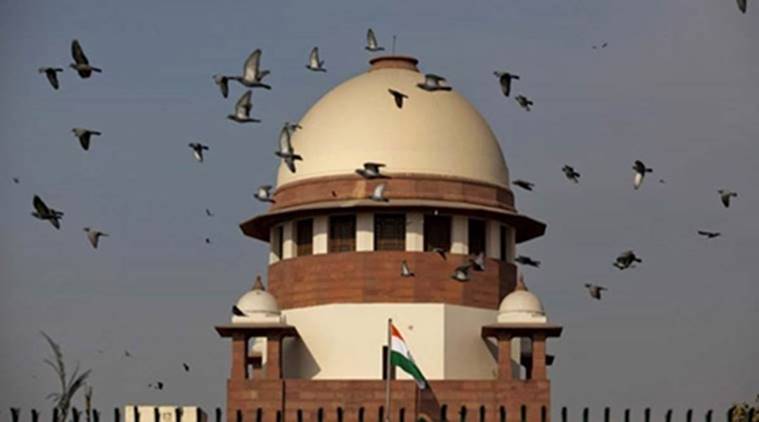
kashmir, kashmir special status, J&K special status, article 370 35 A, Independence day, kashmir independence, Sheikh Mohammad Abdullah, Election Commission, azaad kashmir, indian express news, india news The present challenge to Article 35A in the Supreme Court is based on the ground that it could have been introduced in the Indian Constitution only through a constitutional amendment under Article 368, and not through a Presidential Order under Article 370. (File photo)

Article 370, a part of the Indian Constitution when it came into force on January 26, 1950, provided that only two articles — Article 1, which defines India, and Article 370 — will apply to Jammu & Kashmir. Article 370 also mandated that other provisions of the Constitution can apply to J&K, “subject to such exceptions and modifications as the President may by order specify”, with the concurrence of the state government and the endorsement of the J&K Constituent Assembly. In 1969, the Supreme Court ruled that the President can issue an Order under Article 370 only with the concurrence of the state government.

The first such Presidential Order was issued on January 26, 1950. This was replaced by another Presidential Order (the ‘mother’ order), which applied several provisions of the Indian Constitution to J&K with substantial changes, amendments and provisos. While applying to J&K the provisions of Part-III of the Indian Constitution, which relates to Fundamental Rights, the 1954 Presidential Order introduced Article 35A, which protected laws passed by the state legislature regarding Permanent Residents from any challenge on the ground that they were in violation of the Fundamental Rights.

The present challenge to Article 35A in the Supreme Court is based on the ground that it could have been introduced in the Indian Constitution only through a constitutional amendment under Article 368, and not through a Presidential Order under Article 370. This is an argument that the Supreme Court has rejected on at least three occasions earlier.

Read | Broken vows, court wars on ‘special status’

# In 1961, a five-judge Constitution Bench in Puranlal Lakhanpal vs The President of India and Others held that when, through an order under Article 370, the President applies any provision of the Indian Constitution to J&K, the term “modification” must be considered in its “widest possible amplitude”. It will not be limited to making only partial changes to the provision, but will include the power to “extend” and “enlarge” the constitutional provision, including making a “radical transformation”.

# In 1969, another five-judge Bench reaffirmed this view in Sampat Prakash vs State of Jammu & Kashmir.

# Finally, on December 16, 2016, in State Bank Of India vs Santosh Gupta And Anr. Etc., a two-judge Bench of the court followed the two earlier Constitution Bench decisions to reiterate that the Presidential Order can “extend” or “enlarge” the provisions of Indian Constitution in its application to J&K.

The constitutional validity of Article 35A is, therefore, well established. It protects legislation passed by the J&K legislature relating to benefits to Permanent Residents from challenge on the ground of violation of Fundamental Rights, while extending the chapter on Fundamental Rights of the Indian Constitution to J&K. In that sense, this provision is in the nature of a proviso to the extension of the chapter on Fundamental Rights in the Indian Constitution to J&K. In fact, the Fundamental Rights were extended to J&K through the 1954 Presidential Order.

Story continues below this ad

Therefore, if the court were to accept the petitioners’ argument challenging Article 35A, the extension of the Fundamental Rights and every other provision of the Indian Constitution to J&K through consecutive Presidential Orders (all amendments to the 1954 mother order) will cease to apply. Only Article 1 and Article 370 of the Indian Constitution will then apply to J&K.

Read | Seventy years on, digging a deeper hole in Kashmir

Again, in Sampat Prakash (1969), the Supreme Court held that Article 368 of the Indian Constitution, which requires approval by a two-thirds majority in Parliament to amend the Constitution, does not directly apply to J&K. The court held: “Article 368 is not primarily intended for amending the Constitution as applicable in Jammu and Kashmir, but is for the purpose of carrying the amendments made in the Constitution for rest of India into the Constitution as applied in the State of Jammu and Kashmir. Even in this process the powers of the President under Article 370 have to be exercised.” Thus, any amendment to the Indian Constitution (done under Article 368) will apply to J&K only if such amendment is extended to the state by a Presidential Order under Article 370.

If the legal challenge to Article 35A is to succeed, the Supreme Court would have to undo the constitutional law on the subject over the last six decades, as well as the application of a large number of provisions of the Indian Constitution to J&K.

Story continues below this ad

This is why it appears that the challenge to Article 35A — effectively the last remnant of J&K’s special status — is primarily political and its fate, too, will be decided politically. The other way for the Centre to remove J&K’s special status will be to get the state government’s concurrence to a fresh Presidential Order to remove Article 35A. To secure such concurrence will not be easy.

Muzamil Jaleel is a Deputy Editor at The Indian Express and is widely recognized as one of India’s most authoritative voices on Jammu & Kashmir, national security, and internal affairs. With a career spanning over 30 years, he has provided definitive on-the-ground reportage from the heart of the Kashmir conflict, bearing witness to historic political transitions and constitutional shifts. Expertise and Investigative Depth Muzamil’s work is characterized by a rare combination of ground-level immersion and high-level constitutional analysis. His expertise includes: Conflict & Geopolitics: Decades of reporting on the evolution of the Kashmir conflict, the Indo-Pak peace process, and the socio-political dynamics of the Himalayan region. Constitutional Law: Deep-dive analysis of Article 370 and Article 35A, providing clarity on the legal and demographic implications of their abrogation in 2019. Human Rights & Accountability: A relentless investigator of state and non-state actors, uncovering systemic abuses including fake encounters and the custodial death of political workers. International War Reporting: Beyond South Asia, he provided on-the-spot coverage of the final, decisive phase of the Sri Lankan Civil War in 2009. Landmark Exposés & Impact Muzamil’s reporting has repeatedly forced institutional accountability and shaped national discourse: The Kashmir Sex Scandal (2006): His investigative series exposed a high-profile exploitation nexus involving top politicians, bureaucrats, and police officers, leading to the sacking and arrest of several senior officials. Fake Encounters: His reports blew the lid off cases where innocent civilians were passed off as "foreign terrorists" by security forces for gallantry awards. SIMI Investigations: He conducted a massive deep-dive into the arrests of SIMI members, using public records to show how innocuous religious gatherings were often labeled as incriminating activities by investigative agencies. The Amarnath Land Row: Provided critical context to the 2008 agitation that polarized the region and altered its political trajectory. Over the years, Muzamil has also covered 2002 Gujarat riots, Bhuj earthquake, assembly elections in Bihar for Indian Express. He has also reported the peace process in Northern Ireland, war in Sri Lanka and national elections in Pakistan for the paper. Awards and Fellowships His "Journalism of Courage" has been honored with the industry's most prestigious accolades: Four Ramnath Goenka Awards: Recognized for J&K Reportage (2007), On-the-Spot Reporting (2009), and Reporting on Politics and Government (2012, 2017). Kurt Schork Award: From Columbia University for international journalism. Sanskriti Award: For excellence in Indian journalism and literature. IFJ Tolerance Prize: For his empathetic and nuanced reporting in South Asia. International Fellowships: Served as a visiting scholar at UC Berkeley and worked with The Guardian, The Observer, and The Times in London. He has also received Chevening fellowship and a fellowship at the Institute of Social Studies, Hague, Netherlands. Professional Presence Current Location: New Delhi (formerly Bureau Chief, Srinagar). Education: Master’s in Journalism from Kashmir University. Social Media: Follow him for field insights and rigorous analysis on X (Twitter) @MuzamilJALEEL. ... Read More

 

Latest Comment
Post Comment
Read Comments
Advertisement
Advertisement
Advertisement
Advertisement