


© The Indian Express Pvt Ltd
Tags:



India’s COVID-19 numbers are surging. In terms of the total number of infections, the country has rapidly risen through the ranks to now occupy the third place in the world, behind the US and Brazil, having overtaken Russia over the weekend.
But, argues Kaushik Basu, C Marks Professor at Cornell University and former Chief Economist and Senior Vice President, World Bank, “if instead of counting COVID infections, which have a large margin of error, we look at COVID-deaths, and if we correct for population size (as indeed we should), all countries in Africa and Asia, including India and China, come out much better”.


How did this happen when India was one of the first emerging economies to announce the lockdown?
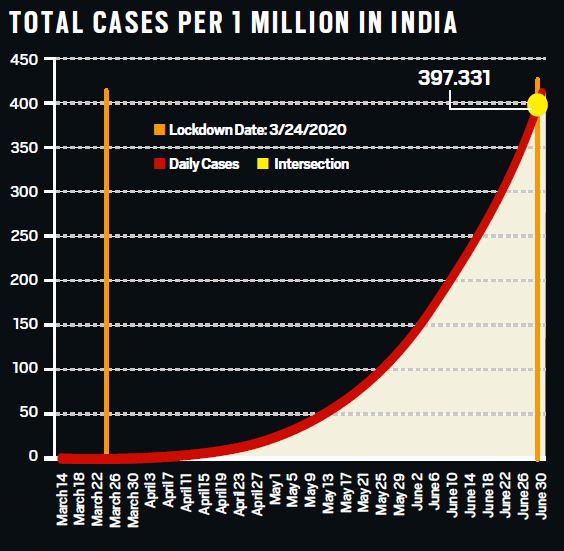
“There clearly had to be a lockdown, but it should have been carefully targeted and curated for our region,” he opines. “India’s economy is spiralling down and the pandemic is spiralling up… The lockdown, announced on March 24, far from controlling the spread of the pandemic, seems to have made it worse. Two weeks after the start of the lockdown, the infection rate picked up and it has been an alarming upward climb since then,” he argues.
Why did this happen?
India’s lockdown has been described widely as the most stringent in the world. At the time of the announcement, with a four-hour notice of complete lockdown, there was a natural expectation that the government had plans of how to handle the sudden stoppage of work and movement of people, and the break in supply chains. But there was no evidence of any of these ancillary actions.
“I do not have enough information to know what plans there were, but the total absence of any supporting action, to ramp up testing, expand the medical sector and to help the millions of stranded poor workers, was baffling,” he writes. “In most countries, after the lockdown announcement, minimal transportation was kept open letting people go home. In India, for weeks there was no sign of any effort to handle the problem of migrant workers huddled and hungry far away from home”.
The Economist magazine (June 13, p. 30) estimated that India issued “well over 4,000 different rules” during the first two months of the lockdown, many of those rules being corrections of many of those rules.
“The way in which the lockdown was executed, the lockdown itself became the source of the virus’s spread. By having people huddle together, infecting one another, and then having the same people travel hundreds of miles, the pandemic has been made much worse than it need have been,” he writes.


