Premium
This is an archive article published on November 1, 2021

Explained: Can better regulation, weather forecasting reduce tragedies in the mountains?

Experts believe these mishaps can be avoided if we follow better safety protocols. What went wrong on these treks and what could have been done to reduce the casualties; we explain.

Mountains are always unpredictable and tragedies depend on a variety of reasons ranging from experience of team members to preparations and the standard of guides and not just the weather.Mountains are always unpredictable and tragedies depend on a variety of reasons ranging from experience of team members to preparations and the standard of guides and not just the weather.

The death of 21 trekkers in four mountaineering and trekking expeditions in Uttarakhand and Himachal Pradesh this month once again puts the spotlight on the risky nature of this adventure sport and the safeguards that need to be followed. Experts believe these mishaps can be avoided if we follow better safety protocols. What went wrong on these treks and what could have been done to reduce the casualties; we explain.

What happened during the Lamkhaga Pass trek?

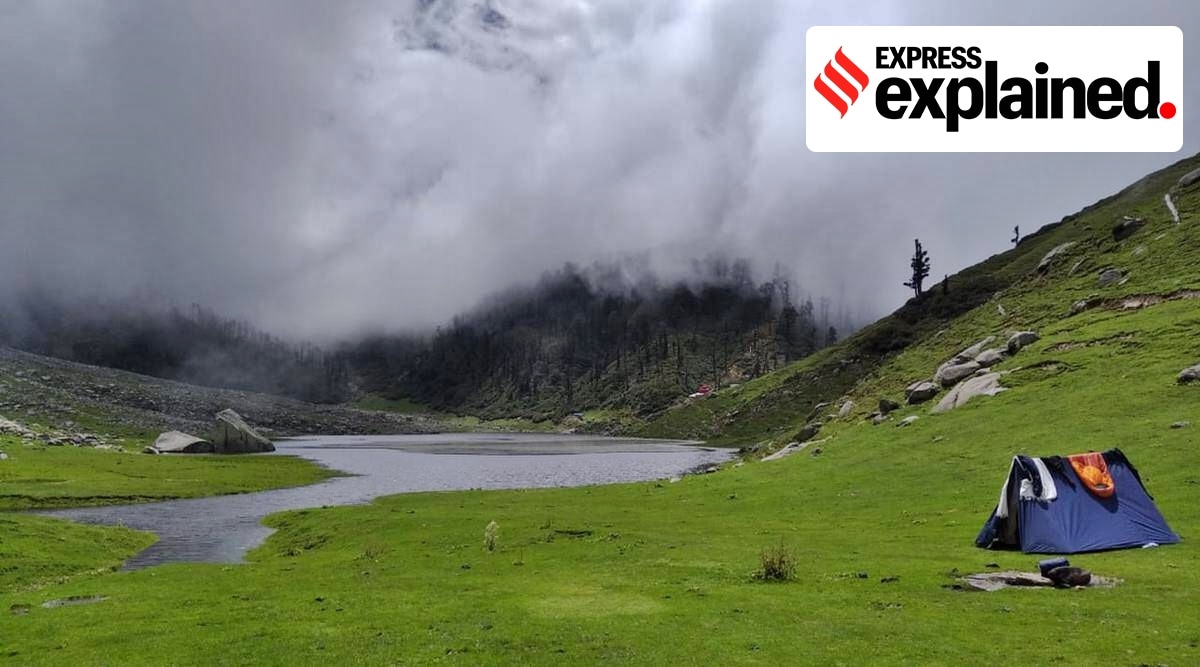
Seven of the 11 members of the trekking team, mostly from West Bengal, were killed and two were reported missing after the team trekked from Harshil in Uttarakhand to Chitkul in Himachal Pradesh’s Kinnaur.

SP (Uttarkashi) Manikant Mishra said they had identified loopholes in how the trip was processed. “We observed that the guides, porters attached with the trekking team were not trained. They did not know how to tackle adverse weather conditions such as heavy snowfall at high altitude,” the SP told The Indian Express over phone from Uttarakhand. He said they are in the process of making detailed Standard Operating Procedures (SOPs) for companies organising trekking expeditions in the state. He said it was also possible that the experienced trekkers overestimated their ability to complete this difficult trek.

An officer involved in the rescue operation said that since the seven bodies were recovered from different spots, it seems like team was scattered, maybe in panic or because they were not guided well. “In the mountains, a team should stay together. They should move together with the help of ropes.”

Can these tragedies be avoided with better weather forecasting?

Mountains are always unpredictable and tragedies depend on a variety of reasons ranging from experience of team members to preparations and the standard of guides and not just the weather.

Brig Ashok Abbey, President of Indian Mountaineering Foundation (IMF) says despite near accurate weather predictions, sometimes alerts come at the last minute by which time the expeditions have already commenced giving the trekkers less time to respond.

In the Mt Trishul tragedy, well-trained Indian navy personnel were hit by a strong avalanche. “From a purely technical point of view, Mt Trishul is more difficult than Mt Everest. While climbing Mt Everest, a mountaineer is likely to find out fixed spots for tying the ropes, fixing ladders etc but during expeditions on peaks like Mt Trishul, there is no such facility because a very few people climb such peaks,” explains Brig Abbey. He says that though bad weather is stated to be the reason behind the Lamkhaga Pass tragedy, there are no conclusive reports yet. “Permissions for these activities are not the guarantee of safety. Lamkhaga Pass trek does not fall in the category of mountaineering but is a tedious and challenging trek. It requires a lot of preparation.”

Story continues below this ad

What precautions should be taken to avoid such incidents?

According to experts, one of the main reasons behind such tragedies is the breakdown of communication between the mountaineers or trekkers and thier base camps, difficulty of ascertaining the exact locations of lost team members etc.

Yogesh Dhumal, vice-principal at Nehru Institute of Mountaineering (NIM), Uttarkashi, says, “Satellite phones and GPS device tags with team members can minimise the time taken for the search operation and can alert the rescue teams about the upcoming hurdles during expeditions. Though satellite phones are a costly affair and operating them is a complicated process involving security issues, GPS-enabled body chips can reveal the exact locations of stranded mountaineers and play a significant role in their rescue. The Uttarakhand government is already working in this direction, he adds.

Chandigarh-based mountaineer Vishal Thakur, who recently returned after climbing Black Peak in Uttarakhand, suggests while there is a need to upgrade the standard of rescue operations, people should also not take mountaineering and treks lasting more than four days casually.

What is the stand of tour operators?

The Adventure Tour Operators Association of India (ATOAI) president, Vishwas Makhija, calls these incidents alarming and underlines the need for more regulation. He says unregistered companies are active along with untrained guides and porters, putting the lives of many at risk. “We have been urging state governments, especially Uttarakhand and Himachal, to make strict policies,” he says adding that this does not absolve the trekkers booking such trips. “We have observed that to save money, people compromise with equipment, safety and prefer to go to companies charging less money without checking their credentials. The quality of safety gears, equipment, tents, sleeping bags matters a lot.” Vaibhav Kumar, another official bearer of ATOAI, says there is also a lot of under-reporting of these incidents. “The reporting percentage of such incidents is only 5 per cent,” he says, calling for a strict audit by the authorities.
Story continues below this ad

What is the role of mountaineering institutes in such tragedies?

Institutes like Indian Mountaineering Foundation (IMF) in Delhi, Nehru Institute of India (NIM), Uttarkashi, prepare case studies of such incidents. These studies aim to learn lessons, educate trainees and find out ways to avoid these incidents. Brig Abbey explains that these play a crucial role in crafting future strategies. NIM is a premier body that organises and trains aspiring mountaineers through basic and advanced courses along with the training in search and rescue operations.

Newsletter | Click to get the day’s best explainers in your inbox

Saurabh Parashar is an Assistant Editor at The Indian Express, primarily responsible for the publication’s coverage of Himachal Pradesh. He is a seasoned journalist with over 17 years of experience in print media, specializing in crime, legal affairs, and investigative reporting. Professional Background Education: He holds a Master’s degree in Mass Communication from Guru Jambheshwar University of Science & Technology (Hisar) and a Law degree from Himachal Pradesh University (HPU), Shimla. This legal background significantly informs his reporting on complex judicial and administrative matters. Career Path: Before joining The Indian Express in 2017, he spent 12 years with The Times of India. Core Beats: His primary focus is the socio-political landscape of the hill state, with a specific emphasis on the environment, forest conservation, drug menace (specifically "Chitta"), affairs related to tribal and archaeology and the unique challenges of governance in high-altitude regions. Recent Notable Articles (Late 2025) His recent reporting highlights the critical intersection of policy, law, and social safety in Himachal Pradesh: 1. "Himachal’s battle against Chitta: Why the border areas are most vulnerable" (Late 2025): An investigative look at the transit routes from Punjab and the impact on local youth. 2. "Shimla ropeway clears key hurdle as 820 trees face the axe :According to the Forest Survey of India’s 2021 assessment, 47.21 percent of Shimla’s 5,131 sq km geographical area is under forest cover (Nov 17, 2025). 3. "Himachal to handover 2.7427 ha of non-forest land for Shimla Ropeway: Given the land’s non-forest nature, RTDC and the state will not require permission from MoEFCC" (Nov 18, 2025) 4. "How the centuries-old Jodidara tradition is fading in Himachal’s Trans-Giri region: Jodidara: a form of fraternal polyandry—has long been part of Hatti tribal culture in the Trans-Giri region of Himachal Pradesh and adjoining Uttarakhand. It is believed to have evolved to prevent division of ancestral land and maintain unity among brothers in the harsh, mountainous terrain" (Aug 18, 2025) Legal & Agricultural Affairs "Kisan Sabha hails SC’s setting aside Himachal HC order to remove orchards from forest land" (Dec 18, 2025): Covering a major Supreme Court victory for farmers, where a High Court order to remove fruit-bearing apple orchards was overturned. "Himachal Cabinet nod to new tourism policy; focus on home-stays in tribal areas" (Dec 11, 2025): Detailing the legislative push to decentralize tourism and bring economic benefits to Lahaul-Spiti and Kinnaur. 3. Governance & Environment "Forest rights and development: Why Himachal is seeking more leeway from Centre" (Dec 19, 2025): Reporting on the legal hurdles faced by the state in infrastructure projects due to the Forest Conservation Act. "Cloudbursts and resilience: How Himachal’s remote villages are building back better" (Nov 2025): Following up on the long-term rehabilitation efforts after monsoon-related disasters. Crime especially cyber crimes, crypto currency etc: crypto currency: "Agents in uniform, motivational speeches, lavish parties: How a Himachal crypto con went unnoticed:A serial conman, a ‘Nelson Mandela Nobel Peace Award winner', and retired policemen got together to pull off a Rs 1,740-crore fraud" (Nov 10, 2023) Signature Beats Saurabh is recognized for his tenacious reporting on the state's drug epidemic. His deep familiarity with the topography and tribal culture of Himachal allows him to report from remote locations like Spiti, Pangi, Shillai, which are often overlooked by national media. His legal expertise makes him a primary choice for covering the Himachal Pradesh High Court on issues ranging from local body elections to environmental PILs. X (Twitter): @saurabh_prashar . ... Read More
 

Latest Comment
Post Comment
Read Comments
Advertisement
Advertisement
Advertisement
Advertisement