Journalism of Courage
Advertisement

Why Himachal’s first satellite mountain township is being opposed by residents

Conceived over a decade ago, the Jathiya Devi township has faced repeated delays due to funding constraints. Phase I is now being initiated using state resources, with central funding still awaited

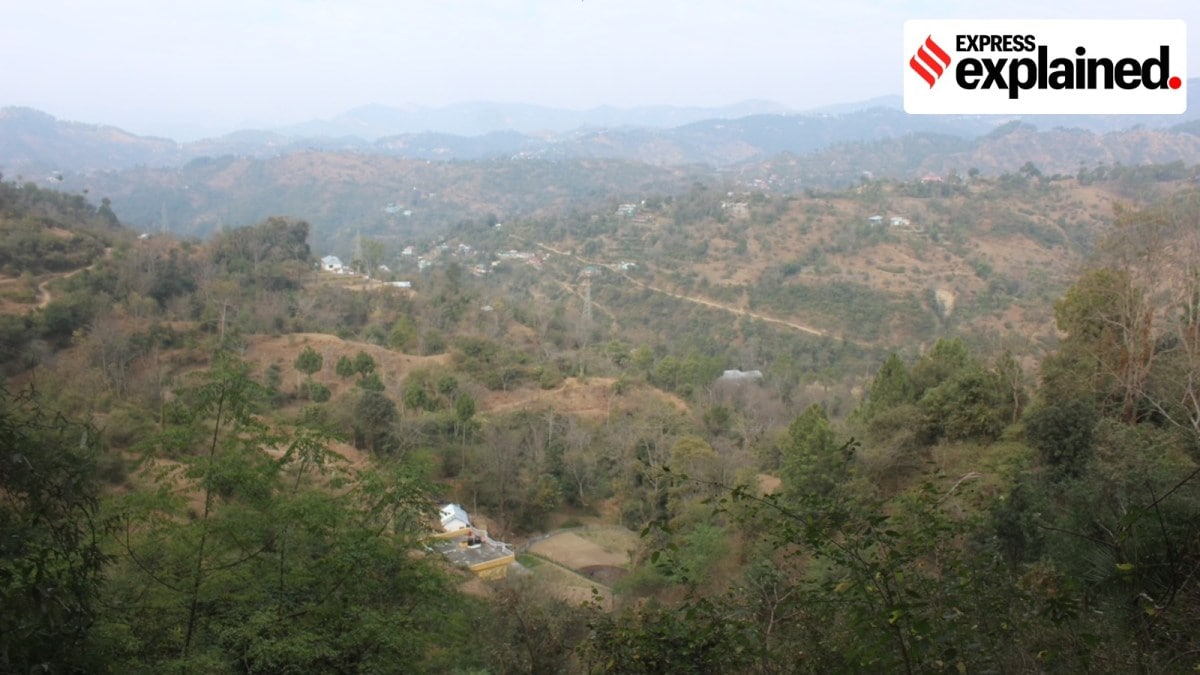
himachalOne of the proposed areas to be acquire for the township in Jathiya Devi. (Photo: Saurabh Parashar)

Located about 14 km from Shimla city, Jathiya Devi has been identified for an ambitious urban development project to be executed by the Himachal Pradesh Housing and Urban Development Authority (HIMUDA). The project was conceived by the state government with the approval of the Centre in 2014. Notices pasted across the area — including at the Jathiya Devi Panchayat Bhawan — invited residents to submit objections and suggestions by December 29 regarding a proposed Social Impact Assessment (SIA) study.

The project, first conceptualised in 2014, has now triggered widespread opposition across several villages, with residents fearing displacement, loss of livelihoods, and inadequate compensation. On January 10, Gram Panchayat Bagi, which has at least eight revenue villages out of 11 that were identified to be acquired for the township, passed an unopposed resolution not allowing their land to be acquired.

The Jathiya Devi Township Project

Jathiya Devi is a place under the Gram Panchayat Bagi. The place derives its name from the existence of an old Jathiya Devi shrine in the area. The proposed township is envisioned as a planned satellite mountain township to ease pressure on Shimla, create new economic hubs, and promote sustainable, disaster-resilient urban growth.

Strategically located along state highway (SH) 16 and national highway (NH) 5, the township lies 3–4 km from Shimla Airport at Jubbarhatti and about 20–22 km from ISBT Shimla. The terrain ranges between 1,300 and 1,500 metres above sea level, comprising ridges, valleys, and seasonal streams.

According to the SIA study, held in November 2025 pertaining to the township, the township will span around 249 hectares, of which 35 hectares is government-owned land. The proposed land use includes residential zones (55.16 ha): housing for high income group (HIG), medium income group (MIG), low income group (LIG), and economically weaker section (EWS). Commercial areas (13.36 ha) and non-polluting industrial zones (15.7 ha). Recreational and green zones (16.42 ha). River development areas (16.56 ha). The proposed widened roads (13.78 ha), utility services, smart transport systems, helipad connectivity, and eco-sensitive planning area were other features of the township. Phase 1 of the township proposes 895 residential units across HIG, MIG, LIG, and EWS categories, along with commercial and industrial components over 84.22 hectares, while green and river development zones will cover another 33 hectares.

Villages identified for acquisition

The SIA report said around 249 ha (approximately 2,959 bighas) across eight villages have been identified for potential acquisition. These villages are: Chanan (568 bighas), Panti (109 bighas), Aanji (396 bighas), Shilli Baghi (699 bighas), Majhola (78 bighas), Shilru (214 bighas), Dhanokari (270 bighas), and Kyaragi (303 bighas).

These villages fall under rural Shimla, primarily within the Gram Panchayat Bagi. Additionally, Manjiyari village (around 441 bighas) in Mamlig tehsil of neighbouring Solan district has also been identified. According to the SIA report, 386 households will be directly affected, with 158 households facing potential livelihood disruption. Indirect impacts include loss of access to common property resources (CPRs) and shared land-use systems.

The protest

Story continues below this ad

Residents argue that the proposed acquisition threatens fertile agricultural land, ancestral homes, and centuries-old social and religious structures. “We were told that entire villages — including agricultural land and houses — would be acquired. The government wants to build homes for newcomers by displacing people who have lived here for generations,” said Neeraj Thakur, who opposed the project during the December 29 public hearing.

The resolution was passed with a clear and full majority. “Although to pass a resolution we need a 1/4 majority of 120 households out of 418 houses, but the resolution was signed by 280 people from each family”, said Naresh Kumar Thakur, pradhan of Gram Panchayat Bagi.

He also said, “A long time back, HIMUDA had acquired more than 250 bighas for the mountain township. So far, not a single brick has been laid on the acquired land. That land was infertile. But this time, the government says it will acquire agricultural land along with the houses of residents.”

Compensation concerns

Story continues below this ad

The notices, issued under Section 5 and Rule 8 of the Right to Fair Compensation and Transparency in Land Acquisition, Rehabilitation and Resettlement Act, 2013, sought public input on the acquisition as suggested by the SIA study. According to HIMUDA and revenue officials, the compensation is to be paid on the basis of current land prices and collector rates in the area.

Although villagers decided to boycott the acquisition without considering what to be offered in the shape of compensation, many believe that the lands in the villages are joint properties and owners will not get a lot of money in compensation.

“My brothers and I own 12 bighas collectively. After division among sons and grandsons, how much will each get? Agriculture is our livelihood. The government must clarify compensation before moving ahead,” Hira Singh Thakur, 84, one of the villagers, said.

The SIA report

Chapter 3 of the SIA acknowledges that land acquisition may lead to displacement and the removal of constructed assets, including seven temples, five schools, around two dozen shops, water canals and other physical structures and residential houses.

Story continues below this ad

However, the report projects significant benefits, claiming the township will create employment opportunities and economic mobility, improve access to education, healthcare, and markets, integrate rural areas into major economic corridors, promote social upliftment, skill development, and local entrepreneurship and emphasise environmental sustainability, reduced fuel consumption, and inclusive recreational spaces.

View of HIMUDA

HIMUDA CEO and Secretary Surender Kumar Vashisht has sought to allay fears, stating that no land will be acquired forcibly. “We are not going to acquire any land against the wishes of locals. The December 29 hearing was only the first step in a long process. We already have around 262 bighas, and we want to expand, but not by displacing people,” he said. He added that residential houses would be excluded from acquisition and that provisions exist for kitchen gardening and protection of livelihoods. “A middle path is being explored so that fertile land and houses can be excluded,” Vashisht said. The CEO also claimed that the land of the eight villages is not too fertile.

What’s next

Conceived over a decade ago, the Jathiya Devi township has faced repeated delays due to funding constraints. Phase I is now being initiated using state resources, with central funding still awaited. Whether the project moves forward in its current form will depend on how authorities address local resistance, compensation concerns, and environmental safeguards. For now, the future of Himachal Pradesh’s first planned mountain township remains uncertain — caught between the promise of planned urban growth and the deep-rooted fears of those who call these hills home.

Curated For You

Saurabh Parashar is an Assistant Editor at The Indian Express, primarily responsible for the publication’s coverage of Himachal Pradesh. He is a seasoned journalist with over 17 years of experience in print media, specializing in crime, legal affairs, and investigative reporting. Professional Background Education: He holds a Master’s degree in Mass Communication from Guru Jambheshwar University of Science & Technology (Hisar) and a Law degree from Himachal Pradesh University (HPU), Shimla. This legal background significantly informs his reporting on complex judicial and administrative matters. Career Path: Before joining The Indian Express in 2017, he spent 12 years with The Times of India. Core Beats: His primary focus is the socio-political landscape of the hill state, with a specific emphasis on the environment, forest conservation, drug menace (specifically "Chitta"), affairs related to tribal and archaeology and the unique challenges of governance in high-altitude regions. Recent Notable Articles (Late 2025) His recent reporting highlights the critical intersection of policy, law, and social safety in Himachal Pradesh: 1. "Himachal’s battle against Chitta: Why the border areas are most vulnerable" (Late 2025): An investigative look at the transit routes from Punjab and the impact on local youth. 2. "Shimla ropeway clears key hurdle as 820 trees face the axe :According to the Forest Survey of India’s 2021 assessment, 47.21 percent of Shimla’s 5,131 sq km geographical area is under forest cover (Nov 17, 2025). 3. "Himachal to handover 2.7427 ha of non-forest land for Shimla Ropeway: Given the land’s non-forest nature, RTDC and the state will not require permission from MoEFCC" (Nov 18, 2025) 4. "How the centuries-old Jodidara tradition is fading in Himachal’s Trans-Giri region: Jodidara: a form of fraternal polyandry—has long been part of Hatti tribal culture in the Trans-Giri region of Himachal Pradesh and adjoining Uttarakhand. It is believed to have evolved to prevent division of ancestral land and maintain unity among brothers in the harsh, mountainous terrain" (Aug 18, 2025) Legal & Agricultural Affairs "Kisan Sabha hails SC’s setting aside Himachal HC order to remove orchards from forest land" (Dec 18, 2025): Covering a major Supreme Court victory for farmers, where a High Court order to remove fruit-bearing apple orchards was overturned. "Himachal Cabinet nod to new tourism policy; focus on home-stays in tribal areas" (Dec 11, 2025): Detailing the legislative push to decentralize tourism and bring economic benefits to Lahaul-Spiti and Kinnaur. 3. Governance & Environment "Forest rights and development: Why Himachal is seeking more leeway from Centre" (Dec 19, 2025): Reporting on the legal hurdles faced by the state in infrastructure projects due to the Forest Conservation Act. "Cloudbursts and resilience: How Himachal’s remote villages are building back better" (Nov 2025): Following up on the long-term rehabilitation efforts after monsoon-related disasters. Crime especially cyber crimes, crypto currency etc: crypto currency: "Agents in uniform, motivational speeches, lavish parties: How a Himachal crypto con went unnoticed:A serial conman, a ‘Nelson Mandela Nobel Peace Award winner', and retired policemen got together to pull off a Rs 1,740-crore fraud" (Nov 10, 2023) Signature Beats Saurabh is recognized for his tenacious reporting on the state's drug epidemic. His deep familiarity with the topography and tribal culture of Himachal allows him to report from remote locations like Spiti, Pangi, Shillai, which are often overlooked by national media. His legal expertise makes him a primary choice for covering the Himachal Pradesh High Court on issues ranging from local body elections to environmental PILs. X (Twitter): @saurabh_prashar . ... Read More


Tags:
  • Express Explained
Weather
Edition
Install the Express App for
a better experience
Featured
Trending Topics
News
Multimedia
Follow Us
Explain SpeakingTrump's tariffs reduced China’s surplus with US — and made it the world’s headache
X