Premium
This is an archive article published on February 18, 2016

Govt formation in J&K: BJP needs to offer PDP tangible measures

While the PDP has put forward pre-conditions to formation of the coalition government, it isn’t easy for the BJP to agree to these demands given the volatile political situation in the country.

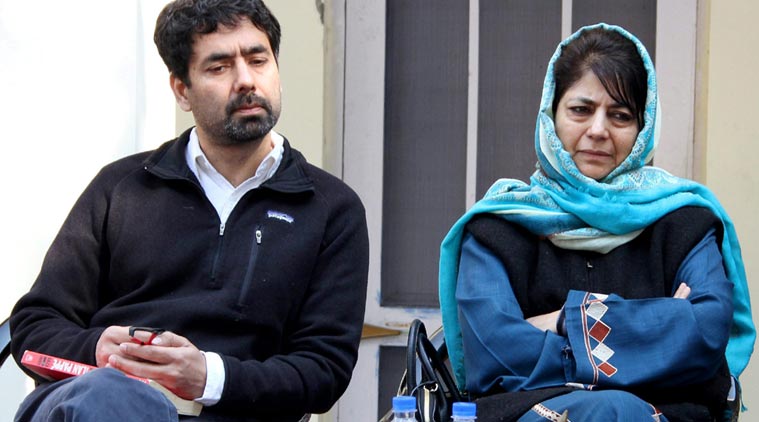
pdp, mehbooba mufti, mufti, pdp bjp, pdp bjp news, jammu kashmir, jammu kashmir alliance, j&k govt, jammu kashmir govt, jammu kashmir news, pdp news, bjp news, india news Peoples Democratic Party (PDP) President Mehbooba Mufti with brother Syed Tasaduq Hussain (File/PTI)

With the BJP taking the first formal steps to end the logjam over government formation in Jammu and Kashmir, the uncertainty in the state may end soon.

While there have been back channel talks between the two alliance partners– PDP and BJP– since the demise of former chief minister Mufti Mohammad Sayeed more than a month and a half ago, BJP general secretary Ram Madhav’s meeting with PDP president Mehbooba Mufti on Wednesday is seen as the formal and final phase of discussions before a decision is taken.

It is not an easy decision for either of them. While the PDP has put forward pre-conditions to formation of the coalition government, it isn’t easy for the BJP to agree to these demands given the volatile political situation in the country following the debate over intolerance and now the latest flare-up at Jawaharlal Nehru University (JNU) in Delhi.

The PDP has openly talked of the need for the Centre to initiate some political and economic measures to “build trust”. The party has maintained that these are not demands or pre-conditions but measures that both parties had agreed to in their ‘Agenda of Alliance’, the document that was supposed to guide the coalition government when it was formed.

The PDP faces a dilemma; its popularity has taken a steep dip after it joined hands with the BJP to form the government in the state, something that was evident by the lack of large numbers of people at Mufti’s funeral.

In the first month of the coalition government, the party had to make compromises on several key issues of the state – be it that of the state flag, Article 370 or the ban on beef. The government failed to implement the ‘Agenda of Alliance’ on the economic front as well.

In such a scenario, the PDP needs and wants some tangible measures–even if they are cosmetic- by Centre that could not only arrest its declining popularity but also help it to re-gain the confidence of people. The removal of Armed Forces Special Powers Act (AFSPA) from certain areas is one such move. On the economic front, it has been seeking the return of two power projects to the state.

Story continues below this ad

The BJP, on the other hand, has its own compulsions. Any decision on the removal of AFSPA would attract criticism from the party that is already under severe pressure for its “double standards” on JNU and PDP.

The party, however, cannot simply say goodbye to the PDP and walk out of the government. After losses in Delhi and Bihar, BJP cannot afford to lose Jammu and Kashmir as well. In the current debate on intolerance, a BJP government in a Muslim-majority state of Jammu and Kashmir is crucial.

The crisis in JNU has only increased the problems for the two political parties and is making it difficult for PDP to justify its alliance with BJP. Thus some political and or economic benefits have to be forthcoming from the Centre for Jammu and Kashmir if the coalition government is to continue.

Bashaarat Masood is a Special Correspondent with The Indian Express. He has been covering Jammu and Kashmir, especially the conflict-ridden Kashmir valley, for two decades. Bashaarat joined The Indian Express after completing his Masters in Mass Communication and Journalism from the University in Kashmir. He has been writing on politics, conflict and development. Bashaarat was awarded with the Ramnath Goenka Excellence in Journalism Awards in 2012 for his stories on the Pathribal fake encounter. Expertise and Experience Two Decades of Frontline Reporting: Bashaarat has spent 20 years documenting the evolution of Kashmir, from high-intensity conflict and political shifts to socio-economic development. Award-Winning Investigative Journalism: He is a recipient of the prestigious Ramnath Goenka Excellence in Journalism Award (2012). This honor was bestowed for his reporting on the Pathribal fake encounter, a series of stories that highlighted his ability to handle sensitive human rights and security issues with investigative rigor. Specialized Beats: His authoritative coverage spans: Political Transitions: Tracking the shift from statehood to Union Territory, electoral dynamics, and the pulse of local governance. Security & Conflict: Providing nuanced reporting on counter-insurgency, civil liberties, and the impact of the conflict on the civilian population. Development: Documenting the infrastructure, healthcare, and educational landscape within the Valley. Academic Background: He holds a Masters in Mass Communication and Journalism from the University of Kashmir, providing him with a localized academic and professional foundation that is rare in regional reporting. ... Read More


 

Latest Comment
Post Comment
Read Comments
Advertisement
Advertisement
Advertisement
Advertisement