Premium
This is an archive article published on February 25, 2021

Explained: What draws Punjabi youth to rallies like Mehraj despite farm unions staying away?

Two recent rallies over the controversial farm laws have witnessed youth participation despite no mobilisation by farmer unions. A look at reasons that made these rallies work.

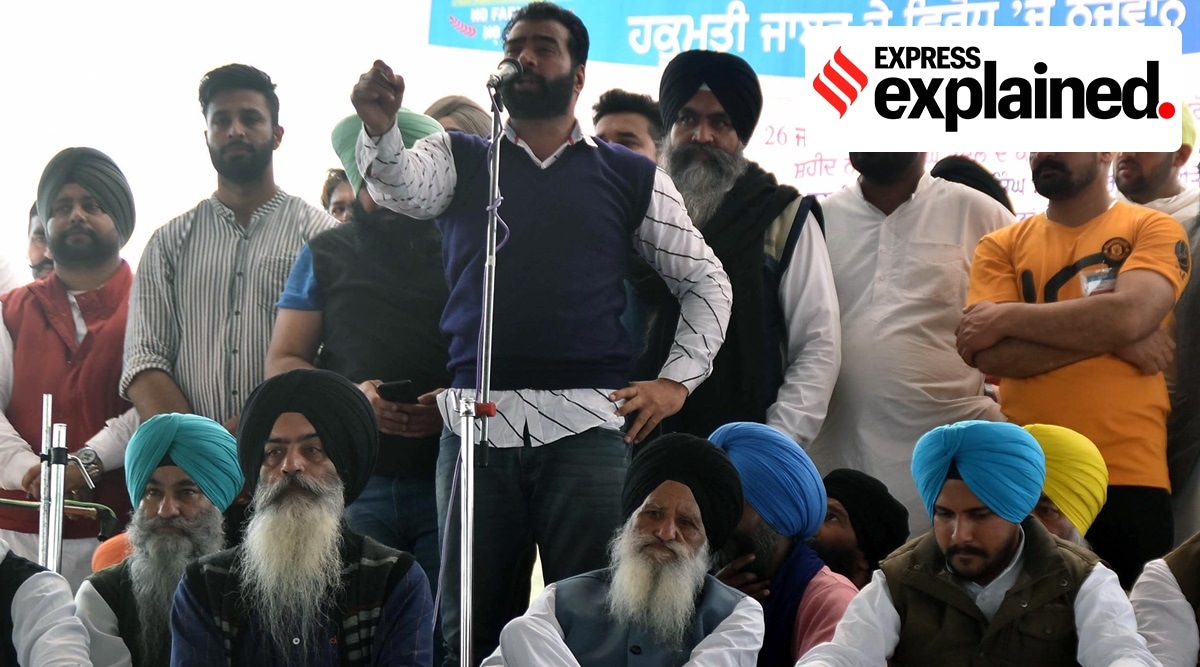
For the Mehraj rally, the call was mainly from former wanted gangster Lakha Sidhana with separatist group Dal Khalsa lending support. (Express Photo: Gurmeet Singh)For the Mehraj rally, the call was mainly from former wanted gangster Lakha Sidhana with separatist group Dal Khalsa lending support. (Express Photo: Gurmeet Singh)

The Mehraj rally held on Tuesday was the second such protest over the controversial farm laws that witnessed youth participation despite no mobilisation by farmer unions. Earlier on September 25, a rally was held at the Haryana border just on calls that went out on social media. For the Mehraj rally, however, the call was mainly from former wanted gangster Lakha Sidhana with separatist group Dal Khalsa lending support. But in both these instances, the well-oiled machinery of famer unions that has been organising massive Kisan Mahapanchayats was not active. The Indian Express looks at reasons that made these rallies work.

Involving youth through social media

While farmer unions have drawn their support mostly from middle-aged and elderly farmers, and even political workers, these rallies saw the involvements of many unaligned youth who were drawn through social media by the likes of actor Deep Sidhu and former gangster Lakha Sidhana who built a narrative over farm laws to reach them through Facebook lives. It was also the first time when several social media influencers also hit ground to join the protests.

Punjabi singers too played an important role in bringing youth to the agitation.

On the flip side, farmer unions had initially denied space to the social media influencers and singers. Famous singers like Harbhajan Mann and Sidhu Mossewala were asked to stay away to avoid ‘nuisance’ during farm protest.

It was only after the Shambu rally that farmer unions had allowed singers to participate thus drawing more youth into the protest.

Ideological constraints acted as put-off

Farmer unions are mostly Left-aligned where as youth coming to their protest had no Left background. Unions wanted youth to behave like their cadre and fall in line without questioning decisions of leadership.

Story continues below this ad

It was, however, unaligned youth of Punjab that had moved towards Delhi on it own in last week of November despite the fact that farmer unions had decided to not break any barricade and sit on dharna whereever they would be stopped on the way to Delhi.

Farmer unions were literally forced to reach Delhi by youth and it also sowed the seed mistrust between protesting youth and unions.

As stages at Delhi Morcha were controlled by the farmer unions, there were restrictions on who would speak from the stage. Deep Sidhu was barred from speaking on the very first day. Lakha Sidhana was barred after he expressed resentment from stage that he was made to wait for his turn to speak.

A former Punjab University president Kanupriya too had said that she also faced resistance over speaking from stage at Singhu. Later, her union was also declared as a traitor by SKM constituents along with Deep Sidhu and Lakha Sidhana.

Delay in taking up cases of arrested youth

Story continues below this ad

At first, farmer unions refused to recognise all arrested after R-Day events as farmers. Facing a backlash on social media, they then drew a distinction between those who broke away from agreed route knowingly and those who did it inadvertently. Young protesters like Navdeep Singh, who become hero after turning off a police water cannon on November 25 while moving towards Delhi, even told farmer leaders publicaly to stand behind every youth arrested on January 26. Navdeep was also present at the rally in Mehraj.

📣 JOIN NOW 📣: The Express Explained Telegram Channel
 

Youth aligned with Sikh bodies

There are many Sikh youth bodies in Punjab, which work in small pockets and don’t have large base. All such Sikh bodies also pushed good number of youth infulencers into the protest. Many of these youngsters received notices from NIA in January and they were not happy with farmer unions allegedly not supporting them.

Unemployment, search for redemption

Unemployment in Punjab has also been citied as a reason by many for large youth participation. Further, the youth in the state have been at the receiving end for several ills plaguing the state including the drug problem. Many who joined the movement saw it as a bid for redemption. The resentment among youth against the political class, apart from farm bills issue, has also been a big force behind these unaligned rallies.

Story continues below this ad

Challenge for political parties

Aam Aadmi Party had attracted Punjabi youth from 2014 to 2017 as it gave hope to common youth of finding space in mainstream politics.

With AAP not being particularly successful in harnessing that youth energy and giving a youth leader to the state picked from among the commoners, sources said, the youth has been drifting to find a rallying point.

The Mehraj rally is also being seen by political analysts as an indication to political parties that established youth leaders are not meeting aspirations of Punjabi youth. With polls due next year, this could prove a challenge for political parties in the state.

Kamaldeep Singh Brar is a Principal Correspondent at The Indian Express, primarily covering Amritsar and the Majha region of Punjab. He is one of the publication's key reporters for stories involving the Akal Takht, the Shiromani Gurdwara Parbandhak Committee (SGPC), and the sensitive socio-political issues of the border districts. Core Beats & Specializations Religious & Panthic Affairs: He has deep expertise in the internal workings of the Akal Takht and SGPC, frequently reporting on religious sentences (Tankhah), Panthic politics, and the influence of Sikh institutions. National Security & Crime: His reporting covers cross-border drug smuggling, drone activities from Pakistan, and the activities of radical groups. Regional Politics: He is the primary correspondent for the Majha belt, covering elections and political shifts in Amritsar, Tarn Taran, and Gurdaspur. Recent Notable Articles (Late 2025) His work in late 2025 has been centered on judicial developments, local body elections, and religious controversies: 1. Religious Politics & Akal Takht "Akal Takht pronounces religious sentences against former Jathedar Giani Gurbachan Singh" (Dec 8, 2025): Covering the historic decision to hold the former Jathedar guilty for granting a pardon to Dera Sacha Sauda chief Gurmeet Ram Rahim in 2015. "YouTube suspends SGPC’s channel for a week over video on 1984 Army action" (Nov 20, 2025): Reporting on the digital friction between global tech platforms and Sikh religious bodies. "As AAP govt grants Amritsar holy tag, a look at its fraught demand" (Nov 28, 2025): An analytical piece on the long-standing demand for declaring Amritsar a "holy city" and its political implications. 2. Crime & National Security "Mostly Khalistanis on Amritpal’s hit list: Punjab govt to High Court" (Dec 16, 2025): Reporting on the state government's claims regarding jailed MP Amritpal Singh orchestrating activity from prison. "Punjab man with links to Pakistan’s ISI handlers killed in encounter" (Nov 20, 2025): Detailing a police operation in Amritsar involving "newly refurbished" firearms likely sent from across the border. "15 schools in Amritsar get bomb threat emails; police launch probe" (Dec 12, 2025): Covering the panic and police response to mass threats against educational institutions. 3. Political Analysis & Elections "AAP wins 12 of 15 zones in SAD stronghold Majitha" (Dec 19, 2025): Highlighting a significant shift in the 2025 rural elections where the Akali Dal lost its grip on a traditional fortress. "Tarn Taran bypoll: woman faces threats after complaining to CM Mann about drug menace" (Nov 9, 2025): A ground report on the personal risks faced by citizens speaking out against the illegal drug trade in border villages. "AAP wins Tarn Taran bypoll, but SAD finds silver lining" (Nov 14, 2025): Analyzing the 2025 assembly by-election results and the surprising performance of Independents backed by radical factions. 4. Human Interest "Two couples and a baby: Punjab drug addiction tragedy has new victims" (Nov 20, 2025): A tragic investigative piece about parents selling an infant to fund their addiction. "Kashmiri women artisans debut at Amritsar’s PITEX" (Dec 8, 2025): A feature on financial independence initiatives for rural women at the Punjab International Trade Expo. Signature Beat Kamaldeep is known for his nuanced understanding of border dynamics. His reporting often highlights the "drug crisis in the underprivileged localities" (like Muradpur in Tarn Taran, Nov 9, 2025), providing a voice to marginalized communities affected by addiction and administrative neglect. X (Twitter): @kamalsbrar ... Read More


 

Latest Comment
Post Comment
Read Comments
Advertisement
Advertisement
Advertisement
Advertisement