Premium
This is an archive article published on November 8, 2020

Explained: Why Stanford University has a list of the top 2 per cent scientists

In the exhaustive list of 1,59,683 persons, 1,492 Indians have found a place, with a majority of them being from IITs and IISc and other top institutes, representing fields like physics, material sciences, chemical engineering, plant biology, energy and others.

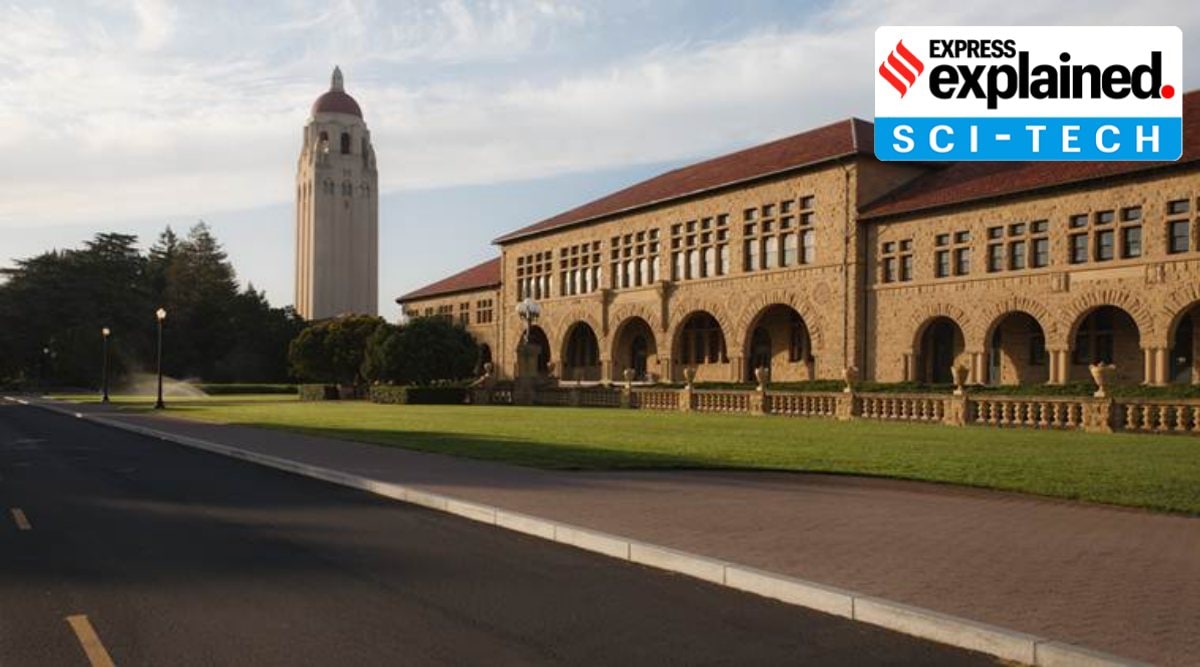
Stanford University’s list of top 2 per cent scientists, stanford university news, express explained, indian expressStanford University (Source: Wikimedia Commons)

Stanford University has recently released a list that represents the top 2 per cent of the most-cited scientists in various disciplines. The exhaustive list has 1,59,683 persons with nearly 1,500 Indians in it.

Why such a study

There is no large scale database that systematically ranks all the most-cited scientists in each and every field to a sufficient ranking depth. There are some like Google Scholar that allow scientists to create their profiles and share them in public. This large database created by experts at Stanford University led by Dr John Ioannidis is also based on data from Scopus that ranks journals and gives a citation index.

This database includes the top 2 percent of scientists of the world from different fields on the basis of standardized citation indications. These include information on the number of citations, H -Index, co-authorship and a composite indicator. The results were published in PloS Biology recently and they have been classified into 22 scientific fields and 176 sub-fields in the report

Nearly 1,500 Indians in the list, majority from IITs, IISc, other top institutes

In the exhaustive list of 1,59,683 persons, 1,492 Indians have found a place, with a majority of them being from IITs and IISc and other top institutes, representing fields like physics, material sciences, chemical engineering, plant biology, energy and others. There were 16 Indian scientists who are ranked 30 or higher in the world, in their respective fields. The list represents the top 2 per cent of the most-cited scientists in various disciplines using a cumulative career citation index (c-index ) as a guide. 📣 Express Explained is now on Telegram

Two Indians in the list of top 30 theoretical physicists in the world

In the field of Nuclear & Particle Physics, there are two Indians: Ashoke Sen (ranked 13) and T. Padmanabhan (ranked 24). In Pune, distinguished professor at Inter University Centre of Astronomy and Astrophysics Prof Thanu Padmanabhan said that he was prompted by several inquiries and congratulatory messages, to closely study the Stanford list of scientists.

Story continues below this ad

“I was interested in finding who were the top physicists in the area I work in (the area of theoretical physics, which the Stanford list calls “Nuclear & Particle Physics”). There were only two Indians and the next Indian name in my field is way down the list, so that the cut-off at 30 does not seriously affect the situation. The fact that many non-Nobel Laureates outrank Nobel Laureates shows the multidimensionality of the selection criteria of the rank list,” Prof Padmanabhan said.

Edward Witten from the Institute of Advanced Studies tops the list in the field of as many as 1,10,499 authors.

Two ranked close to the top in the field of Inorganic and Nuclear Chemistry

There are two Indian in the field of Inorganic and Nuclear Chemistry: Prof Gautam Desiraju, (ranked 2) and CNR Rao (ranked 3) close to the top. Prof Desiraju, former President of the International Year of Crystallography said that the study has been a serious effort as nearly 1.6 lakh scientists are included. “I suppose we are beginning to make a mark in chemistry,” Prof Desiraju said. “Those who are making this list with very high ranks, say less than 1000, are generally known names,” he said.

Story continues below this ad

Others in the top 30 list are two from Biotechnology

Biotechnology also has two names: Dr Ashok Pandey, (ranked 8) and Dr S Venkata Mohan, (rank 29). The remaining 10 Indians are distributed as one each in different subjects, defined by a somewhat subjective classification. For instance Dr Shyam Sundar (rank 7) is from Banaras Hindu University in the field of Tropical medicine. There are 28,529 total authors in this field. Similarly, Anisur Rahman Khuda-Bukhsh (rank 26 in the field of complementary and alternative) is from the University of Kalyani. He said that he had to work with many constraints, particularly lack of proper infrastructural facilities and funding. “The survey has given the scope to know where we really stand in terms of contributing to science in our respective fields,” the retired Professor Emeritus of UGC said. Such studies encourage potential researchers to put in more vigor and zeal to do meaningful research, he added.

Anuradha Mascarenhas is a Senior Editor at The Indian Express, based in Pune. With a career spanning three decades, she is one of the most respected voices in Indian journalism regarding healthcare, science and environment and research developments. She also takes a keen interest in covering women's issues . Professional Background Education: A gold medalist in Communication and Journalism from Savitribai Phule Pune University and a Master’s degree in Literature. Author: She authored the biography At The Wheel Of Research, which chronicles the life and work of Dr. Soumya Swaminathan, the former Chief Scientist at the WHO. Key Focus: She combines scientific accuracy with storytelling, translating complex medical research into compelling public and human-interest narratives. Awards and Recognition Anuradha has won several awards including the Press Council of India's national award for excellence in journalism under the gender based reporting category in 2019 and the Laadli Media award (gender sensitivity -2024). A recipient of the Lokmat journalism award (gender category-2022), she was also shortlisted for the RedInk awards for excellence in journalism-2021. Her debut book At The Wheel Of Research, an exclusive biography of Dr Soumya Swaminathan the inaugural chief scientist of World Health Organisation was also nominated in the Popular Choice Category of JK Paper AUTHER awards. She has also secured competitive fellowships including the Laadli Media Fellowship (2022), the Survivors Against TB – New Research in TB Media Fellowship (2023) and is part of the prestigious 2025 India Cohort of the WomenLift Health Leadership Journey.” Recent Notable Articles (Late 2025) 1. Cancer & Specialized Medical Care "Tata Memorial finds way to kill drug-resistant cancer cells" (Nov 26, 2025): Reporting on a breakthrough for triple-negative breast cancer, one of the most aggressive forms of the disease. Discipline, diet and purpose; How a 97-year-old professor defies ageing'' (Nov 15, 2025) Report about Prof Gururaj Mutalik, the first Head of Department at Pune's B J Government Medical College who at 97 credits his longevity to healthy habits and a strong sense of purpose. 2. Environmental Health (The "Breathless Pune" Series) Long-term exposure even to 'moderate' air leads to chronic heart, lung, kidney issues" (Nov 26, 2025): Part of an investigative series highlighting that even "safe" pollution levels are damaging to vital organs. "For every 10 µg/m3 increase in PM2.5 level, there was 6-8% jump in medicine sales" (Nov 23, 2025): Using commercial data to prove the direct link between air quality and respiratory illnesses in Pune. 3. Lifestyle & Wellness News "They didn't let cancer, diabetes and heart disease stop them from travelling" (Dec 22, 2025): A collaborative piece featuring survivors who share practical tips for traveling with chronic conditions. At 17, his BP shot up to 200/120 mmHG; Lancet study flags why child and teen hypertension doubled between 2000 and 2020'' (Nov 12,2025)--A report that focusses on 17-year-old-boy's hypertensive crisis and reflects the rising global trend of high blood pressure among children and adolescents. 4. Scientific Recognition & Infrastructure For promoting sci-comm, gender diversity: IUCAA woman prof highlighted in Nature" (Nov 25, 2025): Covering the global recognition of Indian women scientists in gender studies and physics. Pune researchers find a spiral galaxy like the Milky Way from early universe'' (December 3, 2025)- A report on how Indian researchers discovered a massive galaxy that existed when the universe was just 1.5 billion years old , one of the earliest to have been observed so far. Signature Beat: Health, Science & Women in Leadership Anuradha is known for her COVID-19 reportage, where she was one of the first journalists to provide detailed insights into the Covishield and Covaxin trials. She has a dedicated interest in gender diversity in health and science, often profiling women researchers who are breaking the "leaky pipeline" in STEM fields. Her writing style is scrupulous, often featuring interviews with top-tier scientists and health experts from various institutions.   ... Read More


Latest Comment
Post Comment
Read Comments
Advertisement
Advertisement
Advertisement
Advertisement