4 min read
© The Indian Express Pvt Ltd



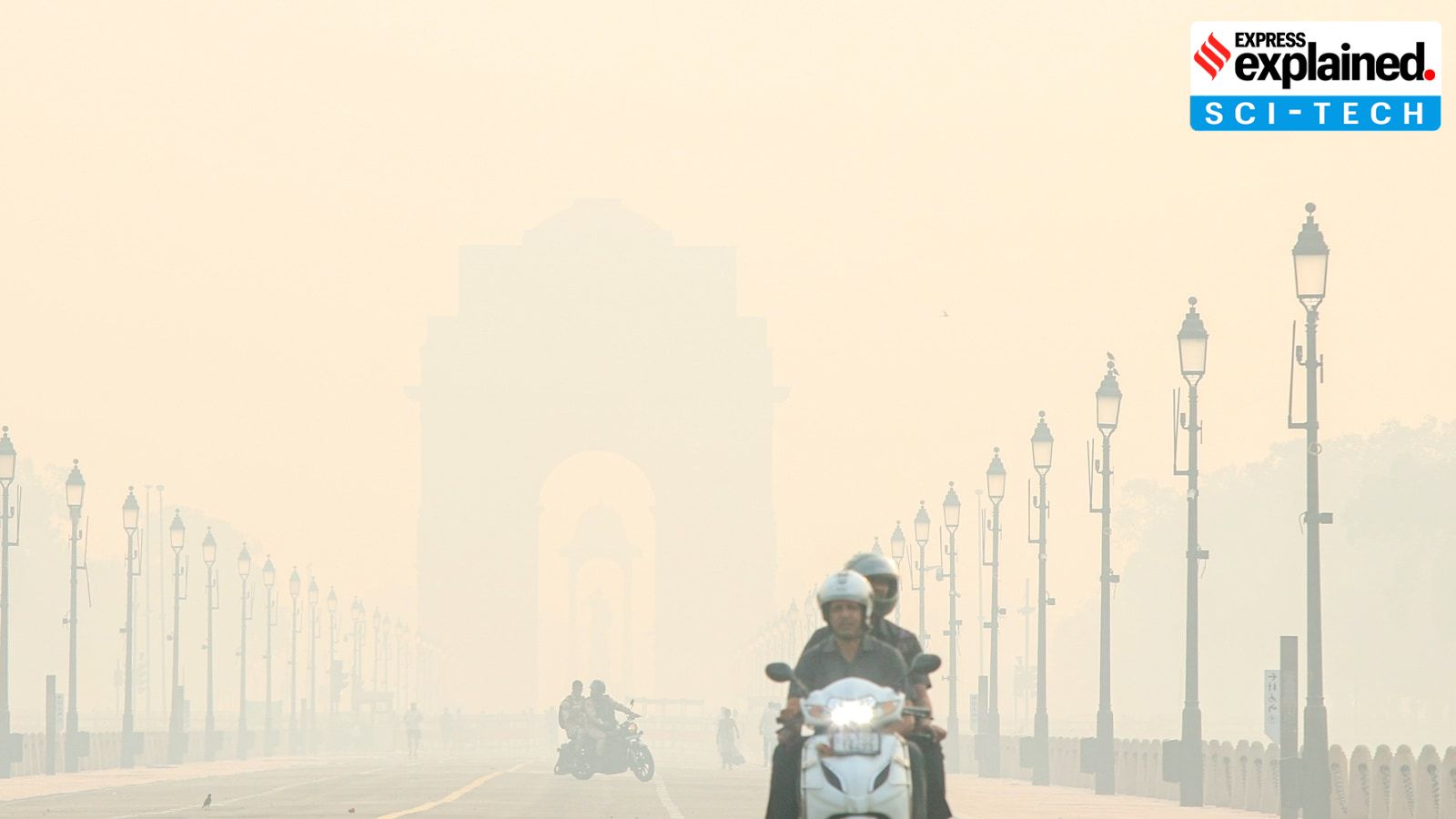 In September this year, the Delhi government inked an MoU with IIT-Kanpur to fight the annual air pollution menace through cloud seeding. (Photo: File)
Delhi Artificial Rain Cloud Seeding: The proposed cloud seeding exercise in New Delhi has already faced multiple reschedules due to unfavourable weather and the wait for appropriate cloud development. Since Diwali, the air quality in Delhi-NCR has deteriorated, and the government pressed-in GRAP 2 levels of restrictions recently.
But cloud seeding in Delhi during the post-monsoon season may not be a good idea. Here is a look at why.
The requirement
Every winter, the air quality in Delhi and the surrounding areas deteriorates over a few kilometers. Smog and polluted air threaten public life, especially those with compromised lungs and respiratory conditions. Smog affects vehicular visibility, leading to cancellations of flights and disruption in other transport services.
In September this year, the Delhi government inked an MoU with IIT-Kanpur to fight the annual air pollution menace through cloud seeding. IIT-Kanpur would conduct experiments using its Cessna 206H aircraft launched from the Hindon airbase. The estimated cost of the trial is Rs 3.5 crore. The latest cloud seeding effort is towards combating this recurring air pollution.
The challenges
The India Meteorological Department (IMD) classifies October to December as the period of the post-monsoon season. This means that the rain-bearing, moisture-laden monsoon clouds and the associated synoptic systems, like monsoonal low pressures or depressions (which trigger rainfall), would be largely absent.
The winds are calm, and atmospheric conditions largely favour dry weather conditions during this season, unless triggered by the passing western disturbances at lower latitudes. Western disturbances cause rain and snow over north and northwest India during the post-monsoon/winter seasons.
Cloud seeding, hence, cannot be performed with these quintessential rain-bearing clouds remaining absent. Even if seeding attempts are made onto visible clouds, these may not necessarily lead to rain.
Largely, the timing of the cloud seeding experiment planned by the Delhi government is amiss, according to multiple officials associated with the Ministry of Earth Sciences, who have previously undertaken cloud seeding experiments.
“The Delhi government seems to have been misadvised about cloud seeding to be done in the post-monsoon / winter season. There will be no use of it as the season is dominated by western disturbances, making the seeding difficult in the absence of mature clouds,” said a senior official at the Ministry of Earth Sciences.
Moreover, there is no scientific data with MoES indicating that cloud seeding efforts could lead to rainfall over Delhi.
MoES had previously conducted the Cloud Aerosol Interaction and Precipitation Enhancement Experiment (CAIPEEX) in four phases in the southern peninsular India region. During the phased studies done in 2009, 2010-2011, 2014-2015, and 2017-2019. Following the latest phase of experiments conducted over Solapur in Maharashtra, now there are elaborate protocols and guidelines formulated to guide policymakers and stakeholders to plan and conduct cloud seeding in India.
The outcomes from the latest experiments were:
The report further said that the potential applications could include: