6 min read
© The Indian Express Pvt Ltd



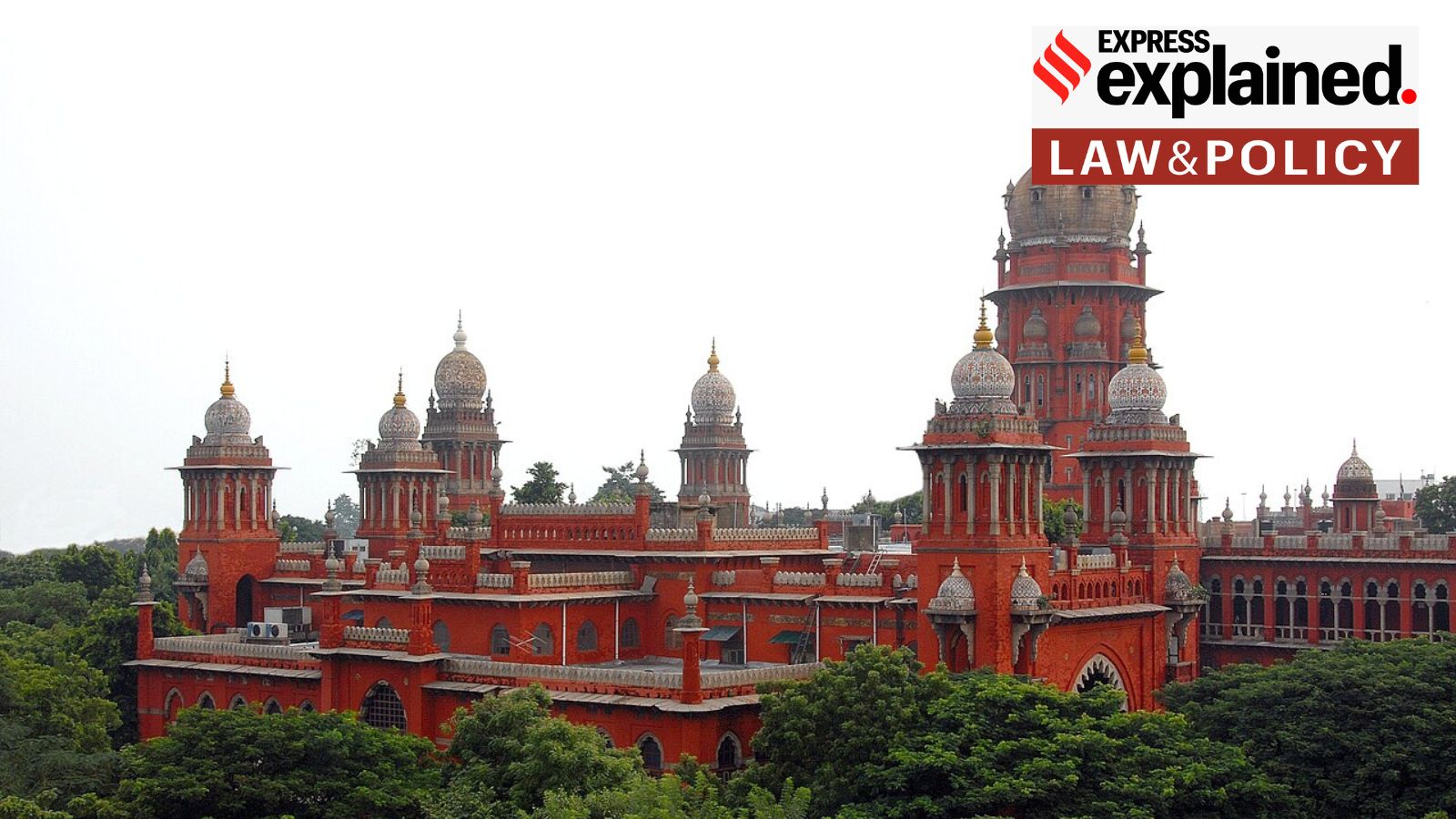 The Madras HC held , holding that the ritual could take place, but without public participation.
 A Division Bench of the Madras High Court on January 6 settled the dispute over the lighting of the ceremonial lamp for Karthigai Deepam at a stone pillar on Thiruparankundram hill near Madurai, holding that the ritual could take place, but without public participation.
The Bench, comprising Justices G Jayachandran and K K Ramakrishnan, rejected the State’s repeated warnings of communal disturbance, observing that the apprehension of unrest was “nothing but an imaginary ghost created by them for their convenience sake and to put one community against other community under suspicion and constant mistrust.”
At the same time, the court limited the manner in which the ritual could be performed, directing that only a small team from the temple administration could go up to light the lamp, with no public access to the hilltop.
Background of the case
Thiruparankundram hill rises about 1050ft on the outskirts of Madurai. At its base stands the Arulmigu Subramanian Swamy Cave Temple, associated with Hindu worship for centuries. Over time, the hill also became home to Jain rock beds and caves carved over many centuries. At the summit lies the burial site of the Sufi saint Sikkandar Badhusha, where a dargah later developed.
These layers gave the hill more than one identity. It has been referred to as “Samanar Hill” for its Jain associations and “Sikkandar Hill” after the Sufi saint. It has also been a site that regularly requires police deployment during festivals, when questions of access and movement tend to surface.
The hill’s legal history dates back to a civil suit filed in 1920, in which the temple Devasthanam claimed title over the entire hill. In 1923, the trial court ruled that most of the unoccupied hill and the pilgrim path were temple property, while the topmost peak, the area around the mosque, Nellithope, and the steps leading to the mosque were Muslim property. This arrangement became the basis for later disputes.
Earlier disputes
Litigation over Thiruparankundram continued over the decades. In 2021, a dispute arose over replacing a wooden flagstaff at the dargah with an iron one. In early 2025, another controversy followed an attempt to perform animal sacrifice at the hilltop, which a three-judge Bench later prohibited, noting that the hill is a protected monument under rules of the Archaeological Survey of India.
The present dispute concerns the lighting of a festival lamp on the hilltop. Records placed before the court showed that attempts to light lamps near the summit were stopped by authorities in the 19th and early 20th centuries, citing the absence of established custom and public order concerns.
The issue returned to court in 1994, when volunteers sought to light a Deepam at the peak. In a 1996 judgment, the High Court directed that the Karthigai Deepam be lit at the Uchipillaiyar Temple mandapam, while allowing the Devasthanam to consider alternate locations, provided the “suitable place [is] at least 15 metres away from the Dargah, the flight of steps and the Nellithope area.”
The trigger in December 2025
Against this backdrop, a group of worshippers approached the court in late November 2025 seeking permission to light the Karthigai Deepam on December 3 at a stone pillar on the hill known locally as the “Deepathoon.” On December 1, a Single Judge allowed the petitions, viewing the act as a restoration of religious practice and directing the temple management to light the lamp with police assistance.
“Karthigai is also a festival of light. Lamps are lit all over the house and not in the pooja room alone. The Karthigai Deepam shall be lit from this year onwards at Deepathoon also,” the court said. When the temple’s Executive Officer expressed difficulty in implementing the order, citing law-and-order concerns, the Single Judge initiated contempt proceedings and permitted a small team to climb the hill under security cover.
State objections
The State government and the Hindu Religious and Charitable Endowments Department challenged the order, arguing that disputes over custom and usage must be decided under the HR&CE Act and not through writ proceedings. They also questioned whether the pillar was religious in nature, suggesting it could be a survey marker or a remnant linked to Jain use.
Citing concerns over crowd control and public peace, the police imposed prohibitory orders under Section 163 of the Bharatiya Nagarik Suraksha Sanhita. The lamp was not lit on the festival day, leading to appeals by the State, the HR&CE Department, and representatives of the dargah.
What the Division Bench held
The Division Bench held that the structure was a Deepathoon, noting that it had a carved cavity capable of holding oil and wicks, and rejected the claim that it was merely a survey marker.
On law and order, the court said the administration’s apprehensions were “nothing but an imaginary ghost,” adding that allowing a small team of temple officials to go up the hill once a year could not be considered unmanageable.
“It is ridiculous and hard to believe the fear of the mighty State,” the Bench said, observing that disturbance would arise only “if such disturbance is sponsored by the State itself.”
At the same time, the court modified the Single Judge’s order, directing that the Devasthanam may light the lamp at the Deepathoon only through a limited team, with no public access. The District Collector was asked to coordinate the exercise, subject to conditions imposed by the Archaeological Survey of India to protect the monument.