5 min read
© The Indian Express Pvt Ltd



 The petition goes beyond a simple copyright dispute. It challenges the constitutionality of the Information Technology (Intermediary Guidelines and Digital Media Ethics Code) Rules, 2021 (IT Rules). (Photo: File)
The Kerala High Court on Wednesday (January 7) admitted a writ petition that could have considerable implications for how digital platforms handle content moderation and free speech in India.
Justice Ziyad Rahman A A issued notice to the Union government and Google India after Liyakkathali C, a prominent rationalist and YouTuber, approached the court facing the imminent termination of his channel due to copyright strikes.
The case represents an emerging schism in the digital age: the use of copyright claims to potentially silence criticism and the power dynamics between individual creators and “significant social media intermediaries” like YouTube.
Who is the petitioner?
Liyakkathali C is the president of the ‘Ex-Muslims of Kerala’, an organisation formed to support individuals who have left Islam. A vocal critic of orthodox religious practices, Liyakkathali runs a YouTube channel, “Liyakkathali CM”, that has almost 1.6 lakh subscribers and has garnered over 5.58 crore views.
According to his petition, Liyakkathali’s content focuses on “dissemination of knowledge and fair criticism of orthodox religious principles through the eye of rationalism and scientific temper,” a duty he links to Article 51-A(h) of the Constitution.
What triggered the legal battle?
The controversy began in late December 2025, after Liyakkathali announced a new project titled “Murtadd” – meaning apostate. Following this, his channel was hit with multiple copyright complaints from various religious organisations and individuals, including the Wisdom Islamic Organization and Islamic preacher M M Akbar.
Under YouTube’s policy, if a channel receives three active copyright strikes within 90 days, it is subject to termination. Liyakkathali received eight strikes – although one of them was later withdrawn. The platform informed him that his channel was scheduled to be terminated on January 9, 2026. He has not posted on his channel since January 1.
The impugned content contained short clips or “trailers” taken from the speeches of religious preachers, which Liyakkathali used as precursors for critical analysis and commentary in the videos. Liyakkathali argues that his use of these clips falls squarely under the “fair use” doctrine.
What is ‘fair use’?
“Fair use” is a legal doctrine that permits the limited use of copyrighted material without having to acquire permission from the rights holder. In the context of YouTube and copyright law, common examples of fair use include commentary, criticism, news reporting and research.
Liyakkathali contends that he only reproduced portions of videos to “highlight the retrograde, un-scientific, un-constitutional ideas” contained within them and to offer a point-by-point rebuttal. He argues that it is impossible to offer criticism unless the portions being critiqued are shown to the audience. The strikes are, therefore, he claims, “malicious, unjustified and with a view to close down the channel.”
Constitutional challenge
The petition goes beyond a simple copyright dispute. It challenges the constitutionality of the Information Technology (Intermediary Guidelines and Digital Media Ethics Code) Rules, 2021 (IT Rules).
Liyakkathali submitted “counter-notifications” – in YouTube’s parlance, a formal response to the copyright strikes – to the video streaming platform for the strikes, explaining his fair use defence. However, the platform rejected six of these counter-notifications without providing any reasons. His petition argues that YouTube, defined as a “significant social media intermediary” under the IT Rules because of its massive user base, exercised its powers “arbitrarily” and “without application of mind”. By acting as a final arbiter on speech without providing a reasoned order, he contends, YouTube is curtailing the fundamental right to free speech guaranteed under Article 19(1)(a) of the Constitution.
The petition specifically challenges Rule 3(1)(b)(iv) of the IT Rules and provisions of the IT Act, 2000. It argues that the delegated legislation gives “unbridled, unguided, arbitrary powers” to private social media companies to act as censors, and that a private entity should not have the power to silence a citizen’s speech based on automated systems or opaque internal policies, especially when the content serves a public function of critique and debate.
Why is this significant?
This case touches upon a significant grey area in Indian law. While the IT Rules, 2021, were introduced to increase the accountability of big tech firms, they have faced criticism for incentivising platforms to over-censor content to avoid liability.
The petition cites a previous judgment by the High Court from 2019 that held online freedom to be a part of the fundamental rights guaranteed by Articles 19(1)(a) and 21 of the Constitution.
Liyakkathali has sought from the court a direction to the government to ensure that censorship on social media is carried out strictly in accordance with the Constitution. He has also asked the court to direct intermediaries to mandatorily forward counter-notifications to copyright claimants, rather than adjudicating the validity of the defence themselves.
With the High Court admitting the matter, the case will now examine whether the “safe harbour” protections given to platforms like YouTube allow them to override the fair use rights of creators and whether the current IT Rules provide adequate safeguards for digital freedom of expression.

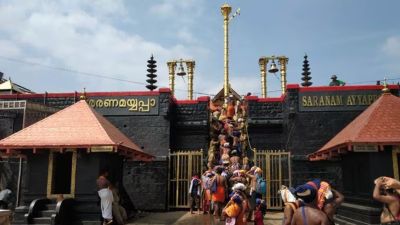
The arrest of a senior Sabarimala priest in connection with the theft of gold from the temple has sparked a political row, with the BJP and right-wing organisations alleging a conspiracy to shield the CPI(M) and Congress leaders involved in the scandal. The SIT arrested the most senior Tantri, Kandararu Rajeevaru, in connection with the misappropriation of gold from temple artefacts in 2019.