7 min read
© The Indian Express Pvt Ltd



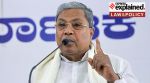
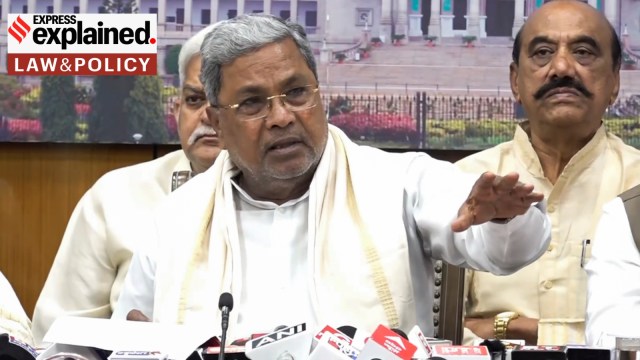 Karnataka Chief Minister Siddaramaiah addressed a press conference in Bengaluru on Tuesday. (PTI Photo)
In a setback to Karnataka Chief Minister Siddaramaiah, the Karnataka High Court on Tuesday allowed an investigation against him in the alleged Mysore Urban Development Authority (MUDA) scam case.
Justice M Nagaprasanna upheld Governor Thawarchand Gehlot’s decision to grant sanction to a probe against the Chief Minister. The decision to allow the investigation is an “irresistible conclusion,” the 200-page ruling stated.
What is the case against Siddaramaiah?
On August 16, Governor Gehlot allowed the police to investigate the Chief Minister’s involvement in the alleged MUDA scam case. The development came in response to complaints filed by three anti-corruption activists — T J Abraham, Snehamayi Krishna, and Pradeep Kumar.
According to the complaints, the Chief Minister’s wife, Parvathi, got 14 housing plots in Mysuru in 2021 (when the BJP was in power) in exchange for 3.16 acres of land that was allegedly acquired illegally by MUDA around 2013. This allegedly resulted in a Rs 55.80 crore loss for the state.
On August 1, Karnataka’s Council of Ministers met and passed a resolution “strongly advising” the Governor to withdraw the complaints. However, the Governor allowed proceedings against the Chief Minister under the Prevention of Corruption Act, 1988, and the Bharatiya Nyaya Sanhita, 2023.
Why did the Governor grant sanction?
This sanction is necessary under Section 17A of the Prevention of Corruption Act (PCA) to investigate and prosecute public officials for offences allegedly committed during the “discharge of official functions or duties”. The police officer must receive the “previous approval” of the “authority competent to remove” the public official from office, which in the case of the Chief Minister is the Governor of the state.
The Governor Gehlot’s order stated that this was an “extraordinary circumstance” because it is difficult to conclude that the Council of Ministers acted “fairly and in a bona fide manner”. The order also said that it is “natural” that the Council of Ministers would support the Chief Minister who is responsible for their appointments. The Council of Ministers also ignored certain key pieces of information regarding the transaction in their resolution, according to the order.
On what grounds did Siddaramaiah challenge the sanction?
Siddaramaiah moved the Karnataka High Court, challenging the Governor’s decision on three grounds.
First, whether sanction can be given when the complaint is made by a private person. Section 17A of the PCA specifically deals with the procedure when the police seek sanction to conduct an inquiry.
Second, the sanction is invalid since Siddaramaiah was not discharging any official functions at the time of the land acquisition that is in question. He was an MLA but was in the Opposition.
Third, the Governor ignored the advice of the Council of Ministers and allowed a probe against the Chief Minister. Under Article 163 of the Constitution of India, the Governor is bound by the aid and advice of the Council of Ministers.
What did the court decide?
On whether a private complaint can be entertained: The High Court said that if a private person could not seek recourse under the PCA when they had a complaint against a public official, they would be forced to file a complaint under the Code of Criminal Procedure, 1973. As a result, the police would have no choice but to register the crime and begin the investigation. This, the High Court said, would make the protection of requiring prior sanction under the PCA “redundant” as it means to protect public officials from being the target of frivolous cases.
So, not only can a private individual file a complaint under the PCA, it is also “necessary” for private individuals to seek the necessary approval under Section 17A, the court said.
On whether Siddaramaiah was a ‘public servant’: The Chief Minister argued that none of the allegations in any of the complaints points to a single decision or recommendation made by Siddaramaiah. This was a necessary requirement to grant sanction under Section 17A of the PCA as the offence must be “relatable to any recommendation made or decision taken by such public servant in discharge of his official functions or duties”, according to the Chief Minister’s lawyers.
On this issue, the court noted that the alleged scam pertains to the series of transactions and apparent irregularities surrounding the 3.16 acres of land in Mysuru. The reasons are:
The court also found that significant action from the state appeared to coincide with Siddaramaiah’s stints as MLA, Deputy Chief Minister, and Chief Minister. Justice Nagaprasanna said, “If this does not require investigation, I fail to understand what other case can merit investigation, as the beneficiary is the family of the petitioner and the benefit is by leaps and bounds, it is in fact a windfall.”
“If this were to be a case of common man, he would not have fought shy of facing the investigation. In the opinion of the Court, the Chief Minister, a leader of the proletariat, the bourgeois and of any citizen, should not fight shy of any investigation,” he also said.
On the issue of the powers of the Governor: The court held that the Governor can act independently to give permission to prosecute a Chief Minister or a Minister if there is a “real likelihood of bias” from the state government. Justice Nagaprasanna said, “What would unmistakably emerge is that the decision of the Cabinet – the cabinet nominated by the Chief Minister, would not be free from bias or being partisan towards their leader. It is in such exceptional circumstance, independent discretion is imperative”.
The High Court cited the Supreme Court’s ruling in Madhya Pradesh Police Establishment v. State of Madhya Pradesh (2004), where the court held that the Governor could provide sanction if the material on record shows a prima facie (at face value) case against the public official. Governor Gehlot also relied on this case in his order which granted sanction.


Fans in India finally got to have a good look at Lionel Messi in the second leg of his GOAT Tour of India as the Argentina football great's event at the Uppal Stadium in Hyderabad went without incident, in stark contrast to what was the case earlier on Saturday in Kolkata.