5 min read


© The Indian Express Pvt Ltd



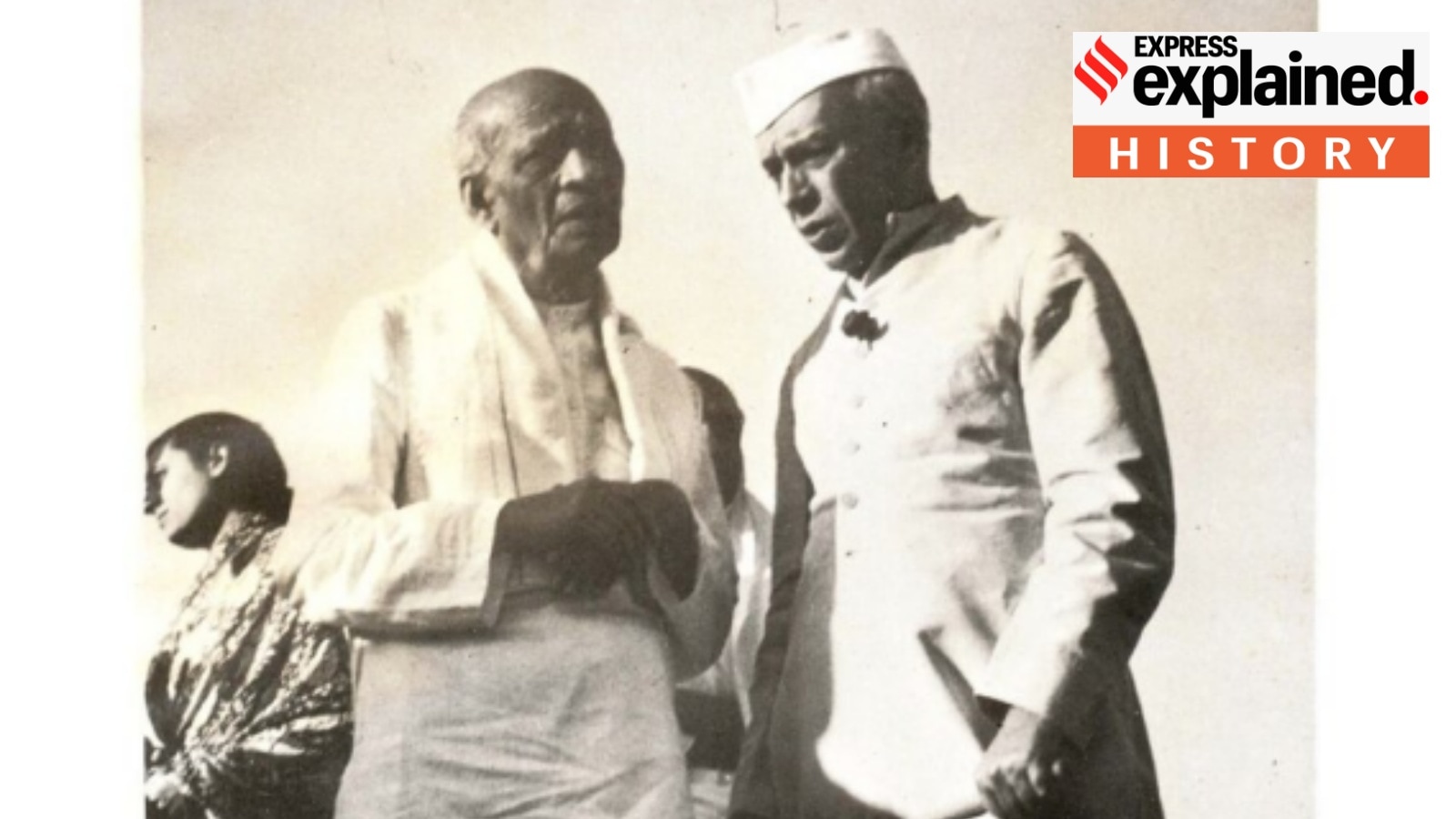 Nehru first prime minister: Jawaharlal Nehru with Sardar Vallabhbhai Patel in 1950. (Nehru Archives)
Nehru first prime minister: In responding to Congress leader Rahul Gandhi’s “vote chori” charge, Union Home Minister Amit Shah delved into India’s Independence-era politics, invoking what he described as a historical subterfuge in Jawaharlal Nehru’s elevation as independent India’s first prime minister.
Shah argued that in 1946, when the Congress was choosing its president — a decision that would effectively determine the head of the interim government and later the first prime minister — the majority of state units backed Sardar Vallabhbhai Patel. Yet, Nehru became the consensus choice, a development Shah characterised as “vote chori”.
The episode Shah referred to centres on the 1946 Congress presidential election, a moment that shaped both the interim administration and the leadership of a soon-to-be sovereign nation.
With World War II drawing to a close, negotiations between the Indian National Congress and the British government over the transfer of power gathered pace. In this context, the Congress decided to hold internal elections — a routine annual affair that had been deferred for six years. The disruptions of the civil disobedience movement of 1940-41, the imprisonment of top leaders, the general elections of 1945-46, and the Cabinet Mission’s arrival all contributed to the delay.
Ordinarily, the Congress presidency did not carry great executive power. Gandhi’s towering presence meant organisational decisions flowed through him. The post was often more ceremonial than authoritative.
But in 1946, the stakes were different. The Congress president would lead the interim government, making him the de facto head of the soon-to-be independent administration.
The three official candidates for the election were Patel, Nehru and Acharya J B Kripalani. The incumbent president, Maulana Abul Kalam Azad, had hoped to continue and several provincial committees had proposed his name. But days before the vote, both Kripalani and Patel informed the All India Congress Committee that they wished to withdraw, leaving Nehru the sole candidate.
The story behind these withdrawals, however, was more complex. As Rajmohan Gandhi records in Patel: A Life, Gandhi had privately made it clear by April 20 that his preference was Nehru. When a newspaper suggested that Azad might be re-elected, Gandhi wrote to the Maulana expressing his reservations about another term. He urged Azad to clarify that he did not intend to continue. “In today’s circumstances, I would, if asked, prefer Jawaharlal,” Gandhi wrote.
Despite Gandhi’s preference, Patel was the overwhelming organisational choice: 12 of the 15 provincial Congress committees reportedly backed him, owing to his reputation as a strong executive, organiser and leader with a widely acknowledged role in the Quit India movement.
To honour Gandhi’s wishes, Kripalani proposed Nehru’s name at a Working Committee meeting, and members — including Patel — signed the proposal. Kripalani then withdrew his own nomination and drafted a withdrawal note for Patel as well.
Patel showed the note to Gandhi. Gandhi, despite his clear preference, offered Nehru the opportunity to step aside since no provincial committee had backed him. Nehru remained silent, a silence interpreted as unwillingness to accept the second position. Gandhi then asked Patel to sign the withdrawal, which he did without protest.
Nehru was thus elected unopposed. A month later, the Viceroy invited him to form the interim government. Nehru’s biographer Michael Brecher later wrote: “If Gandhi had not intervened, Patel would have been the first de facto premier of India.” The Sardar, he noted, “was robbed of the prize and it rankled deeply”.
A year later, Gandhi publicly explained his stance. “Jawaharlal cannot be replaced today, whilst the charge is being taken from Englishmen,” he said. Gandhi believed that Nehru, a Harrow and Cambridge alumnus as well as a barrister, was better suited to negotiate with the British leadership.
Gandhi also recognised that Nehru enjoyed goodwill among at least a section of Muslims, which Patel did not cultivate as strongly. Internationally, too, Nehru was better known, and Gandhi felt this visibility would help India assert itself in global affairs.
Finally, Gandhi believed that Nehru’s elevation would not come at the cost of Patel’s contribution. “They will be like two oxen yoked to the governmental cart,” he said. “One will need the other and both will pull together.”
How did Patel react?
There are differing accounts of Patel’s reaction. He neither protested nor defied Gandhi’s directive. At 71, he knew such an opportunity was unlikely to come again.
Rajmohan Gandhi notes that those close to Patel said the denial hurt him deeply. Others argue that the decision did not affect his commitment to party work or governance. A week after the election, Patel was reportedly making everyone — including Gandhi — “laugh a lot”.