


Tags:


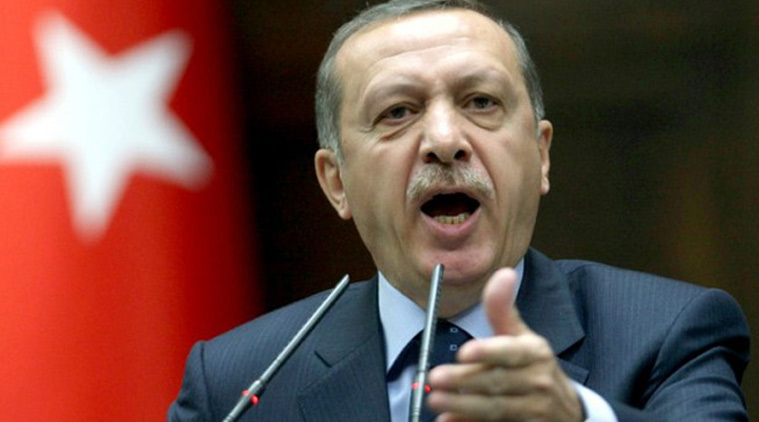
President Recep Tayyip Erdogan wanted a ‘new’ Turkey, with a presidential system of government that he could personally helm. He — and his AKP — were instead handed their worst-ever election defeat, and are now struggling to form the government. How and why did this happen?
What The Results Mean

No parliamentary majority for the AK Party means his ambition and push for greater power are slowed. He stays with the largely ceremonial role of president, even if he is secure in his term until 2019. He may have to deal with a prime minister from a different party, or a power struggle with parliament, but is likely to be backed by the bureaucracy, and relationships he has nurtured for over a decade.

FOR TURKEY
Some instability looms for now as talks on government-formation progress — or, in case of a stalemate, new elections are called after 45 days. Of several possibilities, an AKP coalition with the far-right MHP seems most likely. The economy — which, after growing annually at 4.5% on average under Erdogan, slowed to 2.9% in 2014 — and flagging peace talks with Kurds, are top concerns.
[related-post]
FOR MINORITIES
An AKP-MHP coalition will be bad news for negotiations with the insurgent Kurdish minority, and could halt the process that led to the end of guerrilla skirmishing, and re-trigger the violence. On the other hand, the Kurds have over 13% of the vote and 80 seats and, for the first time ever, an audible voice on the national stage — which will count for something.
FOR THE WORLD
Erdogan has been a reluctant ally in the campaign against the Islamic State; has been accused of playing a double game in Syria. He has rubbed regional leaders from Jerusalem to Cairo the wrong way, and annoyed the West by cosying up to Putin. He could sober down now, become more pliable. In parliament, HDP will push for going softer on Syria’s Kurds.
By attracting secular Turks, women, environmentalists, leftists, urban intellectuals, liberals and gay-rights activists: groups at the heart of the 2013 protests. This inclusiveness — HDP has a 50% women’s quota, many MPs are openly gay — is a cultural-political earthquake. Significantly, a Kurdish group has MPs in western cities Izmir, Antalya, Bursa, Istanbul.
…And Erdogan Lost
In a campaign that overshadowed his own PM, used radical Islam to woo conservatives, painted the opposition as terrorists, traitors and infidels, and denounced criticism as sedition. Result is seen as the third election — after the rejection of Mustafa Kemal in 1950, and of a generals’ party in 1983 — in which voters have chosen democratic process over dictatorship.


