7 min read


© The Indian Express Pvt Ltd



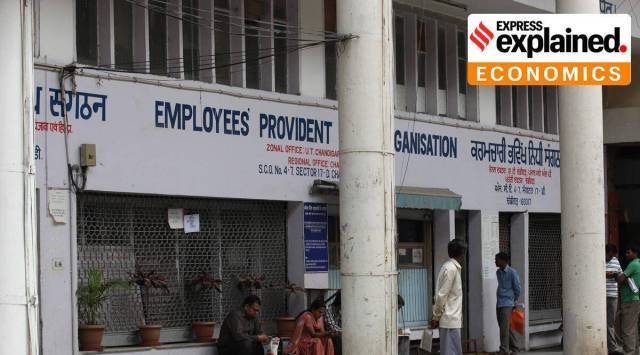 The deadline to apply for higher pension under the Employees’ Pension Scheme (EPS) was to end today, June 26. (File)
 The Employees’ Provident Fund Organisation (EPFO) has extended the deadline to apply for higher pensions till July 11, the second such extension within two months. There is a distinction in the extension of the deadline this time around, with employers getting additional time of three months till September 30 and employees getting time till July 11.
The deadline to apply for higher pensions under the Employees’ Pension Scheme (EPS) was to end on June 26.
For the higher pension option, 16.06 lakh applications are estimated to have been received so far, an EPFO statement said.
Why the extension?
Applicants have been facing recurring issues, with many raising concerns about the lack of clarity on the amount to be deposited to avail of the higher pension. Some have faced difficulties in processing applications.
The earlier deadline was till May 3.
Many of those who had made some changes to their Aadhaar, which is in turn linked to their EPF UAN (Universal Account Number), have been unable to submit their applications. Authorities are being cautious in allowing these changes without proper verification, and hence, it is taking more time to process such applications, sources said.
Others are struggling with the joint option validation, which is to be done by employers along with employees. Many employers have cited difficulties in tracing past historical data for employees’ salaries. As many as 30 employers are learnt to have not agreed to validate the joint option. The authorities have received 15 lakh applications, out of which 3-4 lakh applications are from retirees and the rest are from current subscribers.
Over the amount to be deposited, issues arise especially for those who may have withdrawn some amounts from their PF account in the past few years and thus may not have adequate balance to opt for higher pension. Another concern is that in absence of an estimate of the required amount for the pension, a subscriber may have opted for the higher pension but since the pension scheme per se does not allow exit, they may face difficulties in opting out if they don’t want to continue.
For this legal bottleneck, subscribers are expected to get a three-month window to pay the dues once the higher pension scheme becomes operational, failing which they will be considered ineligible. Also, the subscribers have been given a calculator on the online portal by which they can estimate their dues approximately, sources said.
What pension structure exists currently?
The Employees’ Provident Funds and Miscellaneous Provisions Act, 1952 did not provide for a pension scheme. The EPS, administered by the EPFO, came into being in 1995. The pension fund was to comprise a deposit of 8.33% of the employers’ contribution towards the PF corpus. Both employees and employers contribute 12% of the employee’s basic salary, dearness allowance and retaining allowance, if any, to the EPF. The employee’s entire contribution goes to EPF, while the 12% contribution by the employer is split as 3.67% to EPF and 8.33% to EPS. The Government of India contributes 1.16% for an employee’s pension for those below the wage threshold. Employees do not contribute to the pension scheme.
The Supreme Court in a ruling on November 4 last year had upheld the amendments to the Employees’ Pension (Amendment) Scheme, 2014, providing another chance for employees who were existing EPS members as on September 1, 2014 to contribute up to 8.33% of their ‘actual’ salaries — as against 8.33 per cent of the pensionable salary capped at Rs 15,000 a month — towards pension.
At the time of the introduction of EPS, the maximum pensionable salary was Rs 5,000 per month. This was subsequently raised to Rs 6,500 and, from September 1, 2014, to Rs 15,000. The pension contribution currently is 8.33% of Rs 15,000, that is, Rs 1,250 — unless the employee and employer have opted to contribute at actual basic salary exceeding the pensionable salary.
Last month, in a circular, the EPFO said an additional contribution of 1.16% of basic wages for subscribers opting for the higher pension will be managed from employers’ contributions towards the EPFO.
Who gets pension under the EPS, and how much?
The EPS provides employees with a pension after the age of 58 if they have rendered at least 10 years of service and retired at age 58. If a member leaves employment between ages 50 and 57, they can avail early (reduced) pension.
The monthly pension is computed according to this formula: Monthly pension = pensionable salary x pensionable service / 70, based on a pro-rata basis linked to the maximum monthly pensionable salary of Rs 6,500 for pensionable service up to September 1, 2014, and Rs 15,000 thereafter.
Under the pre-amendment scheme, the pensionable salary was computed as the average of the salary drawn during the 12 months prior to exit from membership of the pension fund. The 2014 amendments raised this to an average of 60 months prior to exit.
In a recent circular, the EPFO detailed the method of computation of pension in a circular to its field offices for those opting for pension linked to higher wages, stating that pension would be calculated based on average monthly pay for 12 months before exit for cases where pension commenced before September 1, 2014, and will be based on average monthly pay drawn for 60 months preceding the date of exit from the pension fund.
What were the 2014 amendments in EPS?
The amendments of August 22, 2014, raised the pensionable salary cap to Rs 15,000 a month from Rs 6,500 and allowed members along with their employers to contribute 8.33% of their actual salaries (if it exceeded the cap) towards EPS.
It gave all EPS members as on September 1, 2014, six months to opt for the amended scheme, extendable by another six months at the discretion of the Regional Provident Fund Commissioner.
Members opting for pensions linked to actual salaries exceeding the wage ceiling were required to contribute an additional 1.16% of their salary towards the pension fund.
Those who did not exercise the option within the stipulated or extended period were deemed to have not opted for contribution over the pensionable salary cap and the extra contributions already made to the pension fund were to be diverted to the provident fund account of the member, along with interest.
What did the Supreme Court say in its November 2022 judgment?
Fifty-four writ petitions were filed by employees from both exempt and unexempted establishments asking for the amendments to be struck down. The employees cited a lack of information and awareness about the time window to opt for the amended pension scheme linked to higher pensionable salary.
A three-judge Bench of the then Chief Justice of India UU Lalit and Justices Aniruddha Bose and Sudhanshu Dhulia upheld the 2014 amendments, but extended the time to opt for the new scheme by four months. The operation of the amendment requiring members to make the 1.16% contribution was suspended by the court for six months.