4 min read





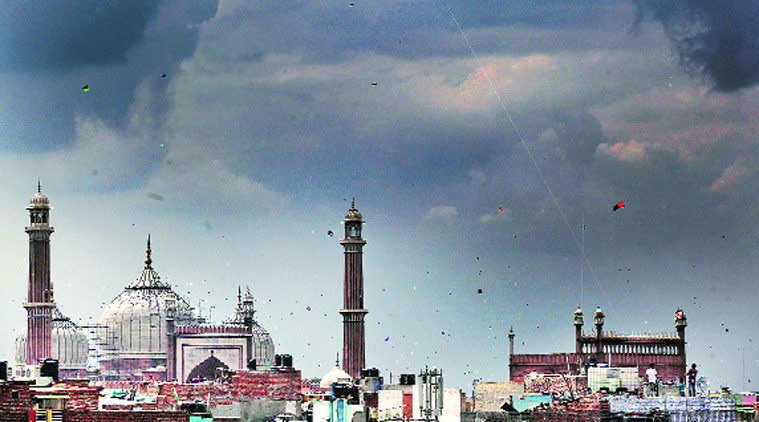 Old Delhi (above) and Lutyens’s Delhi were parts of the capital that the Indian bid had pitched for the tag of UNESCO World Heritage City. (Source: Express photo by Tashi Tobgyal)
UNESCO defines World Heritage as the “designation for places… of outstanding universal value to humanity…, to be protected for future generations”. A UNESCO World Heritage City must be of “outstanding universal value”. Last month, the Centre decided to “postpone” Delhi’s bid for UNESCO World Heritage City status due to concerns over possible curbs on infrastructure building.
THE DELHI BID
The Culture Ministry filed the nomination in 2012, but the final dossier, prepared by the Indian National Trust for Art and Cultural Heritage (INTACH), with which the Sheila Dikshit government had signed an MoU in 2008, was sent to UNESCO in January 2014. The walled city of Shahjahanabad (where the Red Fort is already a UNESCO World Heritage Site on its own), and the Lutyens’s Bungalow Zone, were included.
But just a month before UNESCO was to review nominations from across the world, the government withdrew its bid. “Once the city comes into that heritage list, you are unable to make some construction in the city plans and land use plans, so it will become difficult,” Culture Minister Mahesh Sharma was quoted as saying. UNESCO, which will examine 38 other entries in Germany between June 28 and July 8, said India’s nomination had been “postponed for consideration later”.
According to experts, Delhi could still be in the race next year, and former Delhi minister Jitender Tomar had said he has written to the Centre to reconsider. Intach too is pursuing the matter.
India is home to 32 of UNESCO’s 1,000-odd World Heritage Sites, three of which are in Delhi: Red Fort, Qutub Minar and Humayun’s Tomb. None of the world’s 220 World Heritage Cities is in India.
THE HERITAGE TAG
The tag of a UNESCO World Heritage City is a powerful addition to a city’s tourist branding. Rome, Paris, Cairo and Edinburgh are good examples. A tourism boost is generally associated with growth of employment in allied industries. According to the UNESCO website, “a country may also receive financial assistance and expert advice from the World Heritage Committee to support activities for the preservation of its sites”.
On the question of restrictions on development, the fact is that Lutyens’s Delhi, at least, already has many curbs. Those pushing the bid say the dossier clearly spells out that no additional laws would be required. The total area covered by the bid was only 26.40 sq km, barely 1.8 per cent of the NCT of Delhi’s total 1,483 sq km.
Conspiracy theorists see in the Centre’s decision an attempt to keep from preservation some “Muslim” aspects of old Delhi, and to alter the colonial character of Lutyens’s city, possibly in the interest of the real estate lobby. The Delhi government, which is in the middle of a raging battle with the Centre, has expressed surprise at the decision.
WHAT NOW?
India has several potential contenders for the UNESCO tag. Delhi’s dossier was selected over Mumbai’s this year only because only one nomination is allowed per country. Ahmedabad and Varanasi are contenders, while Chandigarh has been on the tentative list since 2006. Notably, Chandigarh is already part of a transnational nomination of the works of Le Corbusier for UNESCO Heritage status, along with works in France, Switzerland, Belgium, Japan, Germany and Argentina. The nomination was entered in February this year, and will be reviewed in June 2016.