© The Indian Express Pvt Ltd
 7 min read


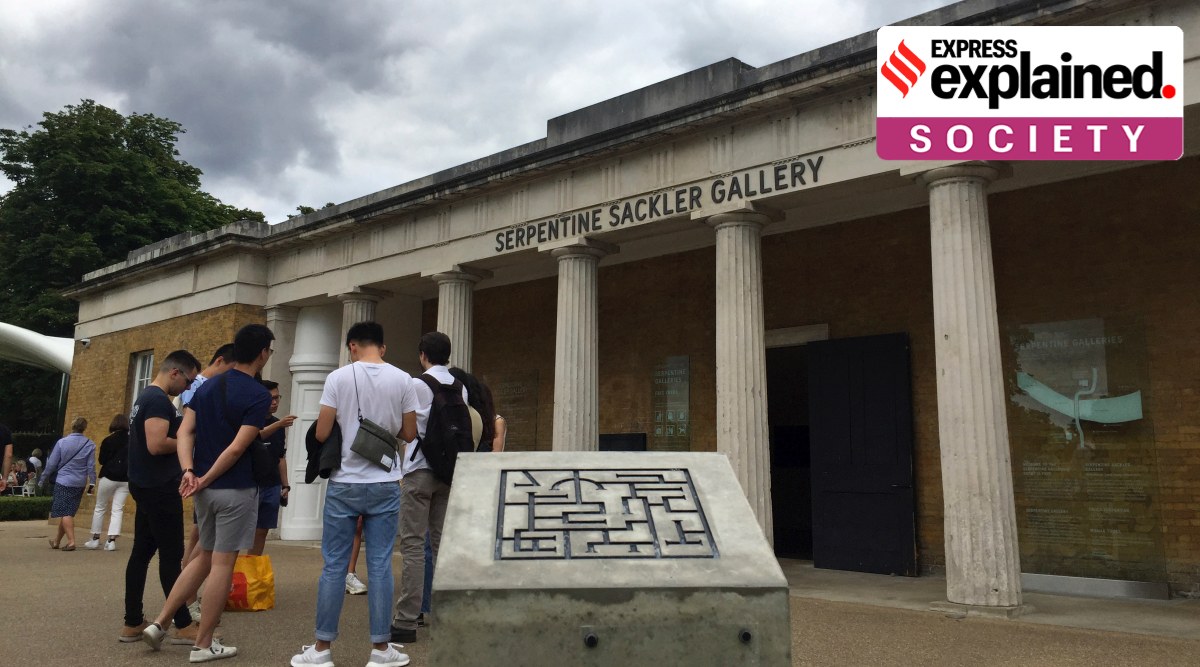 The Serpentine Sackler Gallery in Hyde Park, London, July 21, 2019. (AP Photo/Tony Hicks, File)
Last week, the British Museum announced it would drop the Sackler family name, which is tainted due to its association to opioid addiction, from its galleries. The Raymond and Beverly Sackler Rooms in the British Museum are now called Rooms A and B. The museum’s announcement follows in the footsteps of other major international institutions.
🗞️ Subscribe Now: Get Express Premium to access the best Election reporting and analysis 🗞️
Known as founders of pharmaceutical companies Prude Pharma and Mundipharma, the Sacklers are one of America’s richest families. According to Forbes, they are worth $10.8 billion, and are one of the 30 wealthiest families in the US. Most of their wealth was made from painkiller medication, especially the controversial drug OxyContin, linked to severe opioid addiction.
Family members are also art collectors and known for their donations to several art and cultural institutions, and universities on both sides of the Atlantic. These include the Metropolitan Museum of Art, the Guggenheim, the Louvre, the Tate, Harvard University, Yale University and Oxford University.
According to a report in The Guardian, the Sacklers are “far from a harmonious clan”. The Sackler legacy is not shared evenly between relatives of the three deceased brothers—Arthur, Mortimer and Raymond—who trained as psychiatrists and worked as pharmaceutical researchers, turning the tiny company that Arthur bought in 1952 into a pharmaceutical empire, the report states. Arthur’s family has said he had allegedly not benefited from OxyContin as he died in 1987, before the painkiller was manufactured.
In 2021, Purdue Pharma was dissolved following thousands of lawsuits against the company over the US’s opioid crisis. In March, the Sackler family owners of Purdue Pharma reached a deal to pay up to $6 billion, Reuters reported.
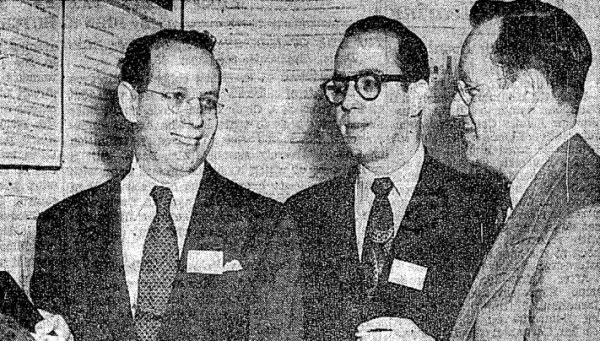 The Sackler brothers (Twitter/@praddenkeefe)
OxyContin is the brand name of the extended release form of the drug Oxycodone. Used for treatment for moderate to severe pain, it has a high addiction rate and is a common form of drug abuse. Oxycodone, a semi-synthetic opiate, was first made in Germany in 1916. Purdue Pharma introduced OxyContin in 1996, by which time the company was calling itself “a pioneer in developing medications for reducing pain, a principal cause of human suffering”.
Mortimer, Raymond, and Raymond’s son Richard, did extensive promotions for the drug. But the harm appeared greater than its benefit. As Dr Art Van Zee, a physician in rural Virginia would observe in the late 1990s, many healthy youngsters reported addiction to OxyContin.
OxyContin is stronger than morphine, and sparked off the opioid epidemic in the US. Even after the drug was modified in the wake of rising addiction cases, people shifted to other opioids. It has been linked to at least 500,000 deaths. In 2011, it was the number one cause of overdose deaths in the country. In 2019, deaths from opioid overdoses surpassed car crashes.
The deaths of celebrities such as Prince and Tom Petty have been linked to oxycodone use.
Like other business dynasties, many members of the Sackler family have made major contributions to the global art world, which means that significant art collections and museum galleries are named after them. For instance, the Smithsonian had a Sackler gallery after Arthur M Sackler donated $50 million worth of Asian art and artefacts to the museum in 1987.

In 2019, the Louvre removed the name from the Sackler wing that contained 12 rooms of near eastern antiquities and significant pieces from the museum’s Persian collection. The move came after a protest by American art photographer Nan Goldin, who had been addicted to OxyContin after she was prescribed the drug for tendonitis pain. Goldin and her fellow-protesters ran a campaign called Prescription Addiction Intervention Now (PAIN), in which they went into Louvre’s pyramid with banners demanding that the Sackler name be taken down.
The same year, a Sackler donation of $1.3 million to UK’s Portrait Gallery was cancelled after both parties thought the opioid crisis allegations would surpass the donation, according to reports.
In December 2021, the Metropolitan Museum of Art said it removed the Sackler name from seven of its exhibition spaces—a big step from its earlier announcement that it wouldn’t receive funding but would keep the name.
On March 25, British Museum’s chair George Osborne tweeted: “…we’ve reached agreement with the Raymond & Beverly Sackler Foundation. The Sackler name will be removed from the galleries, rooms & endowments they supported. We’re moving into a new era, presenting our great collection in different ways for new audiences”.
As Chair @britishmuseum we’ve reached agreement with the Raymond & Beverly Sackler Foundation. The Sackler name will be removed from the galleries,rooms & endowments they supported. We’re moving into a new era, presenting our great collection in different ways for new audiences
— George Osborne (@George_Osborne) March 25, 2022
Museums such as the Tate and Guggenheim have announced they will stop accepting donations from the Sacklers.
The Smithsonian didn’t remove the Sackler name from its famous Asian art gallery, but has added the tag “National Museum of Asian Art” in a rebranding exercise—a move that has been criticised as insufficient.
Institutions that have not yet decided to confront the Sackler name in their buildings include the Victoria and Albert Museum (which has the Sackler Courtyard), the American Museum of Natural History (which has the Sackler Institute for Comparative Genomics) and the Guggenheim (which has the Sackler Center for Arts Education).
What’s the takeaway for art and cultural institutions?
According to reports, the Sacklers have agreed to have their name removed from US institutions without penalties. The allegations and evidence against the Sackler family business have forced art institutions to consider the ethics and morals associated with the businesses of donors. The cultural sector across the world relies heavily on patronage, and sometimes, institutions don’t scrutinise enough on how the donations were acquired in the first place.
According to The Art Newspaper, the Sackler story is a cautionary tale, forcing institutions to consider naming rights and morals clauses in their contracts with donors.
Newsletter | Click to get the day’s best explainers in your inbox