


Tags:


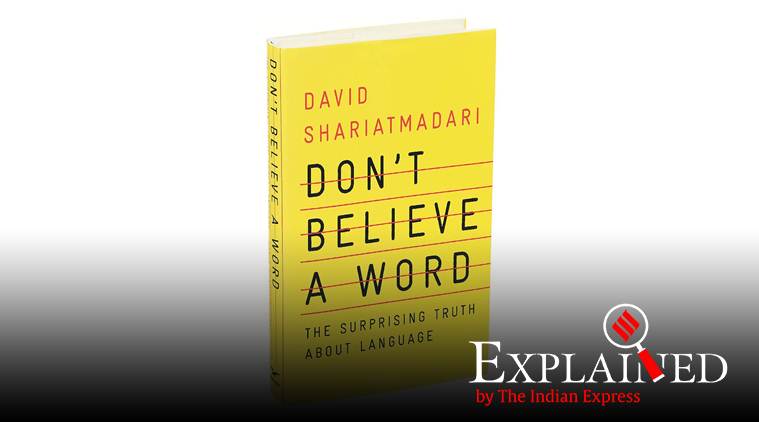
The introduction of The Guardian’s Iranian-born editor and writer David Shariatmadari’s new book, Don’t Believe A Word: The Surprising Truth About Language, begins with a question: “Is there anything quite so familiar, yet so mysterious as language?” Because, he says, language “fills our lives” and “most of us use it without thinking”, but “most of us also have only the vaguest idea of what it really is, and how it works”. Several metaphors to describe language follow: “in our lungs and on our lips but far from our grasp”; “a box of magic tricks inside every one of us”; “an inescapable trap, (because) we can only think and talk about language by using it”, and “deploy (it) to wonder about itself”.

Why do millennials speak in their own language, he asks — do the words that they choose reflect their superficial, lazy, and addicted-to-technology personalities? Do words direct thoughts, or vice versa — that is, is the language that is used to talk about climate change, likely to impact the way people think about it? Who decides what a word actually means, anyway?

The “Enemy Number One” for Shariatmadari, says the book’s review in The New York Times, is “the pedant or self-styled grammar snob, who has been with us for at least 400 years…, wringing his hands and lamenting the decline in linguistic standards”. The expressive power of language is undiminished, but human communication is in constant flux — and ought to be understood, says The NYT review, quoting Shariatmadari, as “a snapshot of a time, place and particular community of speakers”.


