

 6 min read
Click here to follow Screen Digital on YouTube and stay updated with the latest from the world of cinema.
Premium
This is an archive article published on July 25, 2014
Revisiting Pandora
With Avatar, James Cameron redefined cinema and started a whole new craze for 3D. There is a lot riding now on the three back-to-back sequels of the film in production



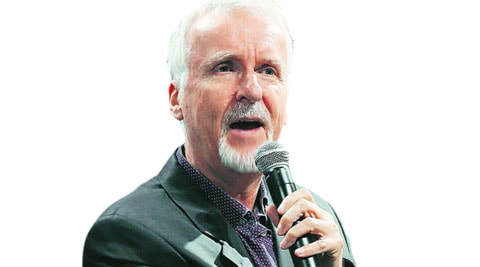 James Cameron
Like the deep-sea craft James Cameron used to dive nearly seven miles down in the Pacific, the long-awaited screenplays for his three sequels to Avatar will soon pop to the surface.
Cameron, an avid adventurer as well as one of Hollywood’s most successful directors, has been working for much of the last several years on the Avatar films, when he was not indulging his other passion and exploring the deepest parts of the ocean.
For those who share Cameron’s movie making adventures — particularly executives at 20th Century Fox, which released Avatar to $2.8 billion in worldwide ticket sales almost five years ago — delivery of finished scripts will signal the beginning of perhaps their grandest enterprise.
Fox, as well as Cameron and his cohorts at Lightstorm Entertainment, his production company, are expecting the three successive Avatar films — set for release in three straight Decembers beginning in 2016 — to transform their companies and possibly once again to set a new standard for large-scale, multimedia entertainment.
Billions of dollars are riding on the effort. The effects-heavy sequels will be expensive: Cameron has vaguely said their combined production cost would be less than $1 billion, though the movies cannot be budgeted until they are written.
But in Cameron, the project is being led by a director who helped redefine his industry with The Terminator, Titanic and the 3-D science fiction spectacle Avatar itself.
“Jim first and foremost in life is an explorer, and it’s what he does in his movies,” said Jon Landau, Cameron’s business partner. Landau described what he said had been a years long effort to conceptualise an entire Avatar universe that will be realised over 20 years or more in various media, some of which have yet to be invented. “This is not about any one medium,” Landau added, referring to the elaborate ideas being developed by Cameron, along with a team of four screenwriters, and by a novelist, Steven Gould. Gould, known especially for the science fiction book Jumper, is weaving those ideas into novels that are meant to read as if they had inspired, rather than were spun off from Avatar.
Fox has waited, optimistically, through Cameron’s painstaking deliberations, but at some cost. The Avatar hiatus has led to some shrinkage at Fox, which last year fell to sixth among the major studios in market share. But the new Avatar films have open-ended storytelling potential — as purely original inventions, they are not limited by existing books or the ageing of a young star. And they are coupled with Cameron’s insistence on an ever more realistic audience experience.
In the view of Jim Gianopulos, Fox’s chief executive, that makes them worth the wait. “We’re going to have merry Christmases for the next few years,” he predicted.
As the films roll out, Gianopulos said, Fox expects that a growing string of ancillary businesses will be helped along by an unusually robust online operation that is being built.
Fox executives at one point believed they might shoot an Avatar sequel in 2011. But Cameron became preoccupied with a growing tangle of commitments. Those included ultra-deep sea dives, now the subject of a self-narrated 3-D documentary, called Deepsea Challenge 3D, set for release by National Geographic Entertainment.
There were also extensive land purchases in New Zealand, as well as a largely concluded battle to defeat a half-dozen legal challenges to his authorship of Avatar.
At an Avatar-themed area in Disney’s Animal Kingdom in Orlando, Florida, for instance, Cameron helped design an attraction that by 2017 will plant visitors on his mythical planet of Pandora.
On a smaller scale, Cameron at a conference last month in Montreal announced that he would join with Cirque du Soleil to develop an Avatar-themed touring troupe, with a debut planned for next year.
Technologically, said Landau, the new films will step beyond the first, though he stopped short of promising radical changes to the 3-D and performance-capture techniques that gave a startlingly immersive feel to those who viewed Avatar.
As for plotlines, Landau only said that he expected all the films to follow the principal characters, played by Sam Worthington and Zoe Saldana — one human, one not — who were central to the first. “It’s the story of their life together,” he said.
By Michael Cieply / NYT
Comedian Tracy Morgan released from rehab after June crash
Actor and comedian Tracy Morgan was released from a rehabilitation center. The actor was critically injured in the New Jersey crash in June that also killed a fellow passenger, his spokesman has revealed. The announcement came just days after he sued Bentonville, Arkansas-based Wal-Mart Stores Inc in a New Jersey Federal court, alleging the retailer knew or should have known its truck driver, Kevin Roper, was not in compliance with Federal regulations designed to combat driver fatigue.
“He asked me to pass along his sincerest gratitude to everyone who has helped him get to this point. He would also appreciate some privacy during this crucial point in his recovery,” spokesman Lewis Kay said in a statement.
The statement added that Morgan, best known for starring in NBC’s 30 Rock and Saturday Night Live, will undergo a rigorous outpatient regimen to complete his recovery. The actor filed a lawsuit last week, claiming that Wal-Mart truck driver Roper commuted more than 700 miles (1,130 km) from his Georgia home to a company distribution facility in Delaware before beginning his work shift, and that he had been awake for over 24 hours prior to the crash.
Roper was charged last month with vehicular homicide and assault-by-auto after prosecutors said he rear-ended the limo bus Morgan and his entourage were riding in during the June 7 crash, near Cranbury, New Jersey. He pleaded not guilty. Morgan was riding along the New Jersey Turnpike with several people including his assistant Jeffrey Millea and comedian Ardley Fuqua Jr, who were also injured in the crash and are co-plaintiffs in the suit. The crash killed comedian James McNair, 62, of Peekskill, New York. Federal investigators said last month that Roper was driving roughly 20 miles per hour (32 kph) over the speed limit just before the crash.
Morgan and the other plaintiffs are seeking unspecified damages and attorneys’ fees.
Advertisement


More Entertainment




Advertisement
PHOTOS


PHOTOS





Top Stories











Must Read







Advertisement
- 01
- 02
- 03
- 04
- 05
Advertisement
