


Click here to follow Screen Digital on YouTube and stay updated with the latest from the world of cinema.
Tags:


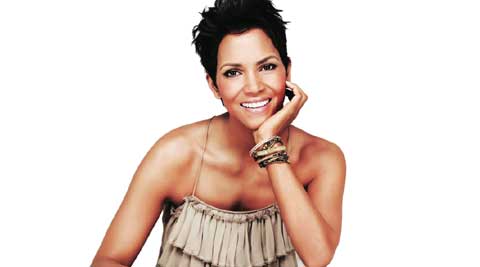
When Halle Berry and Denzel Washington won the best acting Oscar categories and Sidney Poitier was honoured with a lifetime achievement award in 2002, the night was a watershed for black actors in Hollywood.
Since then the debate about Hollywood diversity among the African American community has continued to ebb and flow, but one fact remains constant: nearly all black actors are still only being recognised by the Academy Awards for playing specifically black characters in film.
Four movies from 2013 have served to animate that conversation during Hollywood’s awards season: 12 Years A Slave, Lee Daniels’ The Butler, Fruitvale Station and Mandela: Long Walk to Freedom. Only the first, Steve McQueen’s historical drama, made it to the Oscars. This year, three black actors were in the running for Oscars at the March 2 ceremony. 12 Years a Slave, which won the best picture, is the first film by a black director to do so. But as black films and actors are being celebrated by Hollywood, there is no clear indication that the industry has turned the corner on increasing roles not based on race.
That could be partly explained by the underrepresentation of black talent in senior positions in film studios and among the 6,000-plus members of the Academy of Motion Picture Arts and Sciences, who vote for the Oscars.
“When roles in otherwise mainstream movies go to black actors that aren’t necessarily written for (them), I think that’s a point when there will have been some profile change,” said Todd Boyd, a professor of critical studies at the University of Southern California and an expert on African American cinema and culture. “We are not there yet.”

FROM MAMMY TO ‘THE HELP’

Washington managed to play an alcoholic airplane pilot in Flight, a role for which he was nominated for best actor in 2013. But that was an exception. “Why couldn’t there be an African American starring in the role that Joaquin Phoenix plays (in Her)?” asked Boyd. “When you see that, then there’s a change.”
Nearly 75 years ago Hattie McDaniel broke the racial barrier by winning for her supporting performance as the servant Mammy in 1939’s Gone With the Wind. Twenty-four years later, Sidney Poitier became the first black actor to win best actor for playing an African American worker in 1963’s Lilies of the Field. It took another 38 years for Berry to become the first black best-actress winner for her role as an impoverished mother in the racially charged Monster’s Ball. Since 2002 about 20 black actors have been nominated across the four categories, mostly for black roles. Some of the wins in this group include Jamie Foxx for his portrayal of singer Ray Charles in the biopic Ray and Octavia Spencer for her role as a maid in the civil rights story The Help.
The year 2011 was particularly dismal for black actors and filmmakers at the Oscars. Even so, black actors may be faring better than other black employees behind the camera or in studio offices. A study of the Academy membership by the Los Angeles Times in 2012 estimated that nearly 94 per cent of the 5,765 members at the time were white, while only 2 per cent were black. The Academy does not break down its demographic makeup.
Movie Academy’s get its first black chief
When Cheryl Boone Isaacs presided over the Oscars on March 2, her mere presence conveyed a statement on diversity in Hollywood as the first African-American president of the Academy of Motion Picture Arts and Sciences and its third woman in its 86 years.
But as the head of a body that takes knocks every year at Oscar voting time for a 6,000-plus membership that is overwhelmingly white, mostly male and older, Boone Isaacs offers no quick fixes for diversifying the academy or the industry.
Experience tells her it’s a long haul and it comes down ultimately to proving excellence in the motion picture industry. She herself put in 21 years on the Academy’s Board of Governors, held every office, and worked three decades in film marketing before she was elected president last summer. “I believe very strongly that the entertainment and motion picture business is going to be more open and aware of different voices,” Boone Isaacs told Reuters in an interview at the Academy’s headquarters, a large golden Oscar statuette looming in the background.
‘MUCH MORE AND FASTER’
The Academy is not a reflection of society, but its membership is meant to be a reflection of Hollywood’s film industry. Applicants are asked for their name, their work history and sponsorship from two Academy members.
What the public knows is what the Los Angeles Times published two years ago after a lengthy investigation: estimated academy membership was 94 per cent white, 77 per cent male, and the median age was 62.
The report reignited a debate over diversity at the Academy, and Boone Isaacs said that perhaps the timing of the conversation had “a little bit to do” with her election as president.
“Certainly, physically, I am an African-American woman, so if you look at me it is not like you are seeing something else. It is what it is,” she said. “And I believe that this honour that they have entrusted in me is because they feel for the moment I was the best person for the job.” She was elected to a one-year term as president and can run again next summer. Boone Isaacs was also the first African-American woman to head a publicity department of a Hollywood studio. At Paramount Pictures, she orchestrated campaigns for Best Picture winners Forrest Gump and Braveheart, and she later became president of theatrical marketing at New Line Cinema.
She says African-American’s representation in the Hollywood studios’ executive suites is “slowly increasing,” drawing out the world “slowly” to emphasise the pace. “We would like to see that much more and faster,” she said.


Click here to follow Screen Digital on YouTube and stay updated with the latest from the world of cinema.


