


Click here to follow Screen Digital on YouTube and stay updated with the latest from the world of cinema.
Tags:



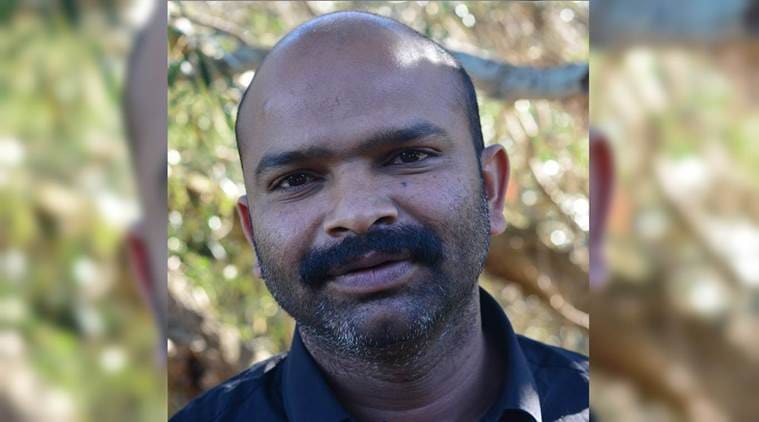
Sometime in 2012, Ravichandran Bathran, a student at English and Foreign Languages University, Hyderabad, devised a means for the Dalit community to be heard in the mainstream. He created Dalit Camera: Through Un-touchable Eyes, a YouTube channel run by students like him, and looked at cases of caste atrocities, in turn reporting them through the digital medium. While Bathran, now based in Chennai, is not leading the movement anymore, he has chosen to employ the visual medium to tell a unique story — of architecture and caste.
Having completed his PhD from Indian Institute of Advanced Study (IIAS) in Shimla, Bathran is currently looking to make a documentary that will establish the connect between architecture and caste. Set at the budget of Rs 8 lakh, it is based on Bathran’s research for his doctorate thesis. He is seeking to crowd-fund the documentary, tentatively titled Hinduism’s Apartheid: Caste-ing Space.


As a fellow at IIAS, Bathran came across a lecture on toilets by Slovenian philosopher Slavoj Zizek. “He said that cultural ideology revolves around the behaviour of how we defecate and flush. This compelled me to relook at the way toilets are built. It struck me that not only the way we defecate but also where we construct the toilet, is unique to India,” he says and adds that Delhi Metro’s initial plan did not have toilets. Most Indian schools in the earlier generation did not have toilets. “Even the footpath leading to the toilets were exclusive to the scavengers,” he says.
Bathran points out that this has continued for centuries. “In the Viceregal Lodge in Shimla, the structure has three entrances — for the sweeper, the cooks and the commoners. Sweepers also have separate quarters and most of the buildings had either a separate staircase or toilets outside the house. In modern-day apartments, we always prefer to have the toilet cleaner restricted to clean the toilets and not the kitchen. Tapti hostel in JNU has a separate staircase, which was an exclusive passage for scavengers,” he says.
Working without any precedents on the subject, Bathran, with his documentary, wants to focus on how architecture has been important to reproduce and sustain the caste system. “We all know of the Vastu system. This documentary will explore how much people in India are connected to different spatials, such as the kitchen, toilet or religious spaces. How these spatials are placed in villages. I will also bring visuals from different architectures across periods and their correlation to various spatials,” Bathran adds.


Click here to follow Screen Digital on YouTube and stay updated with the latest from the world of cinema.


