This is an archive article published on November 12, 2016
Leonard Cohen: It’s Closing Time
Leonard Cohen’s baritone was an embodiment of cis-masculinity and an indication that the universe lay out there, dormant, waiting to be experienced in life.
Leonard Cohen’s baritone was an embodiment of cis-masculinity and an indication that the universe lay out there, dormant, waiting to be experienced in life.
Leonard Cohen came to me during an adolescent affair. A cousin’s then-boyfriend had given her a recording of his popular songs and I spent a long summer vacation with the borrowed tape, listening over and over to his deep-bass rendition of Take This Waltz, Dance Me to the End of Loveand I’m Your Man. I was 14, still a couple of years away from discovering my other musical heroes, Joni Mitchell and Joan Baez, still unaware that Take This Waltz was a loose translation of Federico Garcia Lorca’s Pequeño Vals Vienés or that Dance Me to the End of Love – the song described as “trembling on the brink of becoming a standard” – had been inspired by the holocaust. At that age, Cohen’s baritone was an embodiment of cis-masculinity and an indication that the universe lay out there, dormant, waiting to be experienced into life.
It would take some more years to realise that the universe that the Canadian singer-songwriter – who passed away at 82 – indicated, lay not just outside, but also within us. One of the most influential singer-songwriters of his generation, Cohen was born into a privileged Jewish family in Montreal. But his heredity also taught him a thing or two about self-examination and detachment. In Cohen’s universe, salvation was never the preserve of the virtuous alone and that “what looks like freedom” but “feels like death”, could, of course, be “something in between”.
He was a quintessential seeker who sang of love and disenchantment, of sex and lust, god and spirituality, but, not with the same rock-and-roll abandonment as the musical genius of his generation, Bob Dylan. Cohen was more formal, less flamboyant; his music was full of liturgical references, and, while he sang of the times we lived in — a time of war, peace and change – he also sang of how it impacted and mapped our interior lives – You’re faithful to the better man/ I’m afraid that he left./So let me judge your love affair/in this very room where I have sentenced/mine to death (Take this Longing from my Tongue); or, You say I took the name in vain/ I don’t even know the name/ But if I did, well really, what’s it to you?/ There’s a blaze of light/ In every word/ It doesn’t matter which you heard/ The holy or the broken hallelujah (Hallelujah).
Perhaps, the depth of his songwriting can be traced to his aspiration to be a writer at the beginning of his career. Cohen came to music only after his book of poetry, Flowers for Hitler (1964), and novels, The Favourite Game (1963) and Beautiful Losers (1966), did not do good business. 1966 was a turning point for him. It was when music producer John Hammond, the man who “discovered” Dylan in 1961, came across Cohen and helped him set up his musical career. He never looked back, doing live concerts well into his ’70s and cutting albums till the end.
One of the criticisms that has often been levied at Cohen’s immense body of work – his last albumYou Want it Darker came out as recently as last month – has been of grimness. But this darkness is not born of resignation. It is sometimes, wry, sometimes tetchy, but always set against the larger canvas of life, and, therefore, always, self-aware — Like a bird on the wire/ Like a drunk in a midnight choir/ I have tried, in my way, to be free (Bird on a Wire).
As the writer Pico Iyer notes in his The Art of Stillness: Adventures in Going Nowhere, “…he was working on simplifying himself as fiercely as he might on the verses of one of his songs, which he spends more than ten years polishing to perfection.” If Cohen was didactic, it was because he was telling his listeners that if there were any rules to life, it was that there were no rules at all.
In a profile of Leonard Cohen that appeared in The New Yorker last month, David Remnick quotes Nobel Prize for Literature 2016 recipient, Bob Dylan, who shared a bond with Cohen, as saying, “When people talk about Leonard, they fail to mention his melodies, which to me, along with his lyrics, are his greatest genius. Even the counterpoint lines — they give a celestial character and melodic lift to every one of his songs. As far as I know, no one else comes close to this in modern music…” In the same piece, Dylan goes on to describe Cohen’s works as “deep and truthful as ever and multidimensional, surprisingly melodic, and they make you think and feel.”
Story continues below this ad
For fans of Cohen, that will always be his legacy.
A report by the Billboard magazine last month noted that, at a small gathering at the Canadian consulate in Los Angeles in October for a listening session of his 14th and last album, Cohen had declared, “Uh, I said I was ready to die recently, and I think I was exaggerating. I’ve always been into self-dramatisation. I intend to live forever.”
Paromita Chakrabarti is Senior Associate Editor at the The Indian Express. She is a key member of the National Editorial and Opinion desk and writes on books and literature, gender discourse, workplace policies and contemporary socio-cultural trends.
Professional Profile
With a career spanning over 20 years, her work is characterized by a "deep culture" approach—examining how literature, gender, and social policy intersect with contemporary life.
Specialization: Books and publishing, gender discourse (specifically workplace dynamics), and modern socio-cultural trends.
Editorial Role: She curates the literary coverage for the paper, overseeing reviews, author profiles, and long-form features on global literary awards.
Recent Notable Articles (Late 2025)
Her recent writing highlights a blend of literary expertise and sharp social commentary:
1. Literary Coverage & Nobel/Booker Awards
"2025 Nobel Prize in Literature | Hungarian master of apocalypse" (Oct 10, 2025): An in-depth analysis of László Krasznahorkai’s win, exploring his themes of despair and grace.
"Everything you need to know about the Booker Prize 2025" (Nov 10, 2025): A comprehensive guide to the history and top contenders of the year.
"Katie Kitamura's Audition turns life into a stage" (Nov 8, 2025): A review of the novel’s exploration of self-recognition and performance.
2. Gender & Workplace Policy
"Karnataka’s menstrual leave policy: The problem isn’t periods. It’s that workplaces are built for men" (Oct 13, 2025): A viral opinion piece arguing that modern workplace patterns are calibrated to male biology, making women's rights feel like "concessions."
"Best of Both Sides: For women’s cricket, it’s 1978, not 1983" (Nov 7, 2025): A piece on how the yardstick of men's cricket cannot accurately measure the revolution in the women's game.
3. Social Trends & Childhood Crisis
"The kids are not alright: An unprecedented crisis is brewing in schools and homes" (Nov 23, 2025): Writing as the Opinions Editor, she analyzed how rising competition and digital overload are overwhelming children.
4. Author Interviews & Profiles
"Fame is another kind of loneliness: Kiran Desai on her Booker-shortlisted novel" (Sept 23, 2025): An interview regarding The Loneliness of Sonia and Sunny.
"Once you’ve had a rocky and unsafe childhood, you can’t trust safety: Arundhati Roy" (Aug 30, 2025): A profile on Roy’s recent reflections on personal and political violence.
Signature Beats
Gender Lens: She frequently critiques the "borrowed terms" on which women navigate pregnancy, menstruation, and caregiving in the corporate world.
Book Reviews: Her reviews often draw parallels between literature and other media, such as comparing Richard Osman’s The Impossible Fortune to the series Only Murders in the Building (Oct 25, 2025). ... Read More


 6 min read


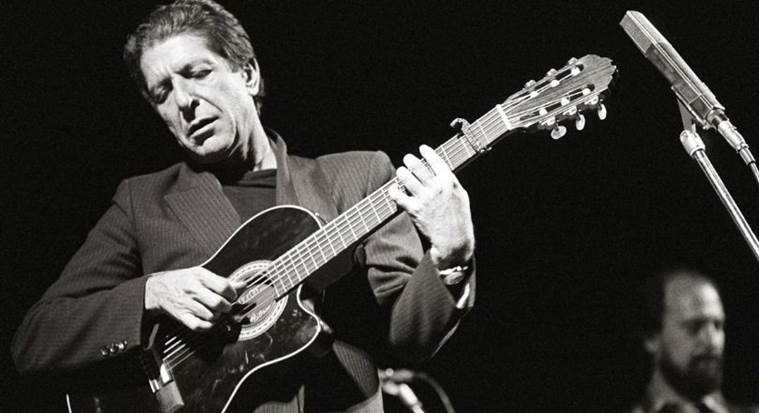 Leonard Cohen’s baritone was an embodiment of cis-masculinity and an indication that the universe lay out there, dormant, waiting to be experienced in life.