Premium
This is an archive article published on June 4, 2015

Face to Face

A documentary filmmaker steps into the world of behrupiyas and discovers colour with squalor

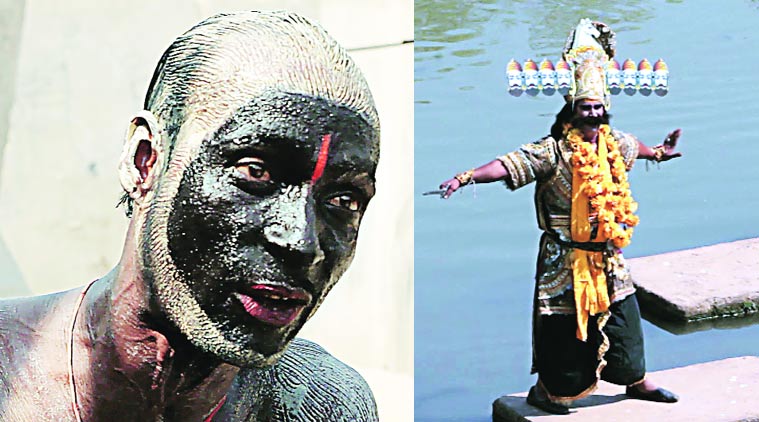
Stills from Srinivasan’s film Stills from Sidharth Srinivasan’s film
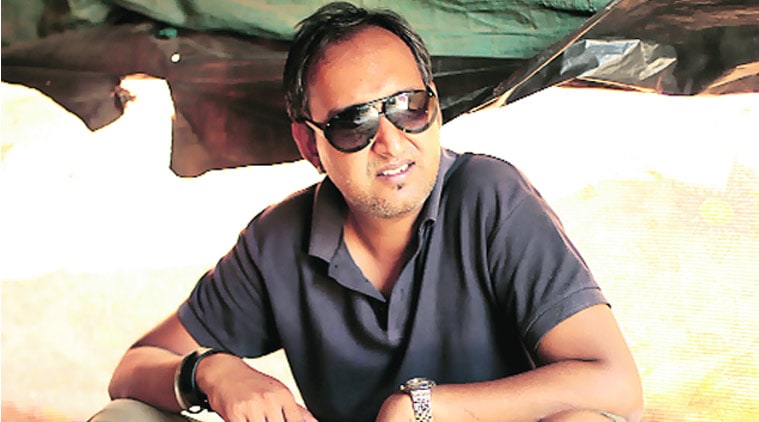
To audiences that watched him in Washington, Kisan Behrupiya is Ardhanarishwar. To regulars at Kingdom of Dreams, Gurgaon, he is commonly known as a monkey. When filmmaker Sidharth Srinivasan turned his camera on this actor of many parts, he found him living in a tent above a drain near a dusty mandi in West Delhi. Here, in front of a mirror, Kisan revealed to Srinivasan the importance of his work.

“People wear many masks. In earlier times, there were no films or theatres. There were Ramleela performances, dramas and street plays.

Even Raj Kapoor mentions the behrupiya in Mera Naam Joker. By transforming himself, a behrupiya will come and make the world laugh.

A hereditary behrupiya hails from the era of kings,” says Kisan in Srinivasan’s film, Behrupiya: Wearer of Faces.

Srinivasan zeroed in on Kisan and Abdul Hamid, among the best-known behrupiyas of Delhi, and, through them, revealed the larger story of street performers who are in the final acts of a dying tradition. Behrupiyas fell off the grid a few decades ago in the flurry of urbanisation.

Kisan Behrupiya, Sidharth Srinivasan, Ardhanarishwar, Kingdom of Dreams, Filmmaker Sidharth Srinivasan, Nizamuddin dargah, Talk Filmmaker Sidharth Srinivasan

 

Cities sprang upward and outward, and the streets — where behrupiyas, acrobats and magicians once drew huge crowds — became the domain of traffic. Consequently, Behrupiya… by Public Service Broadcasting Trust, a Delhi-based filmmaking organisation, is as full of colour as squalor.

Story continues below this ad

Kisan and Hamid play many roles, but Hamid specialises in being Ravana and a dhobi, just as Kisan can switch between playing god and langur. They talk with veneration for their gurus, and allow the cameras to watch as they transform into their characters — slicking back their hair with paste, covering their faces with paint, picking up the right wig and costume and, finally, speaking dialogue or singing
Between the art, we see their bustling families in which women are not allowed to work and where “nobody marries outside the community”. But when it comes to religion, they are more liberal. Hamid, a Bhand-Bahurupiya Muslim, is a passionate Ravana from the Ramayana while Kisan, a Dum-Miraasi Hindu, is a regular at Nizamuddin dargah.

“In them, I found the combination of sringara (beauty) and vibhatsa (disgust). Their lives deal with reality and illusion, and with the discrepancy between what is created and what is true. In that gap, lies magic,” says Srinivasan. His first experience in filmmaking, in 1999, was as an assistant on the film, Bamboo Flute. He broke out in short films with Swamohita (The Tightrope Walker), which premiered in the competition section of the Venice Film Festival in 2000. Since then, he has made around seven films, and screened at the Museum of Modern Art in New York, and the KaraFilm Festival, among others.

Unlike his other films, Srinivasan is a constant presence in Behrupiya…. We see him breaking the auspicious coconut in the film and hear different dramatis personae refer to him during conversations. Thus, the documentary becomes as much about the performers as about the process of filming them. “I had a bit of trepidation about this, but I wanted to show that there was a comfort zone between the filmmaker and them,” says Srinivasan.

On one occasion, he took Kisan, dressed as a langur, into a market. “It was important that I take them to the original performance space because they perform in places such as Kingdom of Dreams now,” says the filmmaker. The scenes that he captured are self-explanatory — at one time, dogs began to bark at Kisan. Striding like a langur, the behrupiya dropped down before them and the dog backed away. “On the footpath, you see the kind of control they exert over an anonymous audience. Out there, the behrupiyas are not in control of circumstances,” says Srinivasan.

dipanita.nath@expressindia.com

Dipanita Nath is a Senior Assistant Editor at The Indian Express, based in Pune. She is a versatile journalist with a deep interest in the intersection of culture, sustainability, and urban life. Professional Background Experience: Before joining The Indian Express, she worked with other major news organizations including Hindustan Times, The Times of India, and Mint. Core Specializations: She is widely recognized for her coverage of the climate crisis, theatre and performing arts, heritage conservation, and the startup ecosystem (often through her "Pune Inc" series). Storytelling Focus: Her work often unearths "hidden stories" of Pune—focusing on historical institutes, local traditions, and the personal journeys of social innovators. Recent Notable Articles (December 2025) Her recent reporting highlights Pune’s cultural pulse and the environmental challenges facing the city during the winter season: 1. Climate & Environment "Pune shivers on coldest morning of the season; minimum temperature plunges to 6.9°C" (Dec 20, 2025): Reporting on the record-breaking cold wave in Pune and the IMD's forecast for the week. "How a heritage tree-mapping event at Ganeshkhind Garden highlights rising interest in Pune’s green legacy" (Dec 20, 2025): Covering a citizen-led initiative where Gen Z and millennials gathered to document and protect ancient trees at a Biodiversity Heritage Site. "Right to breathe: Landmark NGT order directs PMC to frame norms for pollution from construction sites" (Dec 8, 2025): Reporting on a significant legal victory for residents fighting dust and air pollution in urban neighborhoods like Baner. 2. "Hidden Stories" & Heritage "Inside Pune library that’s nourished minds of entrepreneurs for 17 years" (Dec 21, 2025): A feature on the Venture Center Library, detailing how a collection of 3,500 specialized books helps tech startups navigate the product life cycle. "Before he died, Ram Sutar gave Pune a lasting gift" (Dec 18, 2025): A tribute to the legendary sculptor Ram Sutar (creator of the Statue of Unity), focusing on his local works like the Chhatrapati Shivaji statue at Pune airport. "The Pune institute where MA Jinnah was once chief guest" (Dec 6, 2025): An archival exploration of the College of Agriculture, established in 1907, and its historical role in India's freedom struggle. 3. Arts, Theatre & "Pune Inc" "Satyajit Ray, Ritwik Ghatak were not rivals but close friends, says veteran filmmaker" (Dec 17, 2025): A deep-dive interview ahead of the Pune International Film Festival (PIFF) exploring the camaraderie between legends of Indian cinema. "Meet the Pune entrepreneur helping women build and scale businesses" (Dec 16, 2025): Part of her "Pune Inc" series, profiling Nikita Vora’s efforts to empower female-led startups. "How women drone pilots in rural Maharashtra are cultivating a green habit" (Dec 12, 2025): Exploring how technology is being used by women in agriculture to reduce chemical use and labor. Signature Style Dipanita Nath is known for intellectual curiosity and a narrative-driven approach. Whether she is writing about a 110-year-old eatery or the intricacies of the climate crisis, she focuses on the human element and the historical context. Her columns are often a blend of reportage and cultural commentary, making them a staple for readers interested in the "soul" of Pune. X (Twitter): @dipanitanath ... Read More

Click here to follow Screen Digital on YouTube and stay updated with the latest from the world of cinema.

Latest Comment
Post Comment
Read Comments
Advertisement
Advertisement
Advertisement
Advertisement