Titli, which releases on October 30, is very different from your last film Dum Laga Ke Haisha.
They are different films, but they are both rooted in reality. Both are honest and sincere and don’t cater to any formula. The approach towards making and writing the films is very similar.

Screenwriter Urmi Juvekar introduced me to Kanu Behl, the director of Titli. Kanu said that he wants to do a film about a family with two brothers, but he wanted the film to break out of the standard norms of a family. Luckily, we were on the same page from the beginning.
You have mainly worked on the characterisation in Titli.
While writing Titli, we wanted to be as close to reality as possible. We agreed that the characters should not be mere cardboard cut-outs and that there should be a reason for them to be in the script so that people who do not belong to that society could also connect with the characters. There is no particular trick involved in creating such characters. If I have to specify one, then it has to be about experiencing life and observing people.
You have done several comedies before this. Is Titli a departure from that?
A still from Titli.
Titli is funny in places. Comedy is not what I intend to do all my life, but I enjoy the ironies that life is full of. It is always the situation that’s ironic, not the person. So it does not matter if the script is dark, I find situations that are ironic and enjoy writing about them.
How involved was Dibakar Banerjee, the film’s producer, with its making?
It’s Kanu’s film and it’s what he believes in. Everyone has followed that vision and supported it. Dibakar had a couple of script sessions with us when he gave his feedback and questioned a few things. That kept us on our toes and helped reshape the script.
Story continues below this ad
Which took off first — Titli or Dum Laga Ke Haisha?
A still from Dum Laga Ke Haisha.
Dum Laga Ke Haisha got made because of Titli. We had finished writing Titli and Kanu, who was friends with Maneesh Sharma, introduced us and asked him to read the script of Dum… Maneesh showed it to Aditya Chopra for feedback and he loved it enough to produce it.
Small town has become the new cool in Bollywood. Do you think realistic films are here to stay?
It is not like we have started making films set in smaller towns only now. Time and again, we have made films about real people. All good films are about real people and issues. Even a hardcore action film like Mithun Chakraborty’s Mujrim depicts a poor guy’s travails in a big city. Realistic movie is the new gloss. However, it is a phase and people will get tired of it.
How did you get interested in cinema?
I have been sure about two things in life: the girl I wanted to marry and that I wanted to be part of movies. Otherwise, I am always confused about everything, even while taking a shot. We lived in Delhi and my parents were in clerical posts. As a child, I was fascinated with action movies. I once wrote a story about an undercover cop in a gang. I toyed with the idea of sending it to somebody in Mumbai, maybe Subhash Ghai. But I never did.
Story continues below this ad
When I was a student of Jamia Milia Islamia in Delhi, the whole class had got free passes to watch movies at the International Film Festival of India (IFFI), which happening in Delhi then. There, I watched Pedro Almodóvar’s All About My Mother and that changed my life. Then Billy Wilder happened to me when I moved to Mumbai.
How has Wilder influenced your cinema? Who are your other inspirations?
I often have imaginary conversations with Wilder and Martin Scorsese — they have had the strongest influences on me. I ask them whether the scenes I have written are working. I wonder if they have an attitude, whether they are ironic, smart and emotionally engaging. I have seen each of Wilder’s movies some 20 times. I try to follow their process but not copy them. Wilder’s writing is full of sardonic humour while Scorsese has flamboyance.
What were your early days in Mumbai like?
I wanted to be a director or a writer. However, when one comes to Mumbai and does not know anyone, one can only hope to get lucky. In my case, Resul Pookutty introduced me to Rajat Kapoor, when he was about to start Raghu Romeo (2003). Rajat used to write with pen and paper. And my job was to type his scripts. I typed Raghu Romeo and Mithya for him. Sometimes, while discussing a scene, he asked me to write it the way I deemed it right.
How did you end up writing comedies?
I never consciously pursued writing. I wrote 10ML Love, based on A Midsummer Night’s Dream, and wanted to direct it. Rajat had read my script and when they were making Bheja Fry, they asked me write its script. Bheja Fry did well and I kept writing films such as Fruit & Nut, Phillum City, Bheja Fry 2 and Hum Tum Shabana.
Story continues below this ad
You have a three-film deal with YRF. So, what’s next?
We are still figuring out what to work on next. The struggle is mainly within — to have a script that we believe in the most. In the meantime, I have a lot of chores to finish, including filing tax returns. Also, my two-year-old daughter Myrah takes up most of my time.


 6 min read


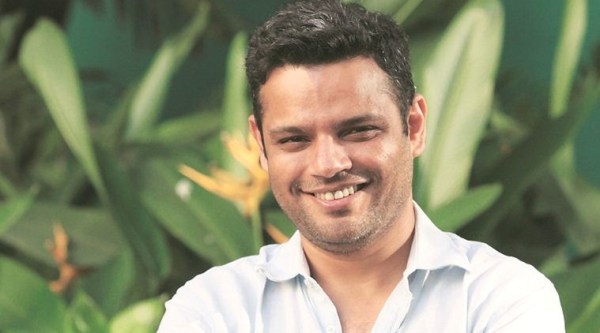 Writer-director Sharat Katariya talks about keeping things real, being lucky in Mumbai and writing for Kanu Behl’s new film Titli.
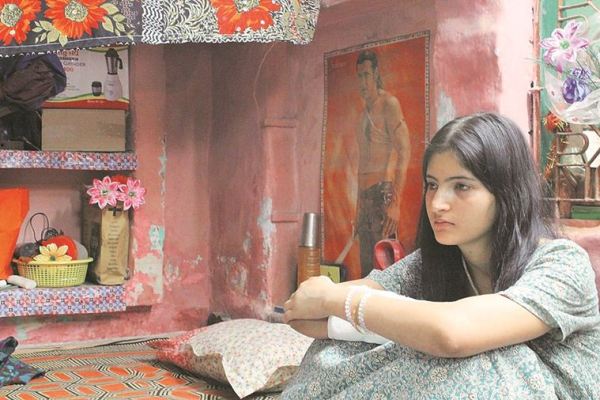 A still from Titli.
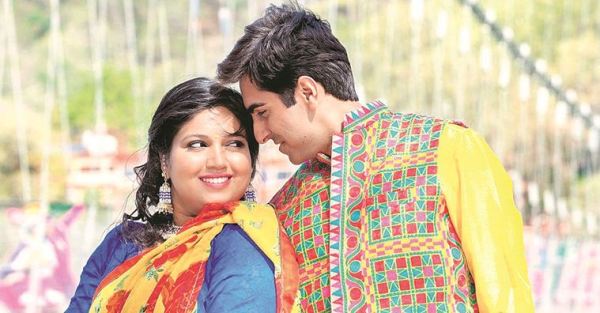 A still from Dum Laga Ke Haisha.