


Click here to follow Screen Digital on YouTube and stay updated with the latest from the world of cinema.
© IE Online Media Services Pvt Ltd
Tags:


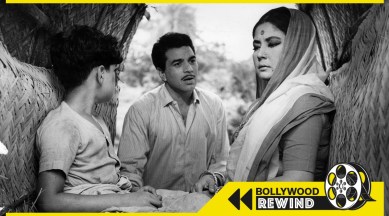
For fans of Hindi cinema, Hrishikesh Mujherjee is remembered as the man who popularised the style of storytelling that felt relatable, had a message but never felt preachy or over the top. So when one watches one of his earlier works, like the 1967 film Majhli Didi, it feels like it was made by a different filmmaker altogether. The signature Hrishi da elements that we have come to associate with him over the years aren’t evident at first, but upon closer inspection, Majhli Didi is the story of domesticity (Bawarchi), duty over relationships (Namak Haraam), being righteous (Satyakam) – all elements that recurred in many of his later movies.
For its female characters, Hindi cinema has often emphasised that for a woman to be an ‘adarsh naari’, she has to keep her head down and say yes to everything she is told by the men around her, or the society at large. Basically, the idea of being dutiful is blended with the idea of being a pushover but Hrishikesh Mukherjee clearly demarcates the two in Majhli Didi. Here, Meena Kumari’s Hema is a responsible homemaker who gave up a luxurious, comfortable life in the city to live with her husband in the village, but she has never complained about the same. Her title of Majhli Didi comes from her maternal home and the idea that the film goes by the same name somehow signifies that Hema is still holding on to the identity that she had before she was thrown into the deep end of domesticity.


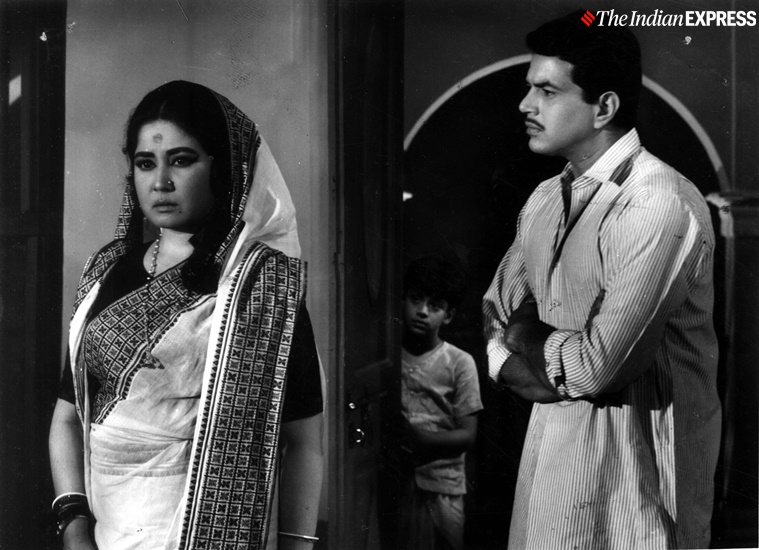
In a significant scene, the women are yelling at each other from across their houses and it is here, that you can’t help but laugh at the absurdity of the situation. It could be a scene straight out of an Ekta Kapoor serial of the early 2000s but it is also the reality of thousands of households. But what makes it funny is the constant back and forth between the two women who are absolutely convinced that they are right.
Based on the Sarat Chandra Chattopadhyay novel titled Mejh Didi, the film establishes that even though Hema lives in a deeply patriarchal society, she has carved out a place for herself living within those boundaries. She has come to the understanding that women can’t have equal footing as men but she has also learnt that the lack of equality does not mean that she has to be subservient to those around her.
Majhli Didi isn’t one of the most popular works of Hrishikesh Mukherjee but in the years since, it has gained prominence for its understanding of feminism. The film was India’s entry to the Oscars that year.


Click here to follow Screen Digital on YouTube and stay updated with the latest from the world of cinema.


