It was deliberate since the content is heavy and dark. So assaulting your emotions as well as visual sense with grimness would be too much. It was a conscious decision to make the visuals bright and aesthetic, without being unfaithful to the content. It’s a fine balance that we have tried to achieve.

I wanted a backlight source in every frame. We always do a look test and shoot one scene of the film in a dummy set. During the test, we tried to bring together everything that my cinematographer, production designer, costume designer and I had discussed.
The movie is inspired by the story of acid attack survivor Laxmi Agarwal. Are you organically drawn to real-life stories?
This is a coincidence and not a strategic decision. I believe that every script has its own destiny. I wrote this in 2016 and made it in 2019. I wrote it along with three others, as I wanted to have a bank of scripts. I made Raazi first. When I instinctively react to a story or it excites me, I know I want to make that into a movie.
What are your responsibilities and challenges while making movies on real people and incidents?
Your intent needs to be clear. You should know why are you telling a certain story. Is it to exploit someone’s misfortune? Or are you telling it to manipulate the audiences’ sympathies? Or are you telling it because it needs to be told? If your intent is pure, everything else will follow from there. Then your responsibility is to handle it sensitively, so that it is not disrespectful to the living or non-living people it is based on. Authenticity is extremely important. For a film like this, the biggest responsibility was not to put off the viewers even as it should rouse them.
Story continues below this ad
Did it take a while to figure out Deepika Padukone’s look?
We nailed it during our first prosthetic test. But while breaking down the script, we realised it is not just one look. The face goes through different stages. It’s a myth that if you are attacked by acid, your face melts off. Many, after watching the trailer, told me that I have showed it incorrectly. We have consulted Laxmi’s surgeon and know how the skin behaves. So, it goes through stages — redness, blisters, peeling, cracking, shedding and stretching. We had to put Deepika’s face through 12 looks, till we arrived at what she (Agarwal) currently looks like.
How crucial is the story of the legal battle in Chhapaak?
The legal battle is part of Chhapaak. Legally, the case was operating at two levels — one is a criminal case and the other was the PIL to ban the sale of acid.
Story continues below this ad
How did Padukone come on board to play the central character?
First and foremost, it’s her physical similarities with Laxmi that made me think of Deepika. I never thought in a million years that she would do it. But I thought of the impact it would have if Deepika played the role. Deepika’s face is her calling card. If you want to tell people what acid attack does to a person, you take a face as adulated as hers and show what if this face would have been attacked with acid. The story and the subject convinced her immediately.
How gruelling was pre-production?
We took about six months to prepare for this. The film is set in Delhi. While doing such a film, you wish to shoot on location, in small neighbourhoods and markets. We wanted to recreate a protest at India Gate. All these factors are logistically very challenging. Plus, we had to try each prosthetic look on Deepika and understand how long each look will be there on screen. Keeping that prosthetics look in the Delhi heat was a challenge. It was a difficult movie to make.
You have cast some real-life acid attack survivors.
I am showing the NGO that Alok Dixit started and ran. Several survivors and volunteers work there. I thought why would I make actors wear prosthetics when I have these girls from the NGO. I was grateful that they had no inhibitions about doing the film.
Story continues below this ad
In 2020, you plan to take a break from shooting. What’s on your bucket list?
First, I want to sleep. I want to write new scripts and revisit the scripts that I have. I find writing very rejuvenating. Also, I want to replenish my script bank. I will start preparing for the movie based on Sam Manekshaw and we go on the floor in 2021.


 5 min read


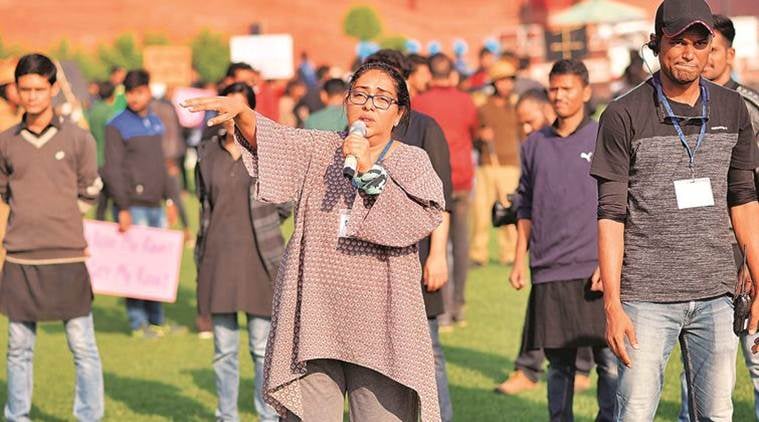 I wrote Chhapaak in 2016 and made it in 2019, says Meghna Gulzar.