4 min read

Journalism of Courage



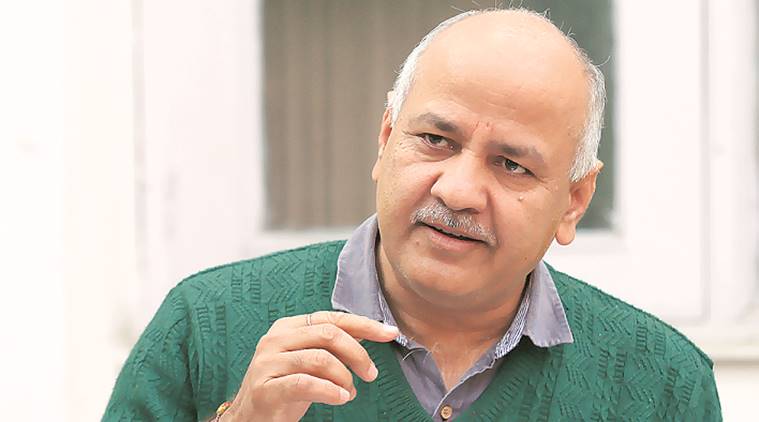 Sisodia said, “The country is already struggling hard to deal with the issue of fake degrees and certificates.” (File Photo)
Deputy Chief Minister Manish Sisodia Saturday said giving autonomy to colleges could increase the risk of fake degrees.
Sisodia, who was speaking after attending the HRD Ministry’s Central Advisory Board of Education (CABE) meeting on the New Education Policy (NEP) draft Saturday, questioned the clause which deals with providing autonomy to colleges running under a university.
“There is a suggestion to give autonomy to colleges in the country, which means even an institute having 200 students will be offering its separate degree. The country is already struggling hard to deal with the issue of fake degrees and certificates. In the middle of this, if all the colleges are given freedom to issue a degree, how will we be able to regulate the system?” he said.
Sisodia also raised objections about the clause under the policy which allows for the creation of private education boards. “Having a private education board will affect the concept of quality education for all and will deteriorate the education system,” he said.
Several Delhi University colleges have been mulling autonomy, with many having already prepared applications as well.
DU officials had approached six colleges — St Stephen’s College, Hindu College, Shri Ram College of Commerce, Sri Venkateswara College, Hansraj College and PGDAV college — to apply for autonomy in 2017. St Stephen’s College had even passed the proposal in its governing body meeting. “However, it was later found that changes would have to be made in DU statutes to allow for autonomy and the whole process was abandoned. No college applied for autonomy,” said an official.
Talking about a series of suggestions, Sisodia said that while the policy has a positive vision in some areas for the country’s education system, a roadmap to a section of initiatives is still missing.
The meeting, chaired by Union HRD Minister Ramesh Pokhriyal ‘Nishank’, was attended by state education ministers and representatives, heads of autonomous organisations, vice-chancellors of universities, HRD secretaries for higher education and school education R Subrahmanyam and Rina Ray, along with senior officials of the central and state governments.
Calling the country’s education policy “highly regulated and poorly funded”, he claimed that the new policy will add more regulations to the existing policy. “The roadmap for the proposed draft seems to be missing. The proposed draft has some positive aspects too but there are certain areas which I feel are not taken care of,” he said.
To meet the fund shortage of the education system, Sisodia said he has proposed a law for mandatory allocation of at least 6 per cent of GDP to the education sector. “Unless there is a law which binds the governments to allocate the fund, the policy per se will not result in the transformation of education in India,” he said.
Another issue he raised was about the quality of education provided in government schools. He suggested that it should be on par with private schools. “Going to private schools should just be an option, not a necessity due to the lack of quality education in our government schools. Only 5 per cent of children get access to quality education, the rest 95 per cent have been getting average quality education,” he said.