‘We have found some flaws’: Why IISER scientists are red-flagging RFD
Among the warnings from the report is that “while the precise increase in the flood levels and flood frequency at the scale of the city are challenging to predict, it is imperative to consider significantly higher design floods...and ensure the city’s flood resilience."
One of the main factors pointed out is that “there is very little data analysis”. (File Photo)
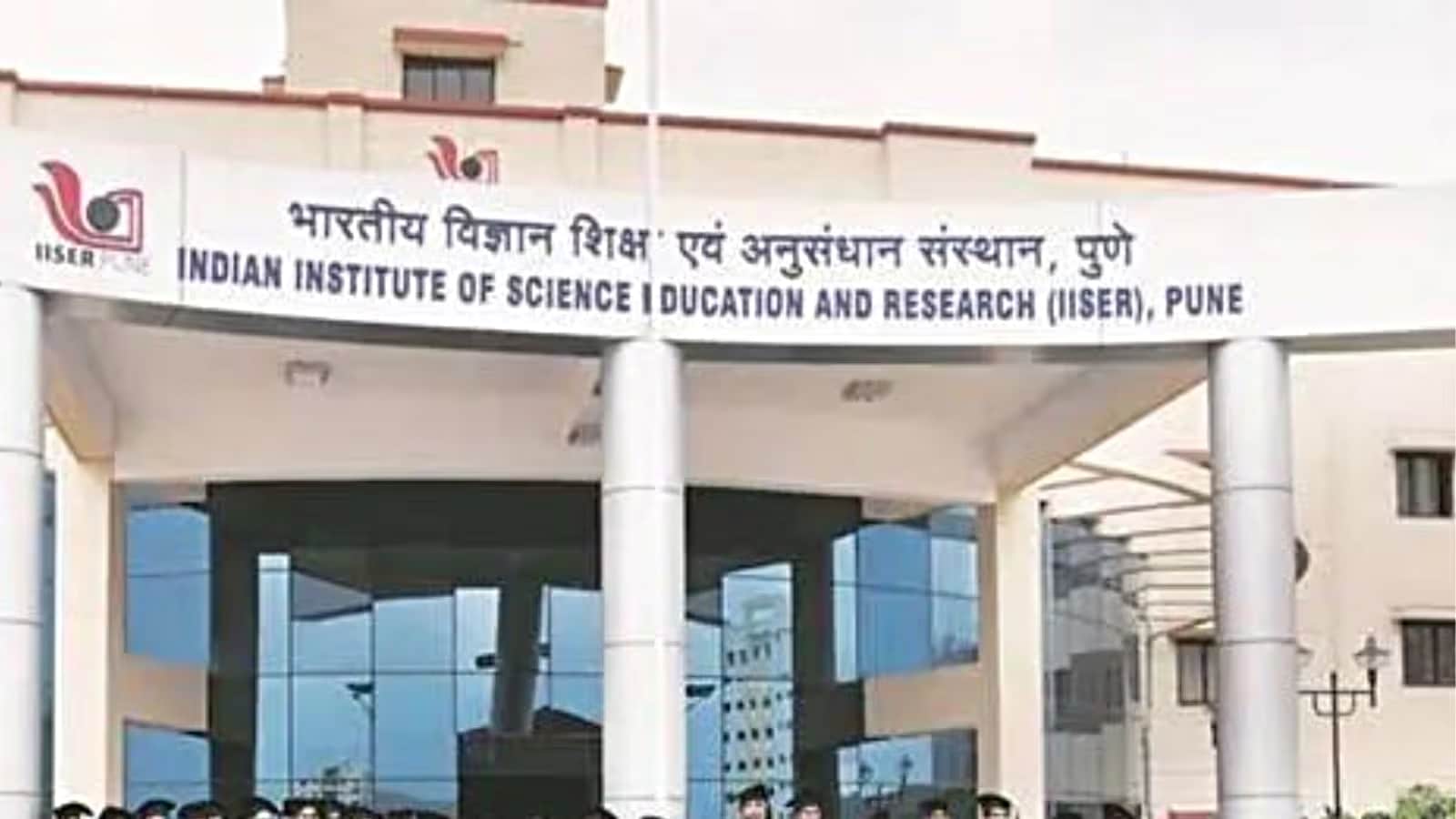
On Monday, as monsoon arrived early in Pune, IISER was among the areas to be lashed by heavy rains. Dr Argha Banerjee, associate professor and deputy chair, Earth and Climate Science, at IISER, says hundreds of papers have been written all over the world that climate change is going to change the precipitation patterns and increase extreme events. “It is the kind of situation that initiatives, such as the Riverfront Development (RFD), should be designed for,” he says.
A few weeks ago, Banerjee, Radhika Mulay and Tresa Mary Thomas, who are with the Earth and Climate Science department and the Center for Water Research at IISER Pune, released a paper, titled “A brief review of the Hydrology and Hydraulics report for the Mula-Mutha Riverfront Development Project”. It summarises that climate change effects were not considered, flood levels were underestimated and world-class scientific expertise present in city institutes must be utilised.
Among the warnings from the report is that “while the precise increase in the flood levels and flood frequency at the scale of the city are challenging to predict, it is imperative to consider significantly higher design floods … and ensure the city’s flood resilience. The RFD report fails to address these critical concerns, and may not prepare the city for the unexpectedly high flood levels due to climate change. This can be remedied by extensive consultation with the world-class experts in climate and hydrology in institutes like IMD, IITM, IISER Pune, etc. that are present in the city”.
“Since we have a general interest in water and the RFD was going on right in front of us, we decided to have a look at the Detailed Project Report of the RFD: Annexure 2 – Hydrology and Hydraulics. We looked at the report from the basic science perspective. We did not run any of their simulations or redo the calculations. We just checked the basic science of it and from that perspective, already, we have found some flaws that we have highlighted in our report,” says Mulay.
One of the main factors pointed out is that “there is very little data analysis”. “Though Pune is home to the IMD and there are a few stations in the region, it is still a very complex terrain. The IMD data is not always good enough as precipitation varies a lot over a short distance. This tells us that we have to be careful and that care is missing in case of the RFD. We have pointed this out. We don’t really have a solution but we can say that the data that exists was not looked into carefully,” says Banerjee.
The report emphasises that the RFD design team did not use their own estimates and, instead, relied on the estimates from the Irrigation Department, Pune. “A recent Maharashtra Engineering Research Institute report came up with significantly higher flood discharge estimates than those suggested by the Irrigation Department. The extreme monsoonal rain can lead to floods, when the river levels and the storage in dams are already high. This was not considered in the RFD estimates of flood levels. It may be prudent to consider the combined effects of the average monsoon discharge and the discharge due to the extreme rainfall. In addition, a strong gradient in the rainfall from the Western Ghats to Pune, together with the sparse network of hydrometeorological stations in this catchment, makes all the above flood estimates inherently uncertain,” says the report.
The report also states that the RFD plans to replace 240 hectares of greenery, “largely with concrete without any serious evaluation of the carbon footprint associated with the infrastructure development”. “It is unclear if the damage to the ecosystem during the construction phase has been assessed. Additionally, the Environmental Impact Assessment report should be independently reviewed by scientists and experts in the city working in the relevant fields,” it states.
Dipanita Nath is a Senior Assistant Editor at The Indian Express, based in Pune. She is a versatile journalist with a deep interest in the intersection of culture, sustainability, and urban life.
Professional Background
Experience: Before joining The Indian Express, she worked with other major news organizations including Hindustan Times, The Times of India, and Mint.
Core Specializations: She is widely recognized for her coverage of the climate crisis, theatre and performing arts, heritage conservation, and the startup ecosystem (often through her "Pune Inc" series).
Storytelling Focus: Her work often unearths "hidden stories" of Pune—focusing on historical institutes, local traditions, and the personal journeys of social innovators.
Recent Notable Articles (December 2025)
Her recent reporting highlights Pune’s cultural pulse and the environmental challenges facing the city during the winter season:
1. Climate & Environment
"Pune shivers on coldest morning of the season; minimum temperature plunges to 6.9°C" (Dec 20, 2025): Reporting on the record-breaking cold wave in Pune and the IMD's forecast for the week.
"How a heritage tree-mapping event at Ganeshkhind Garden highlights rising interest in Pune’s green legacy" (Dec 20, 2025): Covering a citizen-led initiative where Gen Z and millennials gathered to document and protect ancient trees at a Biodiversity Heritage Site.
"Right to breathe: Landmark NGT order directs PMC to frame norms for pollution from construction sites" (Dec 8, 2025): Reporting on a significant legal victory for residents fighting dust and air pollution in urban neighborhoods like Baner.
2. "Hidden Stories" & Heritage
"Inside Pune library that’s nourished minds of entrepreneurs for 17 years" (Dec 21, 2025): A feature on the Venture Center Library, detailing how a collection of 3,500 specialized books helps tech startups navigate the product life cycle.
"Before he died, Ram Sutar gave Pune a lasting gift" (Dec 18, 2025): A tribute to the legendary sculptor Ram Sutar (creator of the Statue of Unity), focusing on his local works like the Chhatrapati Shivaji statue at Pune airport.
"The Pune institute where MA Jinnah was once chief guest" (Dec 6, 2025): An archival exploration of the College of Agriculture, established in 1907, and its historical role in India's freedom struggle.
3. Arts, Theatre & "Pune Inc"
"Satyajit Ray, Ritwik Ghatak were not rivals but close friends, says veteran filmmaker" (Dec 17, 2025): A deep-dive interview ahead of the Pune International Film Festival (PIFF) exploring the camaraderie between legends of Indian cinema.
"Meet the Pune entrepreneur helping women build and scale businesses" (Dec 16, 2025): Part of her "Pune Inc" series, profiling Nikita Vora’s efforts to empower female-led startups.
"How women drone pilots in rural Maharashtra are cultivating a green habit" (Dec 12, 2025): Exploring how technology is being used by women in agriculture to reduce chemical use and labor.
Signature Style
Dipanita Nath is known for intellectual curiosity and a narrative-driven approach. Whether she is writing about a 110-year-old eatery or the intricacies of the climate crisis, she focuses on the human element and the historical context. Her columns are often a blend of reportage and cultural commentary, making them a staple for readers interested in the "soul" of Pune.
X (Twitter): @dipanitanath ... Read More


 4 min read