7 min read

Click here to join Express Pune WhatsApp channel and get a curated list of our stories
© The Indian Express Pvt Ltd



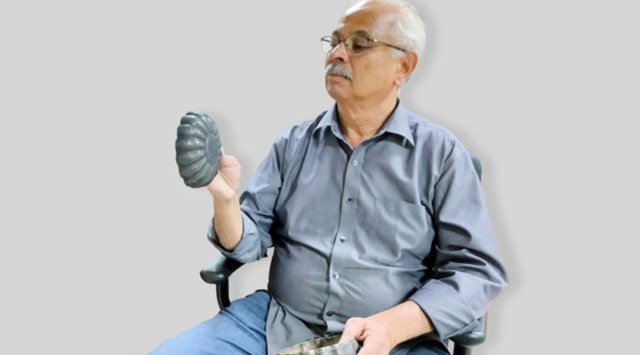 Gadgil remembers selling gold at Rs 150 per 10 gm. (Express Photo)
 For Ajit Gadgil, the director of P N Gadgil and Sons, the biggest change to come about in the gold business in Pune is that they do not have to send employees in camouflage to Mumbai to get the yellow metal any more.
With mobile phones and almost minute-by-minute tracking possible, things have become simpler for Gadgil, 64, whose family has been in the gold trade for the last five generations.
“Back in those days, a couple of our employees used to wear multiple layers of clothes to hide the gold bullion they got from the Reserve Bank of India (RBI) and travel back to Pune. As mobile phones were still to become common, everyone in the shop was literally on tenterhooks till they came back,” says Gadgil.
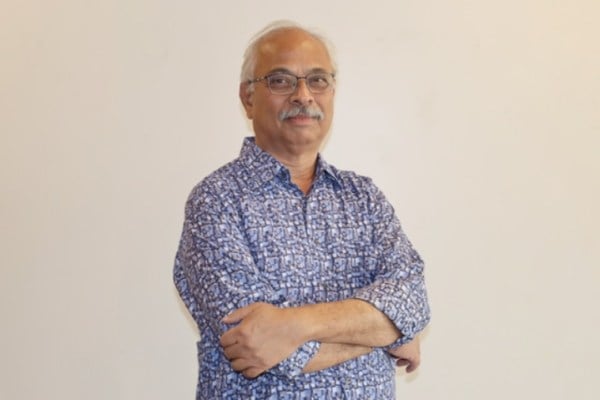 With mobile phones and almost minute-by-minute tracking possible, things have become simpler for Gadgil, 64, whose family has been in the gold trade for the last five generations. (Express Photo)
“In fact, we had to line up outside the RBI right at 4 am to register, and, in case, it was an emergency, we managed to get gold in two days which otherwise would normally take 10-12 days,” he adds.
From a small shop to managing rush hours
When in 1957 Vishwanath, Gadgil’s father, migrated to Pune from their home town of Sangli, Laxmi Road did not have a single gold shop. Laxmi Road was not a commercial hub back then but had wadas which housed many families. “Pune’s gold trade was concentrated around the Sonya Maruti Chowk near the Raviwar Peth area. My father started the first goldsmith shop in Laxmi Road,” says Gadgil.
The original shop was started in a 600 square feet area and Gadgil’s father and uncle used to cycle to the shop from their home near Sadashiv Peth. “Like other shops in Pune, we were closed in the afternoon. Also, all shops proudly displayed boards of them having no branches anywhere. But now, branches are the norm,” he adds.
The main business was divided into P N Gadgil and Sons and P N G Jewellers in 2012 with the former setting up their headquarters in the Abhiruchi Mall on Sinhagad Road.
The yellow metal has always fascinated the masses and Pune was not far behind. Gadgil remembers customers who bought gold every month when they got their salary. “It was a habit with them. Small qualities like 0.5 gm or 1 gm were purchased every month to build up their portfolio,” he says.
Gadgil also remembers selling gold at Rs 150 per 10 gm.
“Instead of intricate designs, simple designs were preferred. People wanted to ensure that they had enough price if they had to sell their gold,” he says.
Retail customers formed the bulk of their clientele for whom procurement of gold was a matter of investment.
Diwali, especially the day of Dhanteras, saw a large crowd and at times mishaps happened as well. “During one such festive occasion, a family left their toddler in our shop and left. The poor child was inconsolable and we had to look after the child. Our shop was located near Ravalgaon’s sweet shop and we tried to pacify him by offering him sweets. It was after an hour and a half that the family came back frantically looking for their child,” he remembers.
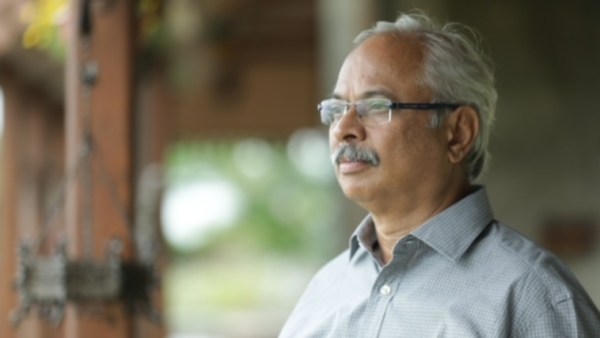 Along with his business, Gadgil also looks after the Zapurza Museum of Art and Culture with “a purpose of promoting and conserving Indian arts & art forms; and to reach out to society, especially the children”. (Express Photo)
Gold continues to be a favoured investment option but people now prefer designs and ornaments with intricate work. “When our family migrated from Sangli, two families of our workers had also come to Pune with us. Most of the workers of the yellow metal were from either Gujarat or Maharashtra. Now, the artisans from West Bengal are in the majority,” he says.
A few firsts and a gold necklace for Ganpati
Theirs was the first shop to start the tradition of selling gold during Gurupushya Yog and other such days — buying gold during such periods is supposed to bring prosperity. “I remember the line stretched for more than a kilometre on some days. People used to buy gold during Sankashti, Thursdays, and other holy days,” he said.
One of the most memorable ornaments that they fashioned was the 1 kg gold necklace for the Dagduseth Halwai Ganapati trust. “Around 25 years ago, the then president of the trust, Prataprao Godse, along with some of the trustees approached us. They wanted to fashion a necklace from the gold devotees had offered to the Lord. It was a challenging task for us as we never had fashioned such a large ornament,” he says.
The prototype was made in silver and once it was finalised, Gadgils got an artisan from Mumbai to fashion it out and the process took more than a month. That ornament can still be seen in the old pictures of the Ganapati, Gadgil points out.
The jeweller also had the honour of fashioning a gold diadem for the Ganapati. “We also have worked for the temples in Nashik and Alandi,” he adds.
Along with his business, Gadgil also looks after the Zapurza Museum of Art and Culture with “a purpose of promoting and conserving Indian arts & art forms; and to reach out to society, especially the children”.
“It aims at promoting a sense of aesthetics in young minds by introducing various arts & culture of this country. The purpose of Zapurza is to use the “museum as a learning resource” for all ages. We believe that Art is an integral part of human life and it enriches the lives of people through understanding & appreciating various arts & cultural fabric,” says the museum’s website.
Spread over eight acres next to the Khadakwasla backwaters at Kudje, the Zapurza Museum showcases Gadgil’s personal collection — from jewellery, works of M F Hussain, Raja Ravi Verma and Jamini Roy, sculptures, textiles, lamps and other artefacts to silver pieces, old vinyl records, vintage movie posters and advertisements.
For Gadgil and his family, his wife and two college-going kids, Pune is home. He feels authorities should look a bit more towards the development of the infrastructure of the city. “The metro work is yet to be completed. We need some good infrastructure for the city,” he said.