Premium
This is an archive article published on March 5, 2021

‘I wanted to ride the wave, not make it’: In conversation with Jim Sarbh, Bruce Guthrie on ‘Sea Wall’

Jim Sarbh and NCPA's Bruce Guthrie on their play, Sea Wall, an ode to stoicism.

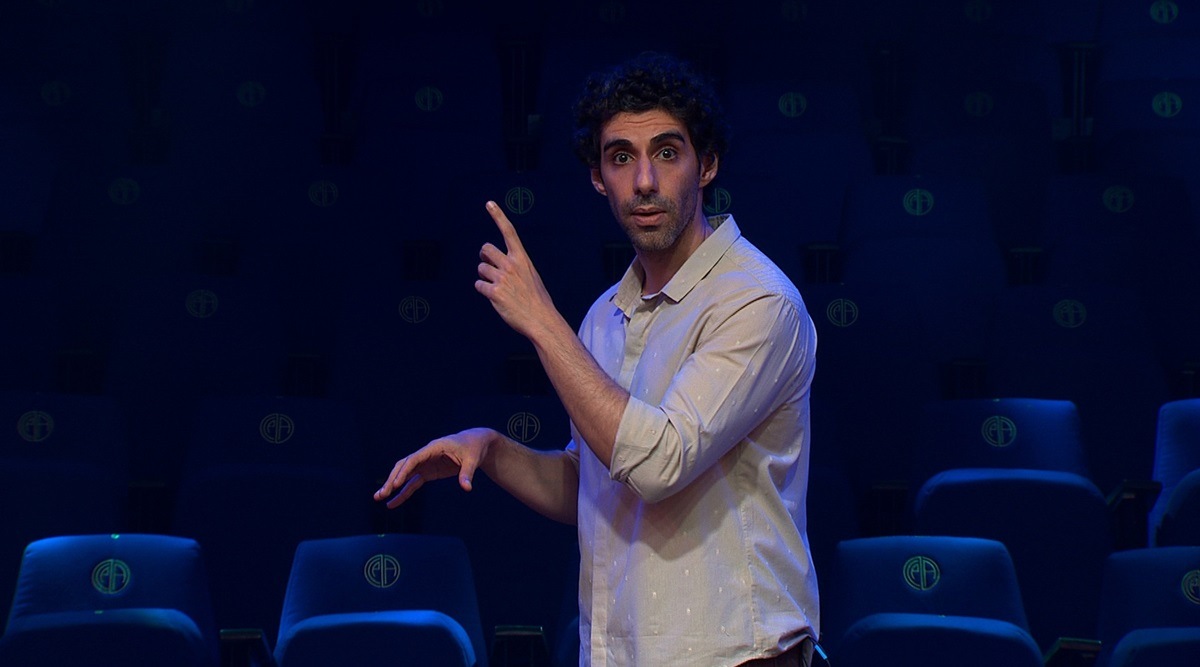
A still from Sea WallA still from Sea Wall

In December 2019, actor Jim Sarbh and Bruce Guthrie, Head of Theatre at Mumbai’s National Centre for Performing Arts (NCPA), came together for a play titled Sea Wall, which ran to packed houses. Sarbh plays a cheerful and mild-mannered man named Alex, who chats with the audience about his life and his family. The hint of how things shape up is in the title of the play, one of the most powerful scripts by Simon Stephens, which signifies how the ground can suddenly fall away from under your feet.

As the world emerged from the shadow of Covid-19, NCPA is revisiting the show with BookMyShow, bringing a recorded version to the homes of audiences. This is the first attempt by NCPA to film a show.

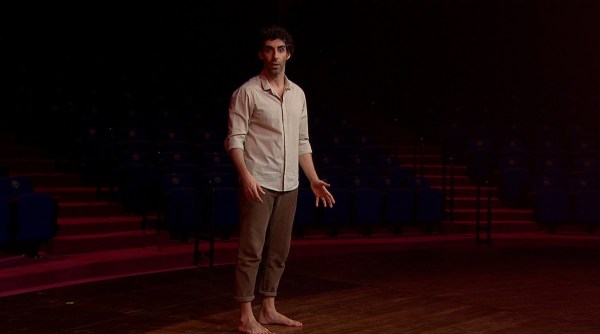
“We have stripped everything to capture the purity of the play. Rather than make a film, we have captured live performance. Jim’s performance of Sea Wall is continuous and raw. It is one complete take from multiple cameras. We wanted to give the audience a different perspective, so we put the cameras onstage, facing out into the auditorium. This acts as an impressive backdrop to the play without having a set.

“There are times where we light the seats gently at points of the play where we felt it would be useful to take in the enormity of the space to heighten the emotional state of the character. Other than that, there is no special effects or trickery of any kind,” says Guthrie.

A conversation with him and Sarbh:

How is Sea Wall a powerful metaphor for the post-pandemic world?

Guthrie: It’s a stunning piece of writing that is relatable at any time. We tend to find common ground much more readily in tragedy than we do in comedy. That’s not to say the play doesn’t have its moments of light relief. It must have warmth, love, fun and happiness in there or the tragedy of the character will have no impact. For me, the play is an ode to stoicism. Our ability to endure through the most difficult of times and remain hopeful is at the heart of this play. For me, the final beats of the play are utterly hopeful, despite what has gone before.

What was your process of creating this play?

Guthrie: For me, it begins with reading the play fully from start to finish in one sitting. You begin to hear the voice of the character emerge from the text — their rhythms and their idiosyncratic turns of phrase. I begin to see images in my head — key moments from the play. They might not literally be what we see on stage, but these first impressions provide the hooks into the piece.

Story continues below this ad

Many times, my first instincts are the basis on which I build the production with a creative team. I know right away whether I want to direct a play or not. It usually requires me to have an emotional connection with it on that first read.

Also, visualising the end of the play is important for me. If I know where we want to end up, we can work backwards from there to create the most interesting journey to get to that destination. Then I think of the type of actor who could be suited to the role. Having worked with Jim on Constellations, I knew his talents would be suited to this. He has an easy charisma and truthfulness in the way he acts. This part is an opportunity for him to show off a side of himself I haven’t really seen in his work to date. He read the play and instantly loved it.

Sea Wall, Sea Wall Jim Sarbh, Sea Wall Book My Show, Sea Wall streaming, Indian Express Jim Sarbh and Bruce Guthrie

As the performer, how did you enter into the mind of the character?

Sarbh: I had done two shows of the play in 2019. This time, we got to deepen our connection with the text, which is gorgeous. We tried to come up with images for each paragraph so there would be something clear for me to visualise as I went through the piece.

Story continues below this ad

The protagonist Alex is a photographer, so he would have a sharp and clear eye, and definitely seems to think in terms of images. It’s hard to watch your own performance, but the bits I enjoyed the most were when I felt I was actually seeing the images in the text, and then simply describing them.

The text, its punctuation, and its imagery, is so precise and instinctively well written, that merely following the punctuation and seeing the images does all the work for the actor. I wanted to ride the wave, not make the wave. As far as being married for years, and having a child goes, I do not have that immediate experience as Alex. But since the performance in 2019, I have been in a happy committed relationship, and I adopted a cat. So, that helped.

How do you, as the solo actor, capture the essence of a live theatre performance in a recorded show?

Sarbh: My responsibility was to try to give the director the kind of performance he was looking for. We did not edit the text in any way. I did the full monologue four times on the day of filming for four cameras, and the final product is the third run of the day, cut together between the four cameras. I don’t think they used sound effects much — the play is supposed to be in natural light with no sound effects. The script is so good, I wouldn’t want to take out a single sentence. So. unless I fudged it by forgetting a word, the attempt was to be true to the script.

Story continues below this ad
Sea Wall, Sea Wall Jim Sarbh, Sea Wall Book My Show, Sea Wall streaming, Indian Express A still from Sea Wall

Can you tell us a dialogue that helps us connect with Alex?

Sarbh: When Helen’s giving birth to Lucy, the midwife calls to me, ]Daddy, do you want to see your baby born?’ They’ve built a little tent. I look over the edge of the tent and I, you know, I’m one of those people who, I never know where to look when people point things out to me. Like, I’m a kid and I’m driving along and Mum says, ‘Look! A kestrel!’ or, ‘Look! A plane!’ and I don’t have the faintest idea what to look at. I just smile and nod dumbly and say, ‘Oh yeah!’ but I’m completely lying. And this is a bit like that. Mainly I see the yellow of the inside of her stomach, I think your relationship with that person probably then moves to… what, a new level?

The play is on BookMyShow’s web and app platforms on March 6-7. Tickets: Rs 299

– Stay updated with the latest Pune news. Follow Express Pune on Twitter here and on Facebook here. You can also join our Express Pune Telegram channel here.

Dipanita Nath is a Senior Assistant Editor at The Indian Express, based in Pune. She is a versatile journalist with a deep interest in the intersection of culture, sustainability, and urban life. Professional Background Experience: Before joining The Indian Express, she worked with other major news organizations including Hindustan Times, The Times of India, and Mint. Core Specializations: She is widely recognized for her coverage of the climate crisis, theatre and performing arts, heritage conservation, and the startup ecosystem (often through her "Pune Inc" series). Storytelling Focus: Her work often unearths "hidden stories" of Pune—focusing on historical institutes, local traditions, and the personal journeys of social innovators. Recent Notable Articles (December 2025) Her recent reporting highlights Pune’s cultural pulse and the environmental challenges facing the city during the winter season: 1. Climate & Environment "Pune shivers on coldest morning of the season; minimum temperature plunges to 6.9°C" (Dec 20, 2025): Reporting on the record-breaking cold wave in Pune and the IMD's forecast for the week. "How a heritage tree-mapping event at Ganeshkhind Garden highlights rising interest in Pune’s green legacy" (Dec 20, 2025): Covering a citizen-led initiative where Gen Z and millennials gathered to document and protect ancient trees at a Biodiversity Heritage Site. "Right to breathe: Landmark NGT order directs PMC to frame norms for pollution from construction sites" (Dec 8, 2025): Reporting on a significant legal victory for residents fighting dust and air pollution in urban neighborhoods like Baner. 2. "Hidden Stories" & Heritage "Inside Pune library that’s nourished minds of entrepreneurs for 17 years" (Dec 21, 2025): A feature on the Venture Center Library, detailing how a collection of 3,500 specialized books helps tech startups navigate the product life cycle. "Before he died, Ram Sutar gave Pune a lasting gift" (Dec 18, 2025): A tribute to the legendary sculptor Ram Sutar (creator of the Statue of Unity), focusing on his local works like the Chhatrapati Shivaji statue at Pune airport. "The Pune institute where MA Jinnah was once chief guest" (Dec 6, 2025): An archival exploration of the College of Agriculture, established in 1907, and its historical role in India's freedom struggle. 3. Arts, Theatre & "Pune Inc" "Satyajit Ray, Ritwik Ghatak were not rivals but close friends, says veteran filmmaker" (Dec 17, 2025): A deep-dive interview ahead of the Pune International Film Festival (PIFF) exploring the camaraderie between legends of Indian cinema. "Meet the Pune entrepreneur helping women build and scale businesses" (Dec 16, 2025): Part of her "Pune Inc" series, profiling Nikita Vora’s efforts to empower female-led startups. "How women drone pilots in rural Maharashtra are cultivating a green habit" (Dec 12, 2025): Exploring how technology is being used by women in agriculture to reduce chemical use and labor. Signature Style Dipanita Nath is known for intellectual curiosity and a narrative-driven approach. Whether she is writing about a 110-year-old eatery or the intricacies of the climate crisis, she focuses on the human element and the historical context. Her columns are often a blend of reportage and cultural commentary, making them a staple for readers interested in the "soul" of Pune. X (Twitter): @dipanitanath ... Read More


Click here to join Express Pune WhatsApp channel and get a curated list of our stories

Latest Comment
Post Comment
Read Comments
Advertisement
Loading Taboola...
Advertisement