6 min read
Click here to join Express Pune WhatsApp channel and get a curated list of our stories
© The Indian Express Pvt Ltd



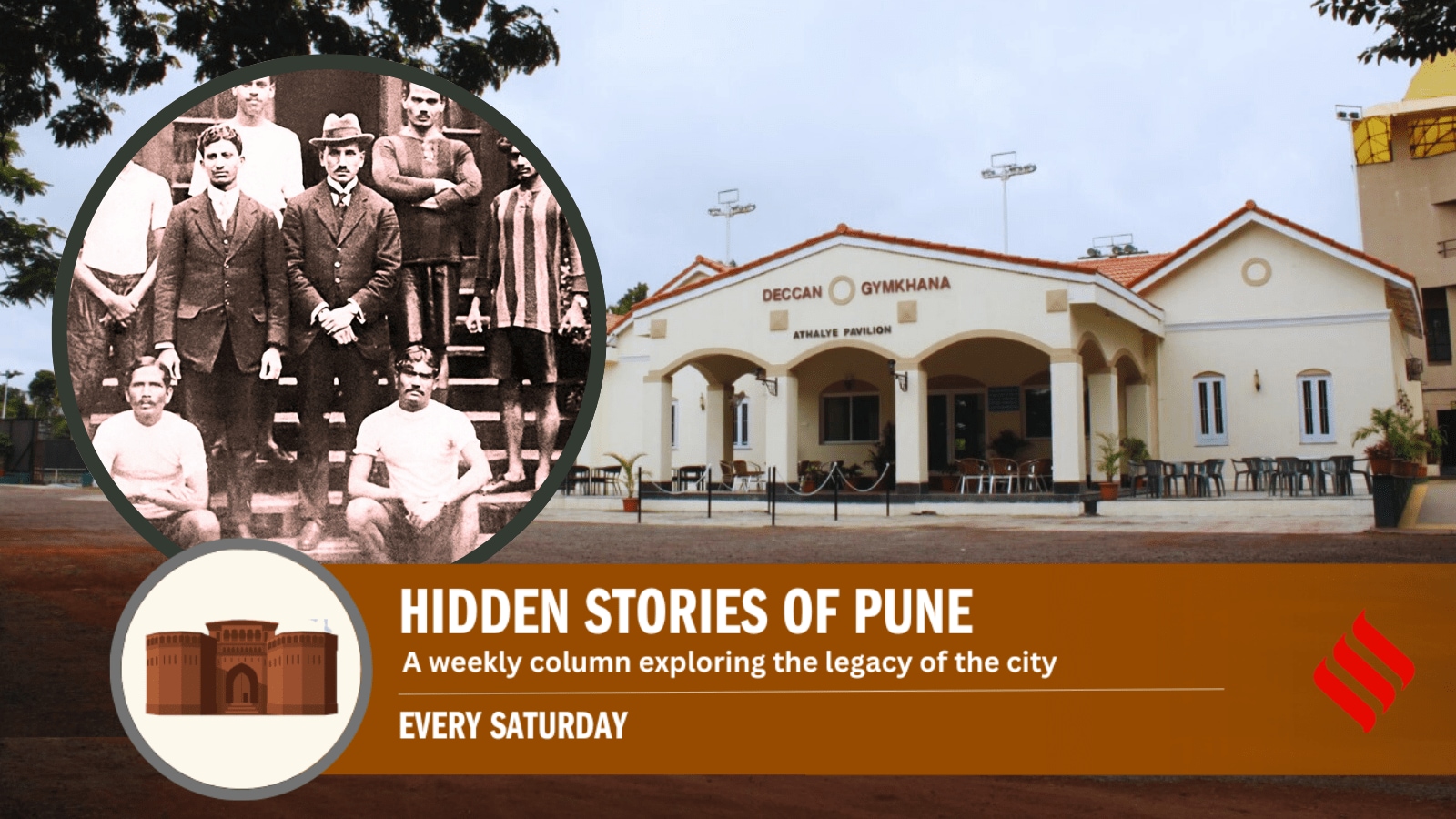 The credit for India’s 1920 participation is given to Sir Dorabji Tata and The Deccan Gymkhana in Pune.(Express Photo)
It was at Antwerp in Belgium in 1920, that India first participated in the Olympics. In 1928, the country got its first gold medal in Men’s Hockey, with 29 goals, of which 14 were by the legendary Dhyan Chand. As of now, with over a hundred years of journey at the Olympics, the country has still won only a total of 38 medals, it was a rocky start from the beginning.
The credit for India’s 1920 participation is given to Sir Dorabji Tata and The Deccan Gymkhana in Pune. Dorabji Tata, an Indian industrialist who was the elder son of Jamsetji Nusserwanji Tata, was born on August 27, 1859. He was also a tennis player and a horse rider, and later became a patron of sports. The Deccan Gymkhana was established on October 5, 1906, by Balakrishna Narayan Bhajekar, known as ‘Bandopant Bhajekar’, along with the support of his cousin L R Bhajekar and the help of the members of the Poona Young Men’s Cricket Club.
In 1919, at the Deccan Gymkhana, Dorabji Tata decided to fund athletes for the 1920 Olympics, the story as documented in the TATA central archives says, “Sir Dorabji Tata, the second Chairman of the Tata group, presided over the first athletic meet of the Deccan Gymkhana organised at Poona (now Pune). At this event he noticed that all boys of the peasant class working in the fields and living off poor fare were proposing to run their 100-yard heats round a bend without strings. This was because their sports ground was very small and the track was part of a rough unrolled grass field. To the peasants, running was running, but now it had to be undertaken under standardised and controlled conditions. Other popular events included the long-distance race of about 25 miles, rightly designated the Marathon. The peasants who participated were used to running barefoot on hard macadamized or dirt roads. As Sir Dorabji observed, their time would compare well with the times done in Europe or elsewhere. In 1919, some of their times were close to the times clocked in the Olympics. Impressed by this, Sir Dorabji decided to send three of the runners, at his own expense, to the Antwerp Games of 1920.”
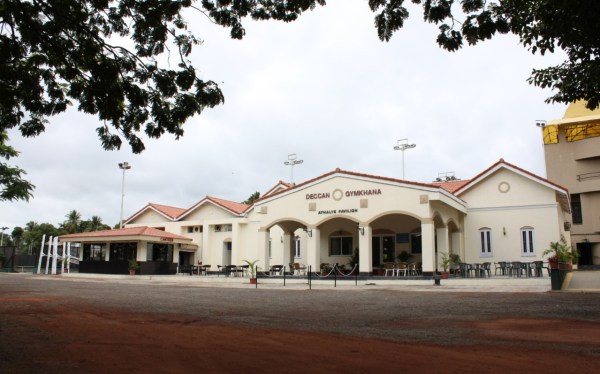 The Deccan Gymkhana was established on October 5, 1906, by Balakrishna Narayan Bhajekar, known as ‘Bandopant Bhajekar’, along with the support of his cousin L R Bhajekar and the help of the members of the Poona Young Men’s Cricket Club. (Express Photo)
The Gymkhana had the support of Lokmanya Bal Gangadhar Tilak, a leader of the Indian independence movement, while Gopal Krishna Gokhale was the first president of Deccan Gymkhana. In 1918, Dorabji Tata became the president of the institution, where he supported the work of the Deccan Gymkhana to have India on the international map. It was also A S Bhagwat of the Gymkhana who pushed for India’s participation at the Olympics. So, the trials were held at the Gymkhana itself.
“At his (Dorabji’s) urging, Sir Lloyd George, the Governor of Mumbai, took up cudgels on behalf of Indian athletics, and obtained affiliation for India with the International Olympic body. In 1919, before India had set up an Olympic Committee, he selected and financed four athletes and two wrestlers for participation in the Antwerp Games in 1920. P F Chaugle, a middle-distance exponent, and P C Banerjee for the sprints were sent. During these Games, Sir Dorabji Tata was elected as a member of the International Olympic Committee (IOC) and thus became the first IOC member in India,” reads the TATA central archives.
The 1920 Indian Olympic contingent comprised sprinter Purma Bannerjee, who became the first Indian flag bearer at the opening ceremony, marathon runner P Chaugule, long distance runner Sadashiv Datar, and wrestlers Kumar Navale and Dinkkarao Shinde.
This was, however, not the first time the country rooted to materialise its Olympic dream. In his book, A History of Indian Sport Through 100 Artefacts, Boria Majumdar shares that according to evidence India’s Olympic history dates back to a decade before Antwerp. “These documents and letters, a couple of which are being reprinted, demonstrate that there was a series of letters exchanged between the British Olympic Association, the International Olympic Committee and the India Office, discussing prospects of Indian participation at the 1912 Stockholm Olympics. Had this come to pass, India would have become the first Asian country to embrace the Olympics alongside Japan that established a national Olympic Committee in 1911 and participated in the 1912 competition as the first Asian country to do so,” he writes.
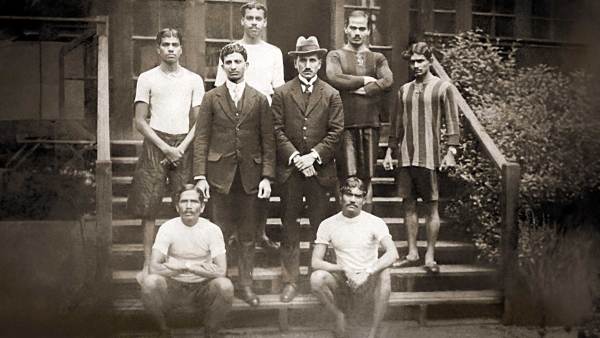 The first Indian Olympics contingent sponsored by Sir Dorabji Tata (Photo Credit: Tata)
He shares that after 1912, the correspondence only increased and that there was communication about India participating in the 1916 Olympics in Berlin, which got cancelled due to the First World War. But Majumdar states that even then the key concern was always funding. He writes, “Among the many dispatches discussing India’s participation, it is evident that funding was always a key issue. Who would fund the team and how many of the athletes were entitled to receive support from the Olympic host city? That was a constant thread of discussion in the communications. That nothing came out of this effort does not diminish the significance of this exchange because the foundation had already been laid. It was on this base that the superstructure to send an Indian team to the 1920 Olympic Games was built.”
In 1900, an Anglo-Indian, Norman Pritchard, had participated in the Olympics in Paris and won two silver medals in athletics. Pritchard’s medals were initially credited to Great Britain, but the International Olympic Committee later credited them to India.