6 min read


Click here to join Express Pune WhatsApp channel and get a curated list of our stories
© The Indian Express Pvt Ltd



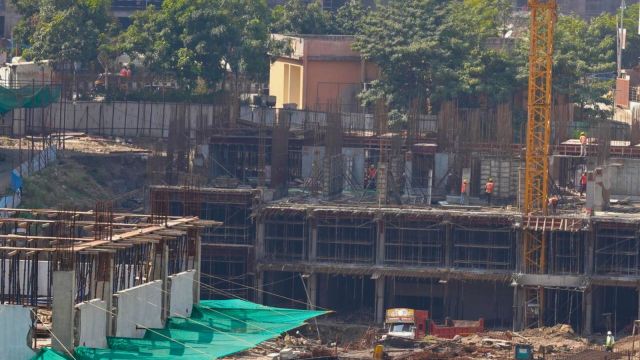 The civic body has been approving construction of around 3,200 new buildings—mainly multi-storey residential structures—in its jurisdiction every year. (Express Photo)
With rapid urbanisation, the real estate growth in Pune and the boom in public infrastructure to meet the demands of the growing population have been taking a huge toll on the air quality of the city, leading to pollution due to construction activity and adversely impacting the health of citizens.
The jurisdiction of the Pune Municipal Corporation (PMC) has increased to 480sqkm after the inclusion of 23 new villages. The civic body has been approving construction of around 3,200 new buildings—mainly multi-storey residential structures—in its jurisdiction every year.
Though there are instructions to keep a check on air pollution due to construction dust particles, there are not many construction sites that follow the rules. The civic body has directed the developers to check air pollution arising from construction activity by regularly sprinkling water at construction sites so that the dust settles down. This was in addition to covering the construction site by barricading the area and the transportation of waste through covered vehicles and clean tyres so that the dust doesn’t get carried outside the construction area. With lack of manpower to keep a check on air pollution arising from construction sites, the PMC has now joined hands with IITM to bring the situation under control.
Watch Express Cafe Podcast:
“The PMC has decided to have real-time monitoring of air quality. It is being made mandatory to install air pollution sensors at construction sites with a 20,000 square metre area to check pollution due to dust particles,” said Ashwini Yadav from the PMC’s environment department.
Stating that sensors have to be installed at construction sites in the city with approval from IITM, Yadav said, “IITM has air quality monitoring systems installed at nine locations in the city. The PMC has sought IITM’s help in checking air pollution due to construction activities. Once the sensors are manufactured, it will be compulsory for construction sites of 20,000 square metres to install them at the spot. This information will be tracked live at civic headquarters on a dashboard and if the situation is serious, then a notice would be served to the developer of the construction site to increase mitigation measures.”
However, this is yet to come into actual implementation as the sensors are yet to be manufactured and finalised. The PMC wants to keep a check on at least 80 percent of the construction site, said Yadav. According to PMC, the use of Ready Mix Concrete (RMC) and precast structures is being encouraged to reduce air pollution while ensuring construction material is covered during its transportation.
As per the Environment Status Report (ESR) of Pune, factors contributing to air pollution has impacted the air quality in the city, which is satisfactory for half of the year. Last year, the air quality was moderate for 174 days, poor for three days as against satisfactory for 137 days and good only for 52 days.
Apart from the construction of buildings, the debris and construction waste is also generated due to civic works of various government departments, MNGL, telecommunication companies for laying their cables, pipelines across the city.
The PMC generates around 200 metric tonne of construction waste and debris every day and to tackle the situation, it has set up a processing plant at Wagholi with a capacity to treat 250 metric tonne of waste per day. The civic body is also starting another construction waste processing plant of 200 metric tonne per day in southwest of the city.
The civic body is also taking other steps to improve the air quality. “The open burning of waste is against the rules set up by the state and central pollution control boards. Anyone having a bonfire during winter will be penalised,” said municipal commissioner Naval Kishore Ram.
To discourage private vehicles on city roads, the PMC has been strengthening the public transport system with execution of the Pune Metro and its expansion and increasing the fleet of PMPML buses by adding 1,000 new electric buses. “The electric buses will increase the capacity of transporting citizens and is also the best solution to reduce pollution arising from the use of petrol vehicles,” said city MP and Union minister of State for Civil Aviation Murlidhar Mohol recently. This would help establish freeder service for Pune Metro rail and encourage citizens to opt for environment friendly means of transport.
Meanwhile, the number of private vehicles continue to increase on city roads with addition of three lakh new vehicles but the use of environment friendly fuel operating vehicles are being promoted. The electric auto rickshaws are being given subsidies by the PMC while electric charging stations are being created at various locations across the city. The civic body is using electric vehicles for office purposes to promote its use among the public.
Under the National Clean Air Program (NCAP), the PMC—with help of funds sanctioned by the Union government—is making crematoriums operate with environment-friendly fuel. Many electric-run or gas-run crematoriums are being created while the Air Pollution Control (APC) system is being installed at all crematoriums. Citizens are being encouraged to use electric or gas-run crematoriums for last rites at no cost as against using paid service of wood pyre for the purpose. Of the 21,574 cremations last year, 44 percent of cremation were still with wood despite the PMC installing air pollution control systems—33 per cent electric crematoriums and 23 per cent gas crematorium.
The PMC is setting up 82 charging stations for electric vehicles in civic-owned plots such as civic buildings, parking areas, gardens, halls, hospitals and crematoriums.
The civic body has initiated steps to check air pollution through bakeries, said Yadav adding there are around 600 bakeries in the city. “The bakeries have been urged to run on environment-friendly fuel. A survey is being undertaken to resolve the problems faced by bakeries for gas supply and other issues,” she said.