

Journalism of Courage

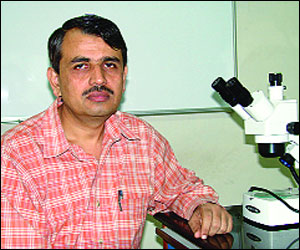
While investigating evolution of flight appendages in insects,a Pune-based researcher breaks new ground in the study of the mechanism of organ positioning and development in living organisms
How does it happen that specific organs of the body are placed on specific locations,over and over again? During evolution,while organs do get modified,the location remains the same. It is this poser,among others,which made me undertake this research using the fruitfly,Drosophila melanogaster,as a genetic system to study human genes,develop fly models of human diseases and apply the same in drug discovery, says Prof L S Shashidhara,a professor of biology at the Indian Institute of Science Education and Research (IISER,Pune).


Asserting that his current and future work also involves functional genomics,using Drosophilaas a genetic system to study human genes,develop fly models of human diseases and study application of the same in drug screening,he says,We have generated several transgenic flies expressing different truncated and mutant versions of human APC (normally found in colon cancer patients) to study structure-function relationship of various biochemical domains and to further improve drug-screening efficiency. In addition,we are working to determine mode-of-action of certain drugs and plant-based insecticides using Drosophila genetics, he adds.
Appendage means
An additional or subsidiary part existing on or added to an external body part such as antennae,mouthparts (including mandibles,maxillae and maxillipeds),wings,elytra,gills,walking legs (pereiopods),swimming legs (pleopods),sexual organs (gonopods) and parts of the tail (uropods). Typically,each body segment carries one pair of appendages.


