Premium
This is an archive article published on September 11, 2019

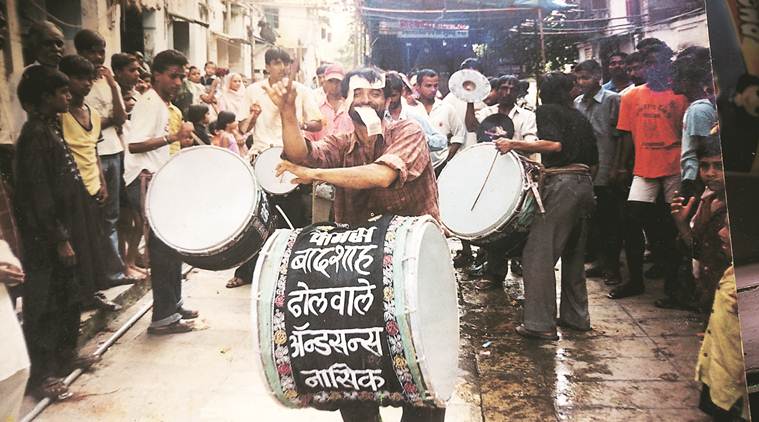
Sound of faith: Nashik’s Muslim drummers pray their music binds communities

Khalil says while they have never faced any hostility for their faith in the past, the instances have increased where being Muslim has caused problems for them.

nashik, nashik dhol, communal harmony, ganpati festival, maharashtra communal harmony Muslim drummers have been playing the Nashik dhol for decades, mostly during Hindu festivals, receiving tremendous love and respect from patrons.

THE NASHIK dhol has enthused generations of revellers and brought their skilled percussionists national fame. The thunderous beats of the double-sided barrel drum and clanging cymbals were a common sound in most festivities, including Ganesh festival or even political rallies held in Maharashtra.

But over the past five years, Khalil Ansari, a master proponent of the Nashik dhol, has been forced to learn some tough and uncomfortable lessons in the face of the changing socio-political situation of the country. He has witnessed growing incidents of churlish behaviour in some of his patrons against Muslim drummers.

“Our family has been playing the Nashik dhol for the past five decades, mostly during Hindu festivals. We have received tremendous love and respect from our patrons. However, in the last few years, our Muslim identity seems to have become a hurdle in getting business,” says Khalil, owner of the Nashik-based Badshah Dhol Company.

The dhol, a double-sided barrel drum, and tasha, a kettledrum, have long been used in the state to play martial music during wars. The Nashik dhol was deemed a new style of drum playing started in the 1950s by Badshah Ansari, who brought in elements of showmanship and acrobatics into his largely freestyle form.

His group members’ rock star hairstyles and rhythmic patterns brought them instant fame that transcended from Nashik to states like Gujarat and Rajasthan. As business boomed, more people were attracted to the art and new band parties opened shop. A majority of the earlier drummers from Nashik were all Muslims.

“We played in almost every big Ganpati pandal in Mumbai. We were in high demand in Rajasthan as well. The demand was so high that we had to set up offices in Rajasthan to cater to our clients. We played in temples, during Hindu weddings, even Shiv Sena rallies,” says Khalil, the son of Badshah Ansari.

Khalil says while they have never faced any hostility for their faith in the past, the instances have increased where being Muslim has caused problems for them.

Story continues below this ad

“Some of us have faced problems. Recently, a band was not allowed to play after some youngsters found out that we were Muslims. They threatened to break our legs if we did not leave the place. Such incidents are rare but are disturbing nevertheless,” Khalil says.

Other drummers like Salim Ansari say even though they have never been personally attacked, they end up becoming pawns in the communal and ill-natured behaviour of some of their patrons.

“I have not been targeted for being a Muslim but sometimes I too have experienced that when people hire us for processions, some of them ask us to play louder and for a longer time in front of mosques. I realise that they are doing this to provoke and tease people. I play drums to earn money, but at the end of the day if your art is being used to foment trouble you feel bad about it,” says Salim.

The success of the Nashik dhol has spawned many imitators. With new bands cropping up in cities like Mumbai and Pune, the business of the original patrons has declined. Despite numerous cheaper imitators, there are still those who are loyal and ensure that the original boys from Nashik are hired for performing during their festivites.

Story continues below this ad

“Even if we hire 10 bands, most of the boys in our Ganpati processions choose to dance to the beats of the Nashik guys. Tunes can be copied but their style is something that people have not been able to imitate so far and that is what makes them unique,” says Suhas Kelkar, who organises Ganesh festivites in Sanpada.

Despite the hostility from some quarters, Khalil says they have no plans to quit playing during Hindu festivites.

“In which other country can Muslim artists have the freedom to welcome and perform before Hindu deities? I hope what we do helps in mending growing differences between communities,” Khalil says.

Zeeshan Shaikh is the Associate Editor who heads The Indian Express' Mumbai reporting team. He is recognized for his highly specialized Expertise in analyzing the complex dynamics of Maharashtra politics and critical minority issues, providing in-depth, nuanced, and Trustworthy reports. Expertise  Senior Editorial Role: As an Associate Editor leading the Mumbai reporting team, Zeeshan Shaikh holds a position of significant Authority and journalistic responsibility at a leading national newspaper. Core Specialization: His reporting focuses intensely on two interconnected, high-impact areas: Maharashtra Politics & Urban Power Structures: Provides deep-dive analyses into political strategies, municipal elections (e.g., BMC polls), the history of alliances (e.g., Shiv Sena's shifting partners), and the changing demographics that influence civic power in Mumbai. Minority Issues and Socio-Political Trends: Excels in coverage of the Muslim community's representation in power, demographic shifts, socio-economic challenges, and the historical context of sensitive political and cultural issues (e.g., the 'Vande Mataram' debate's roots in the BMC). Investigative Depth: His articles frequently delve into the historical roots and contemporary consequences of major events, ranging from the rise of extremist groups in specific villages (e.g., Borivali-Padgha) to the long-term collapse of established political parties (e.g., Congress in Mumbai). Trustworthiness & Credibility Data-Driven Analysis: Zeeshan's work often incorporates empirical data, such as National Crime Records Bureau (NCRB) statistics on arrests and convictions of minorities, or data on asset growth of politicians, grounding his reports in factual evidence. Focus on Hinterland Issues: While based in Mumbai, he maintains a wide lens, covering issues affecting the state's hinterlands, including water crises, infrastructure delays, and the plight of marginalized communities (e.g., manual scavengers). Institutional Affiliation: His senior position at The Indian Express—a publication known for its tradition of rigorous political and investigative journalism—underscores the high level of editorial vetting and Trustworthiness of his reports. He tweets @zeeshansahafi ... Read More

Stay updated with the latest - Click here to follow us on Instagram

Latest Comment
Post Comment
Read Comments
Advertisement
Loading Taboola...
Advertisement